The Tyre That Did Not Exist
Ferrari had a problem no supplier had solved.

No power steering. No servo on the brakes. No traction control. Everything this car does, the driver has to ask for.
Five 288 GTO Evoluzione development cars sat in Maranello in 1986, finished and idle. Nicola Materazzi had engineered them on Saturdays, outside the working week, because permission had been granted on no other terms. They were built for Group B. That season the FIA abolished it.
The Evoluzione did not need a series. It needed a number plate. Enzo Ferrari let Materazzi hand-pick his own engineers and gave him eleven months to turn a dead race car into a road car, ready for the summer of 1987.
The occasion was the marque's fortieth anniversary. The car was presented at the Civic Centre in Maranello on 21 July 1987, and the date was met. Ferrari planned four hundred. Demand did not respect the plan, and more than thirteen hundred were eventually built, this one among the last of them.
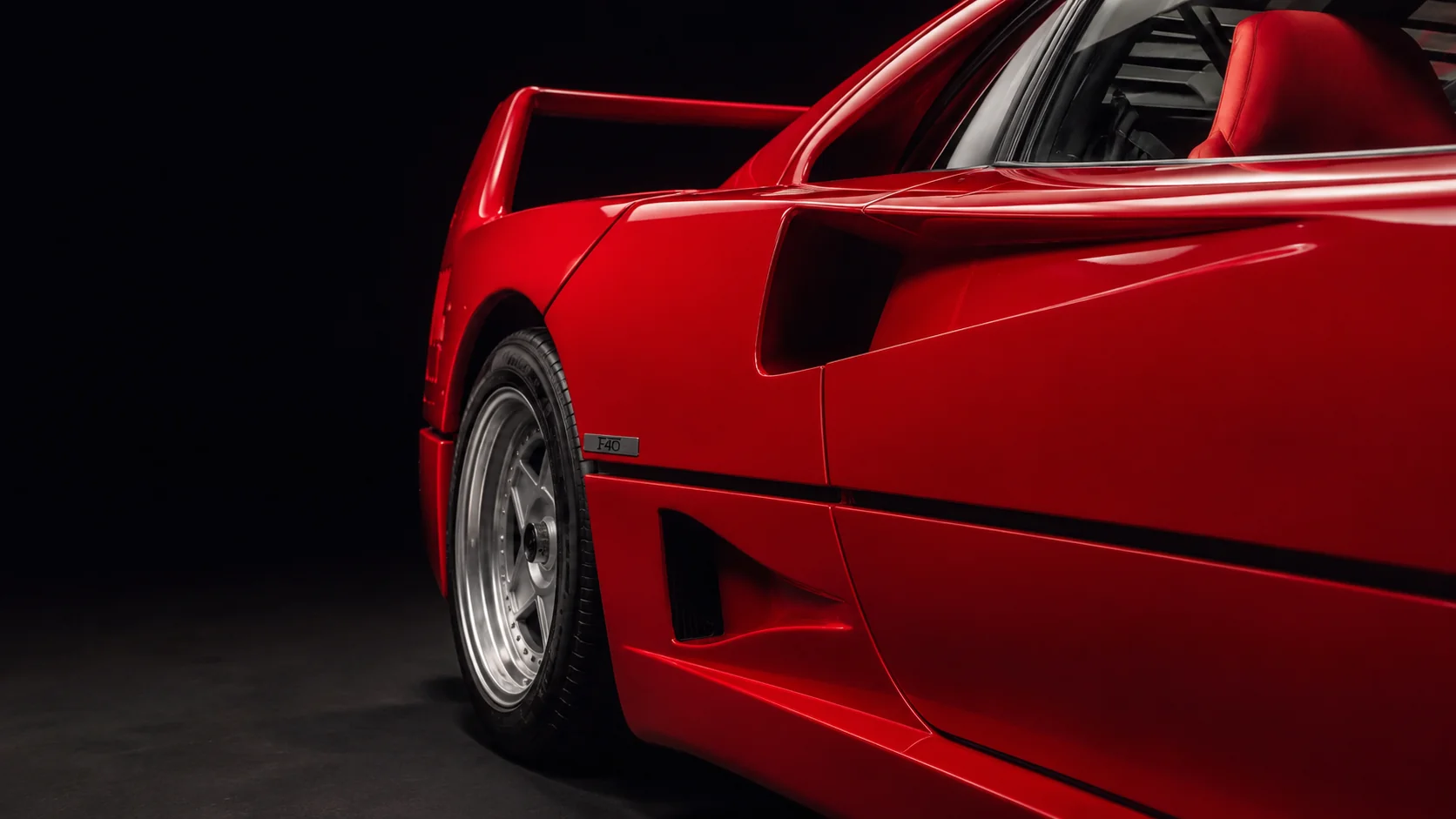
Every surface on this car is doing a job. None of them are doing you a favour.
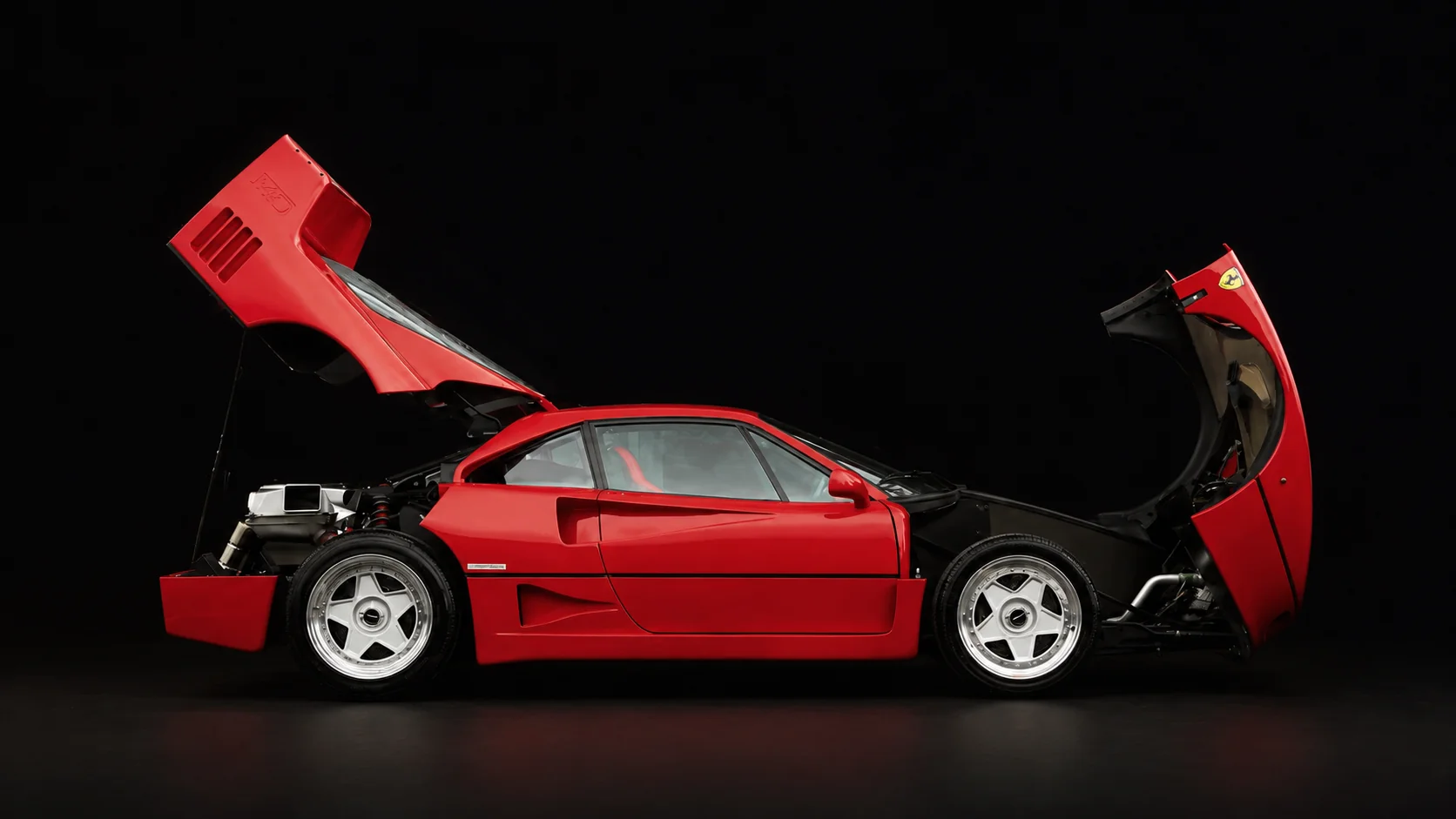
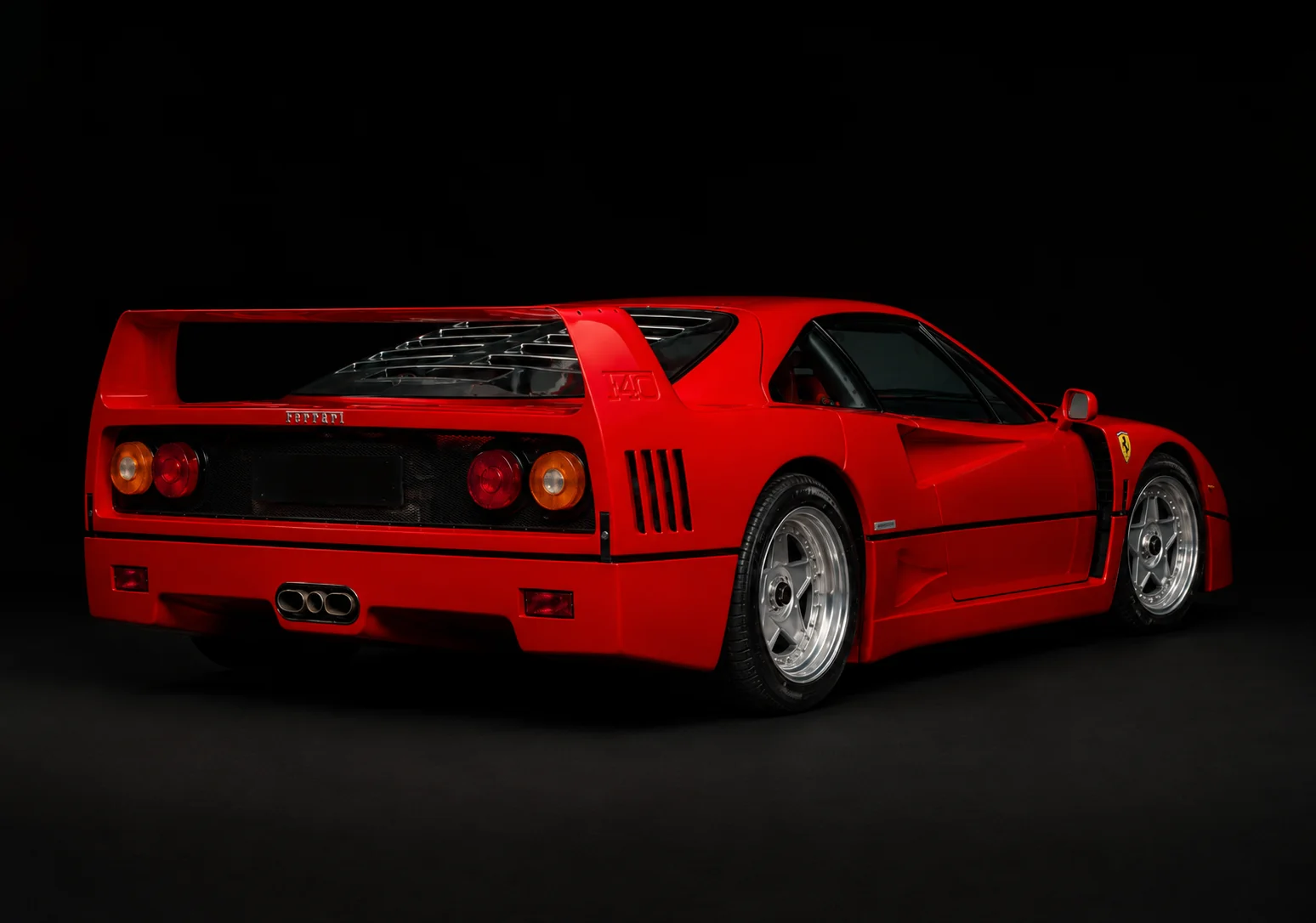
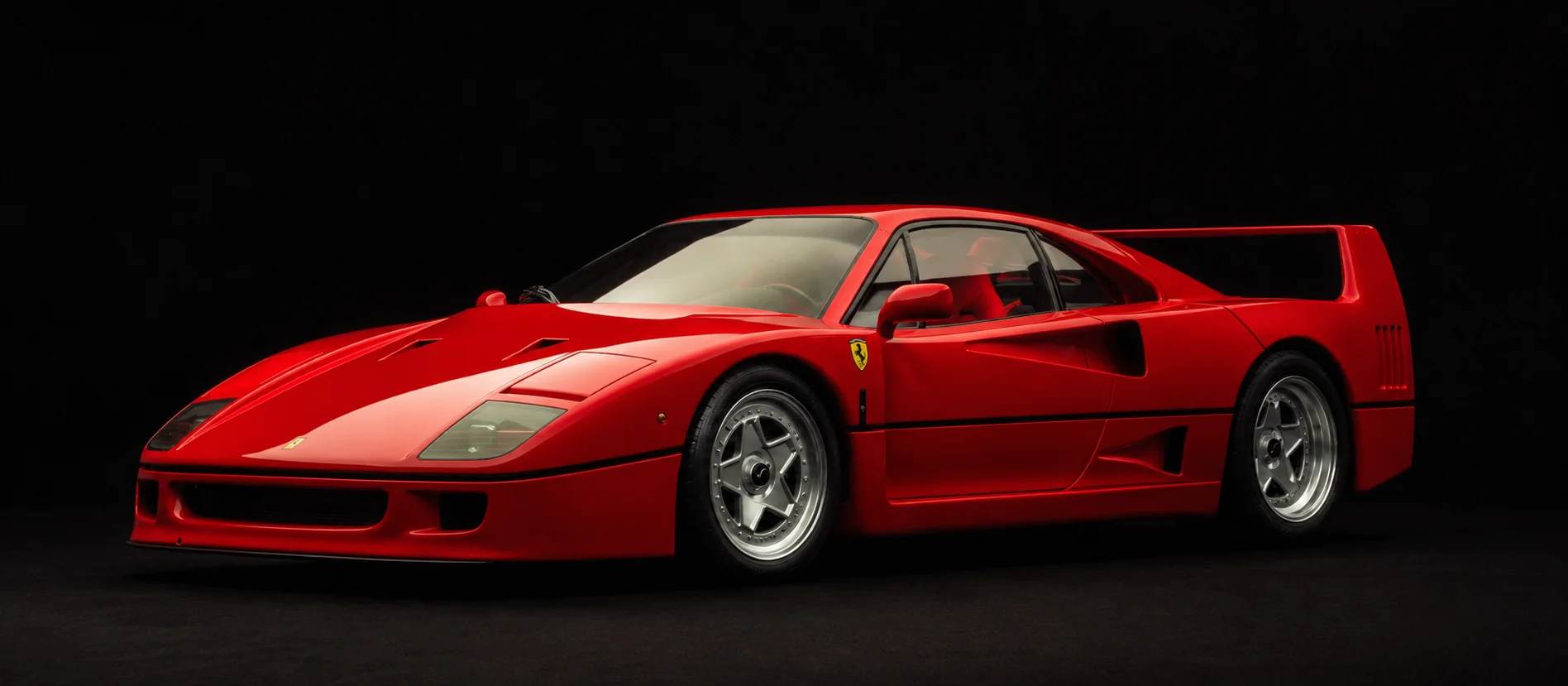
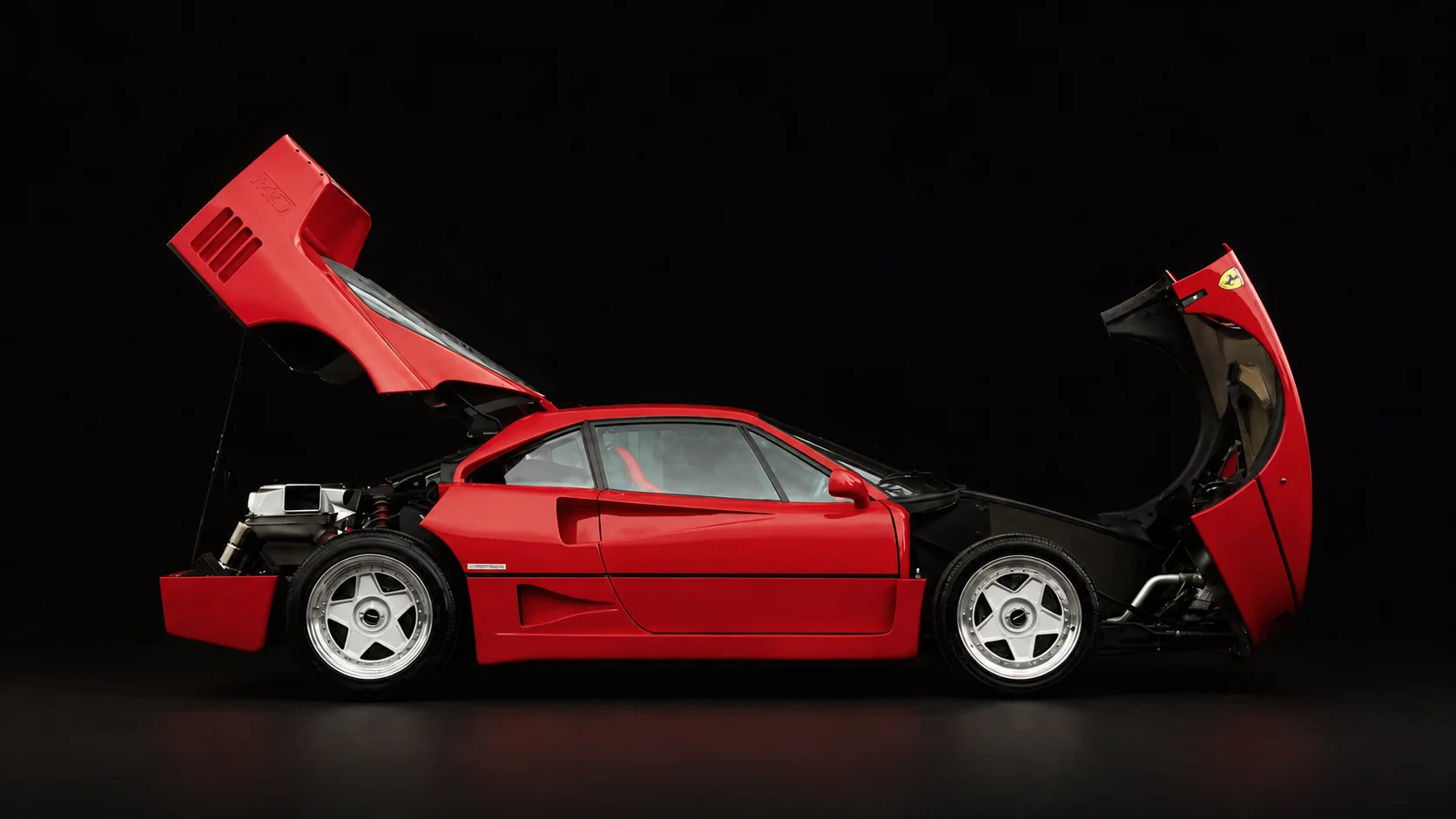
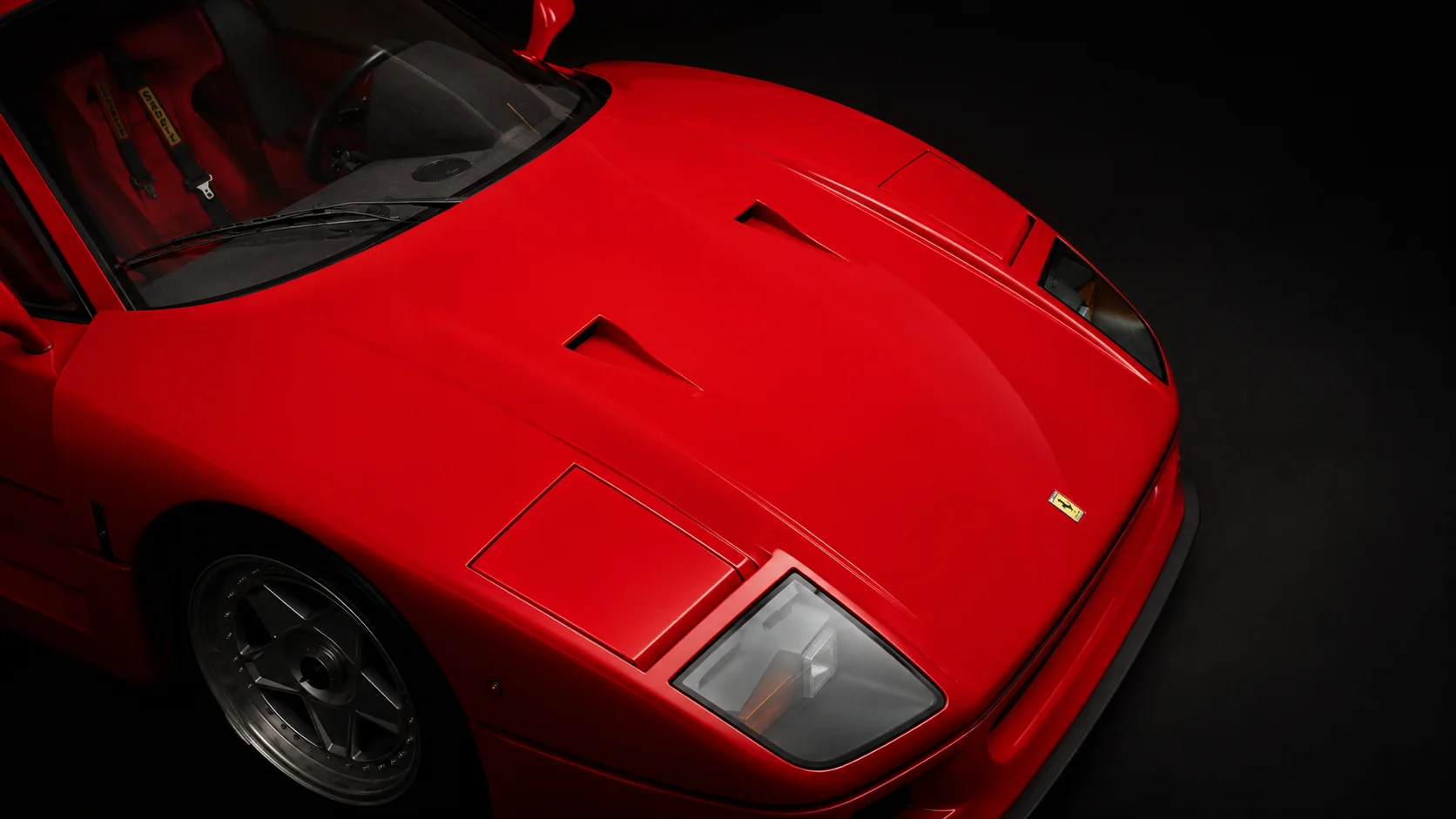
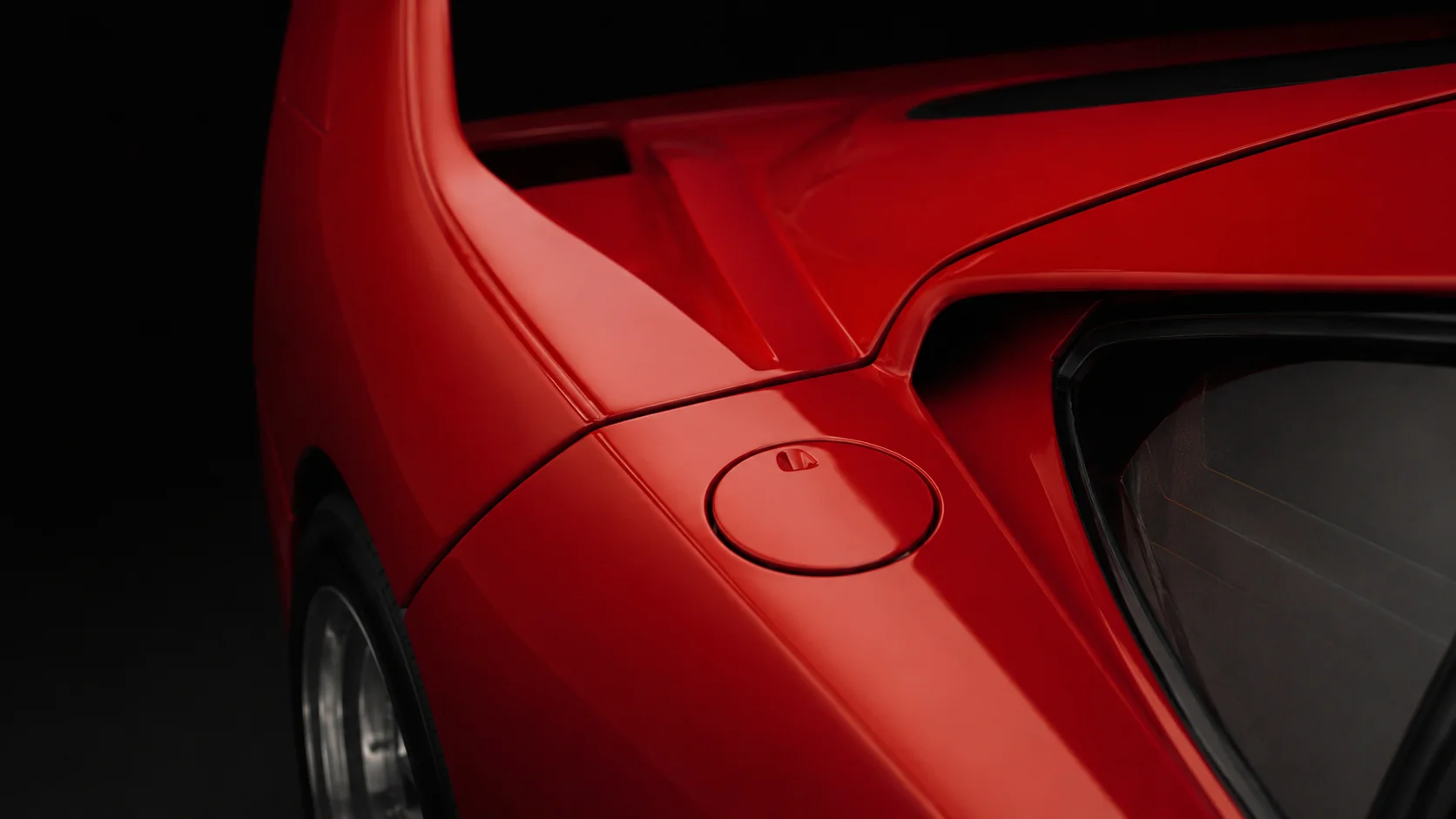
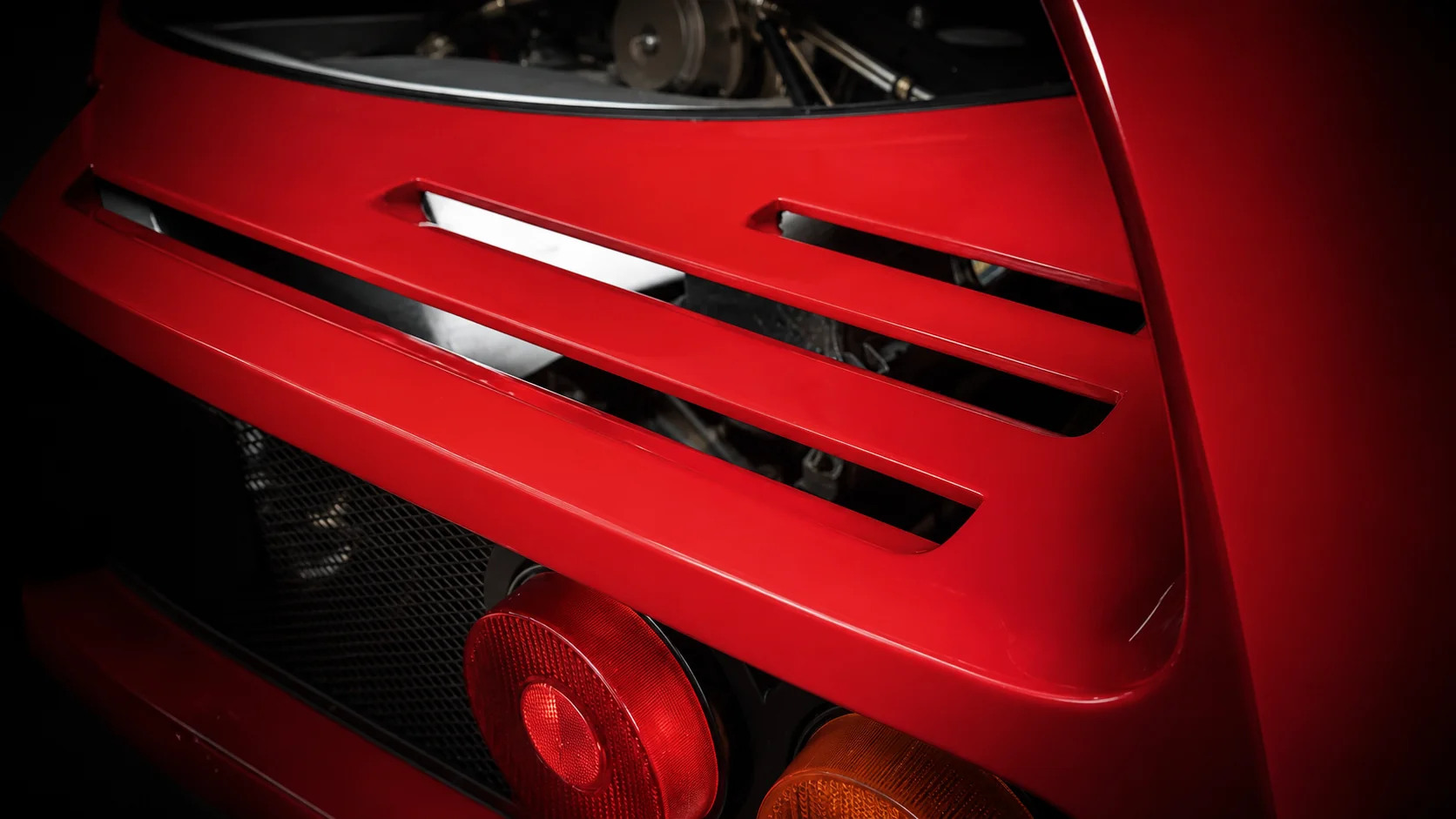
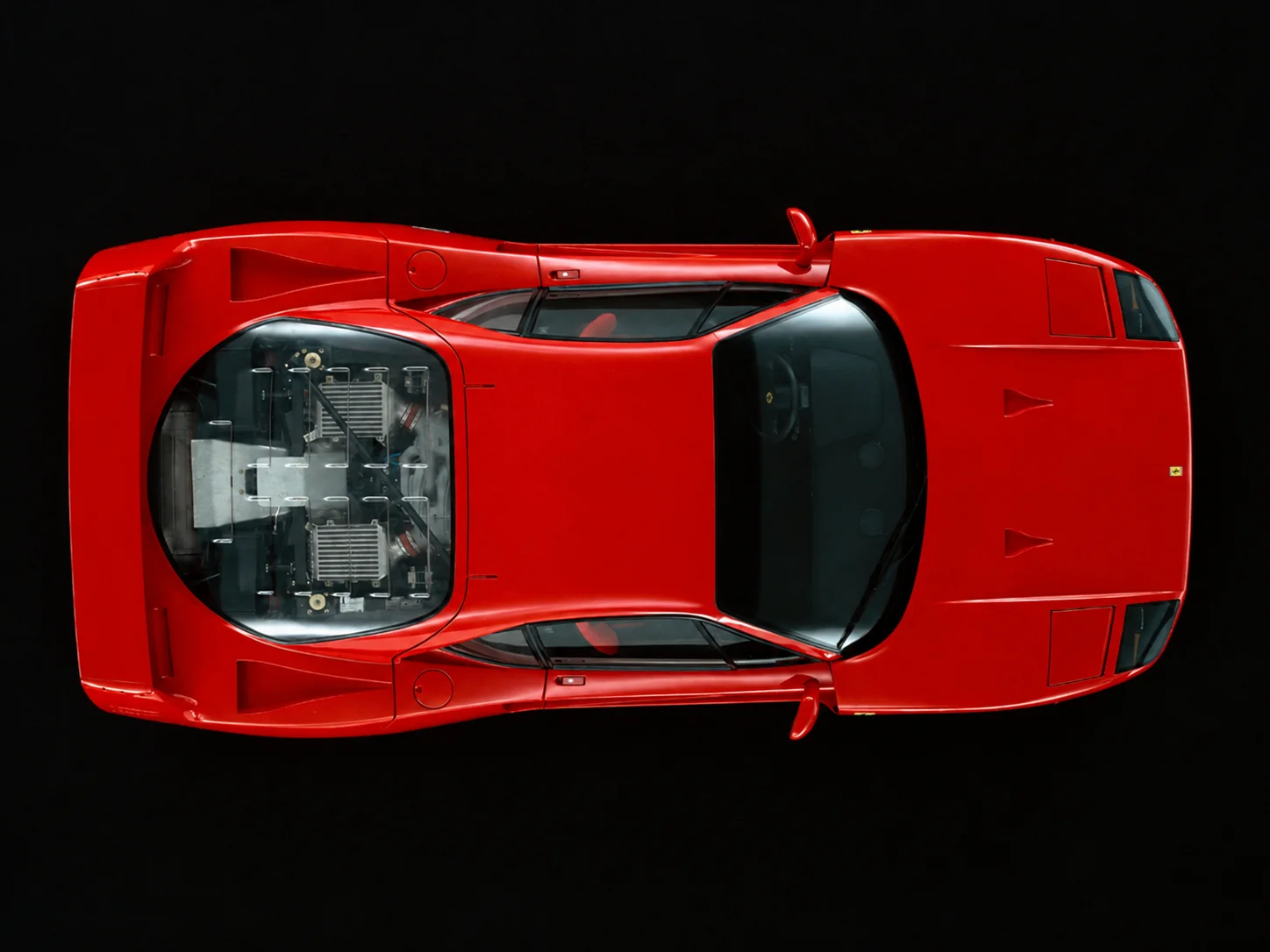
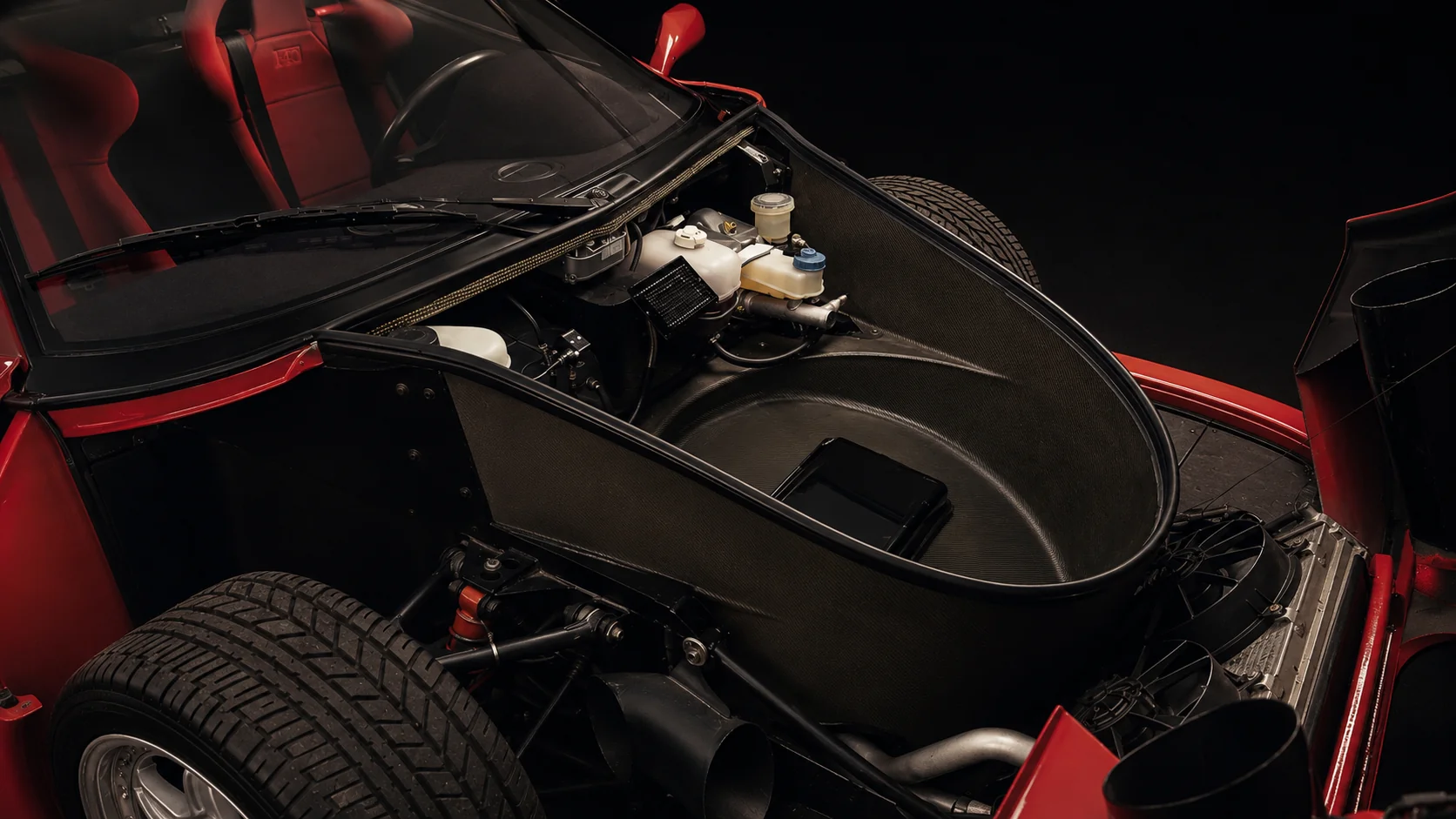
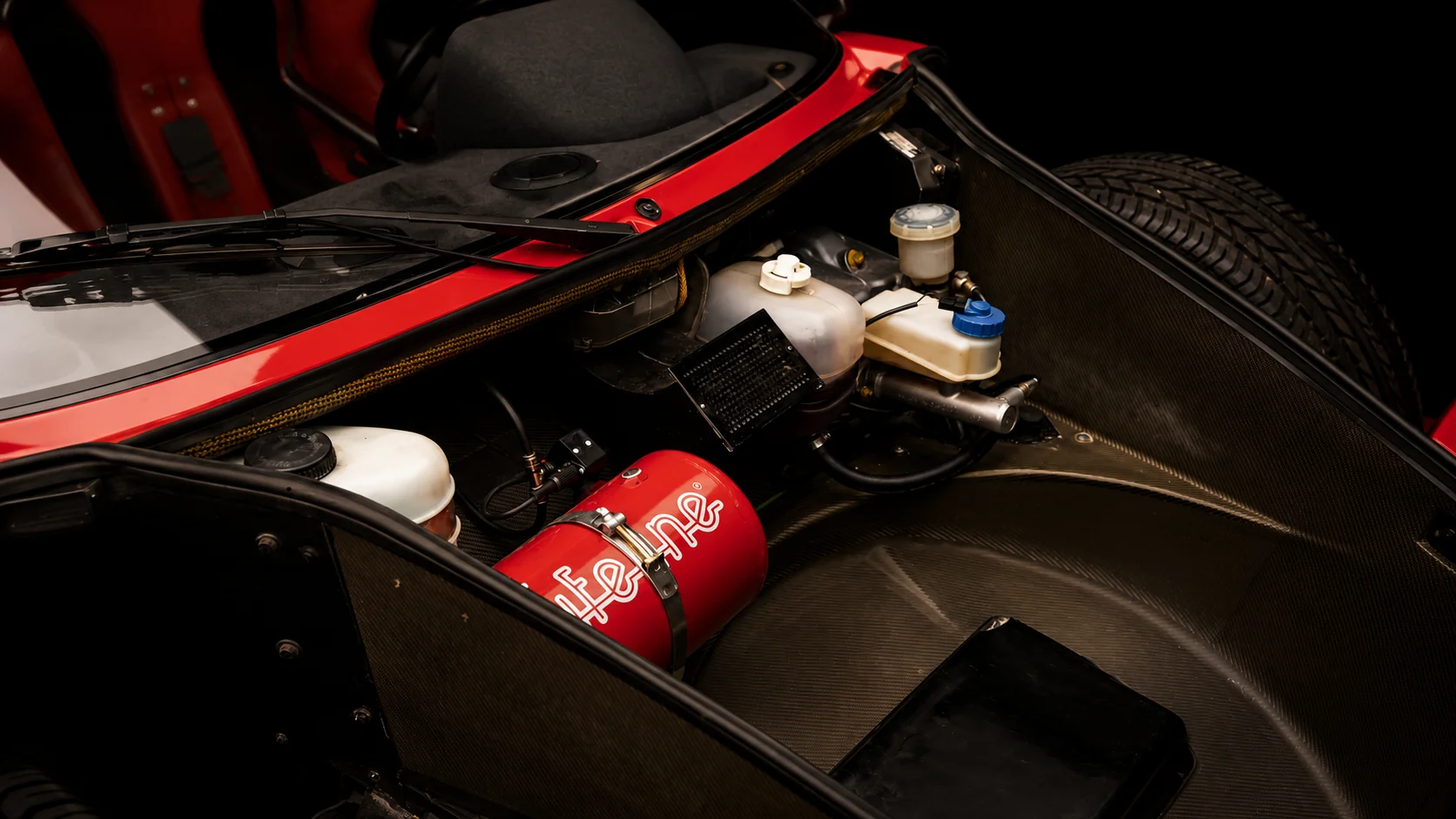
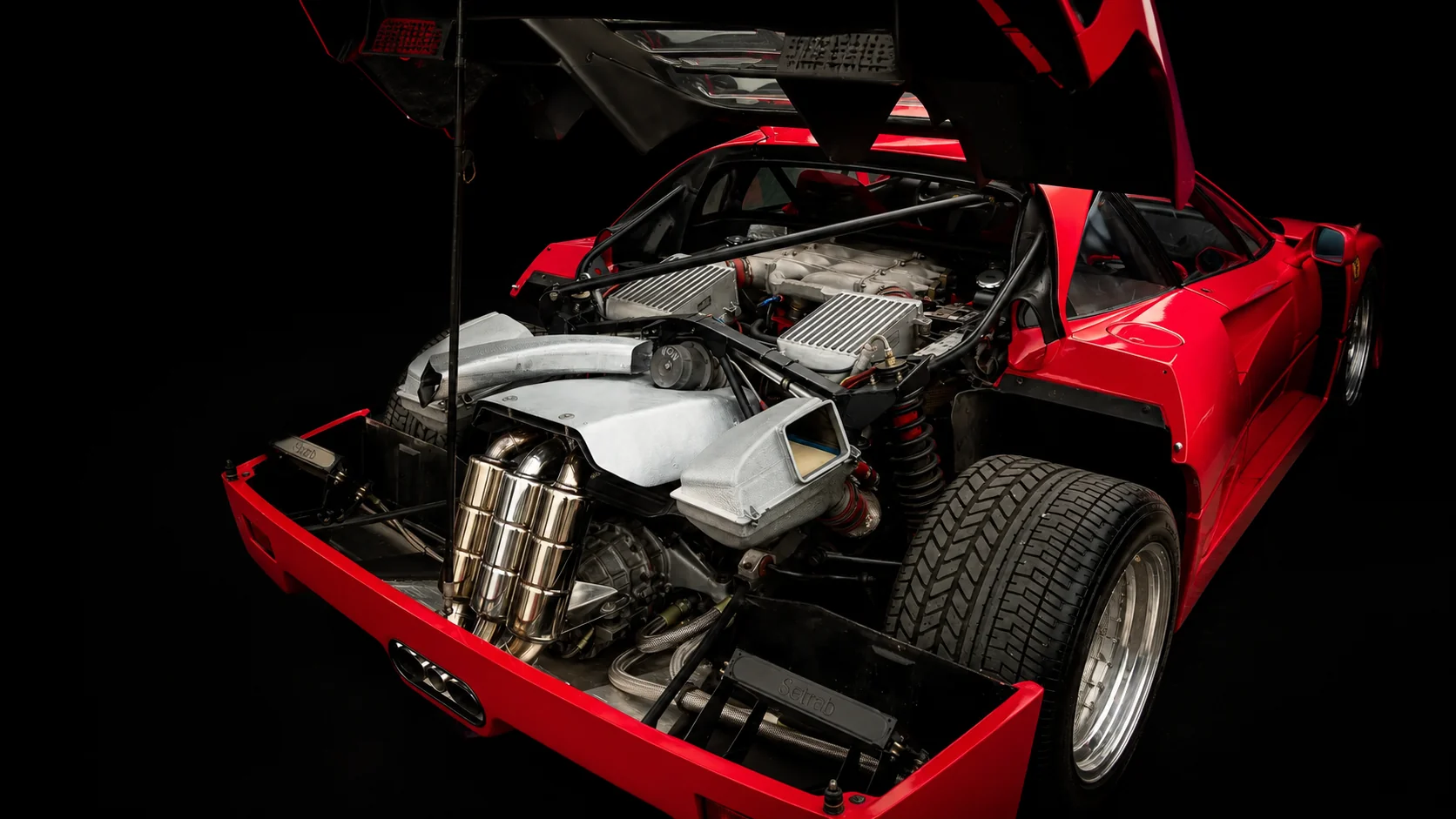
Ferrari built the body from materials that belonged in aerospace and motorsport rather than a road car showroom. Kevlar, carbon fibre and aluminium for the panels, at a fraction of the mass of steel. Eleven pieces in total, because the front and rear are each a single vast section that lifts clear to expose the whole mechanical car beneath.
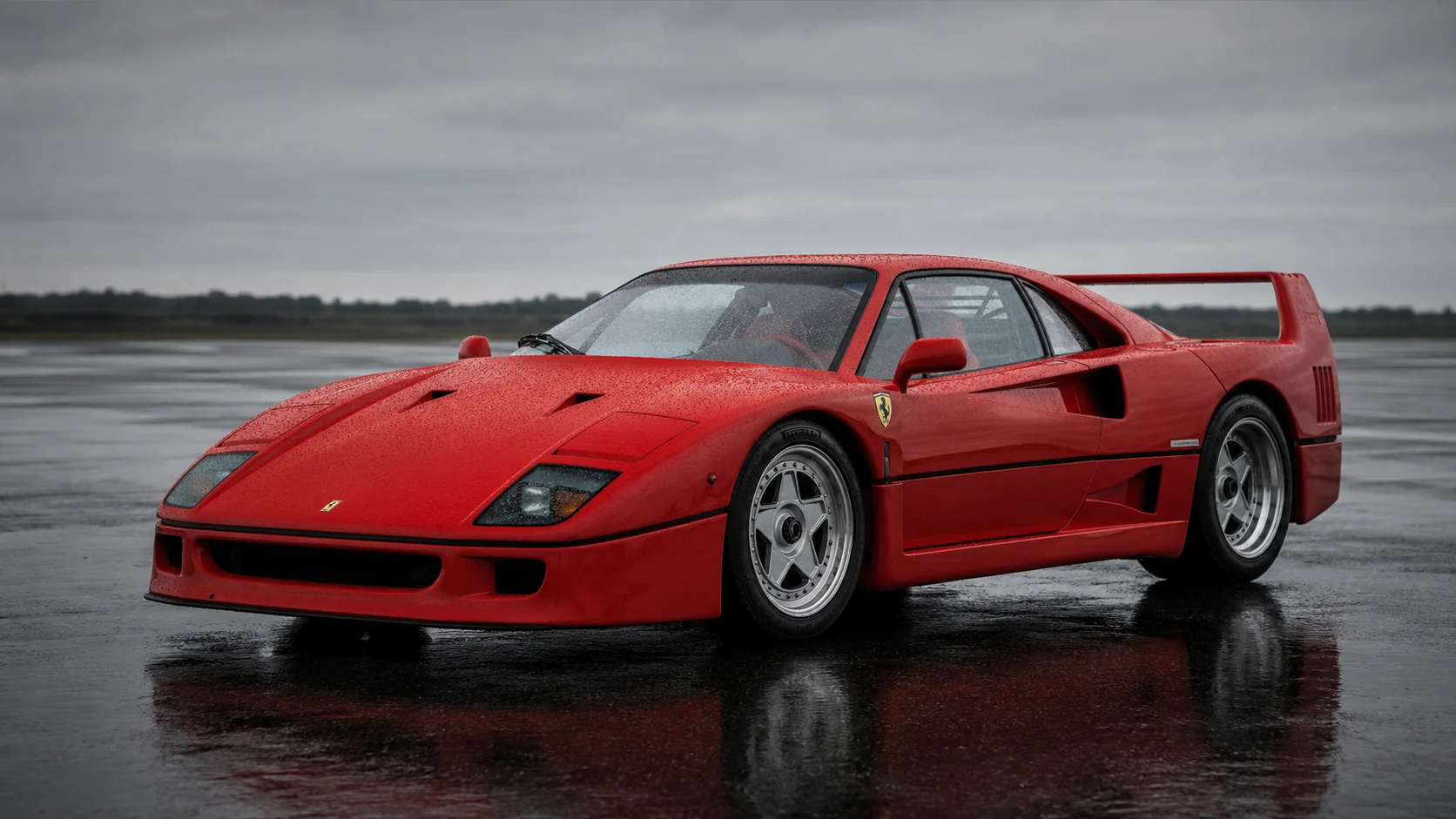
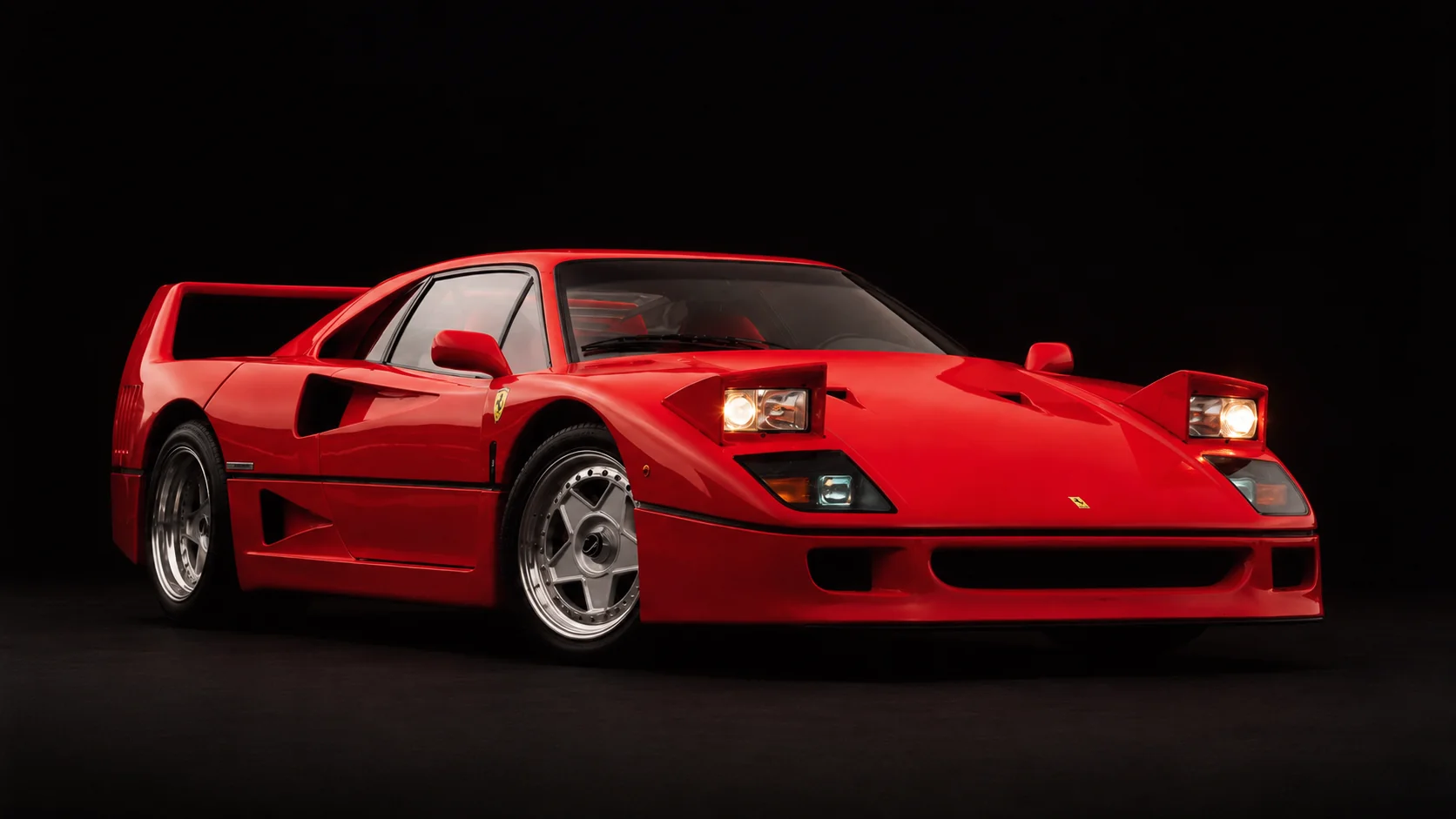
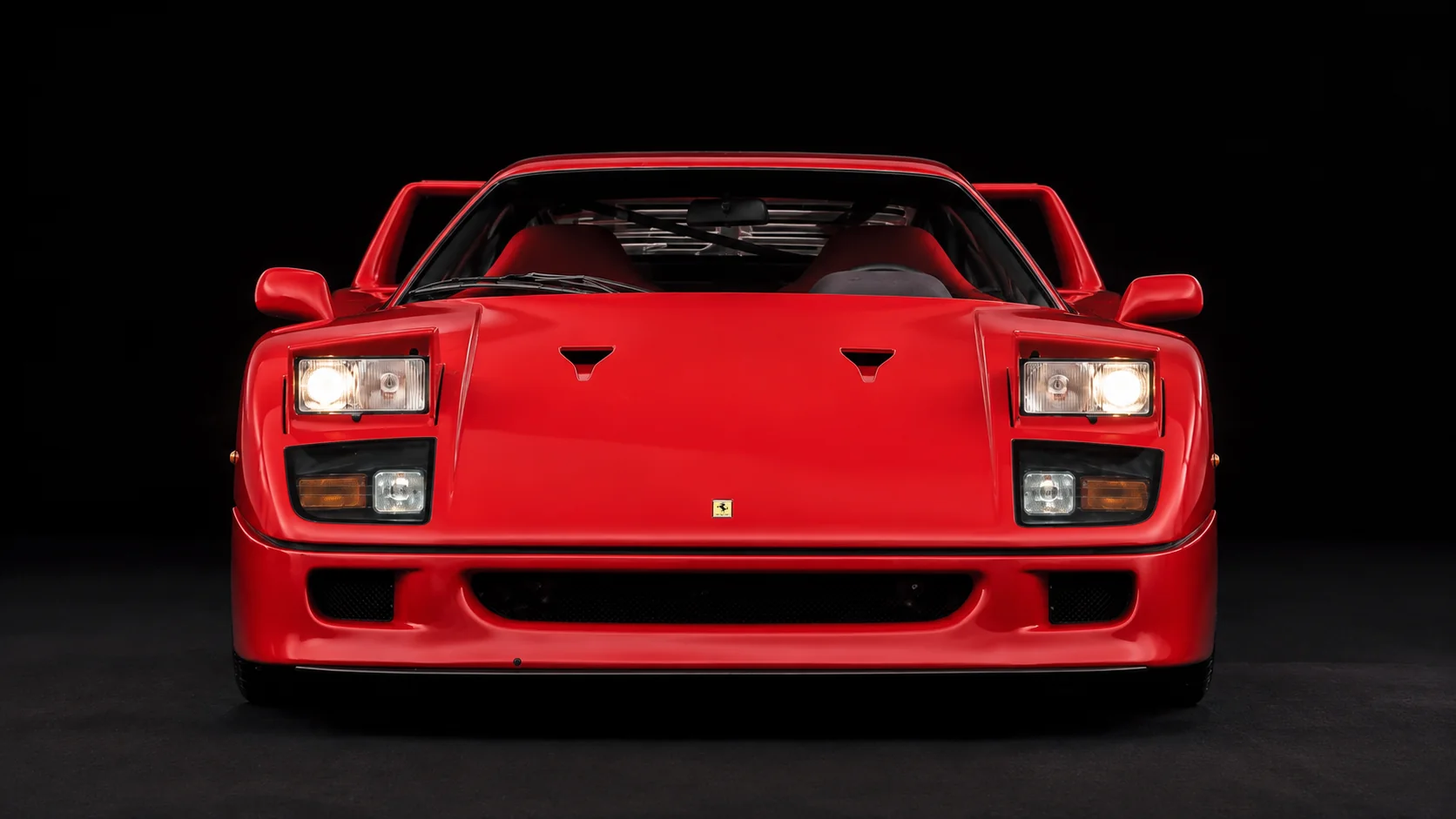
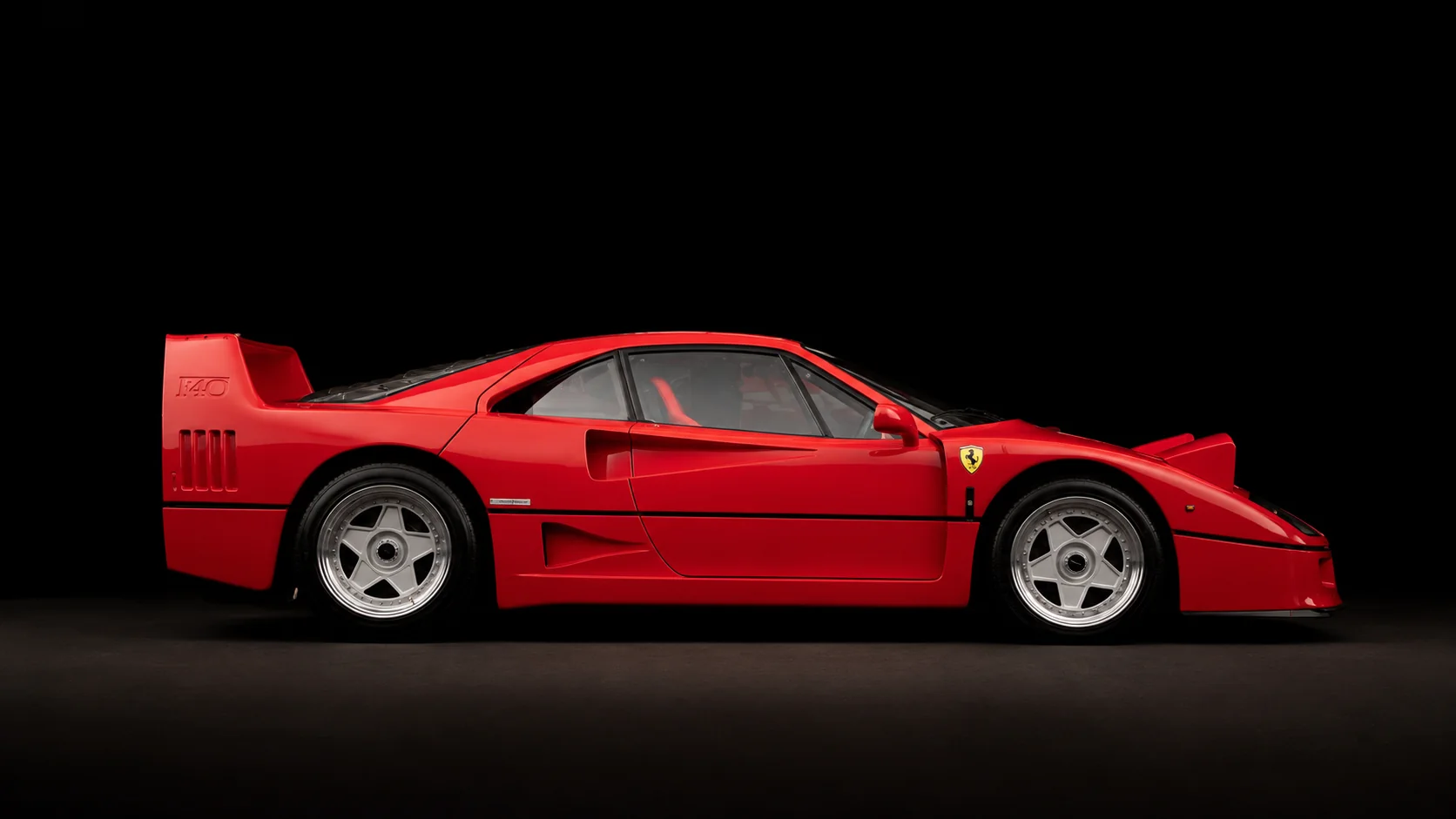
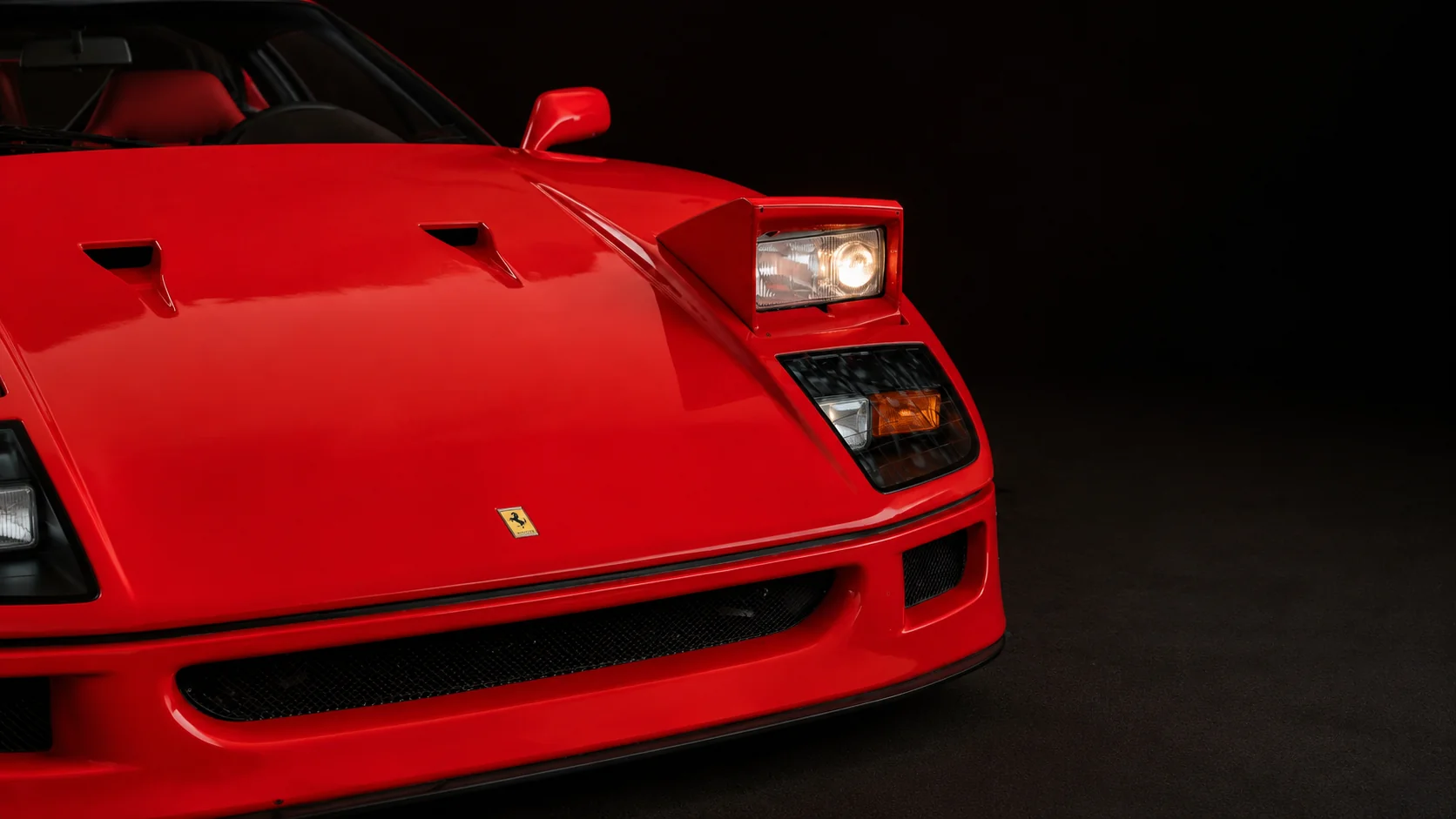
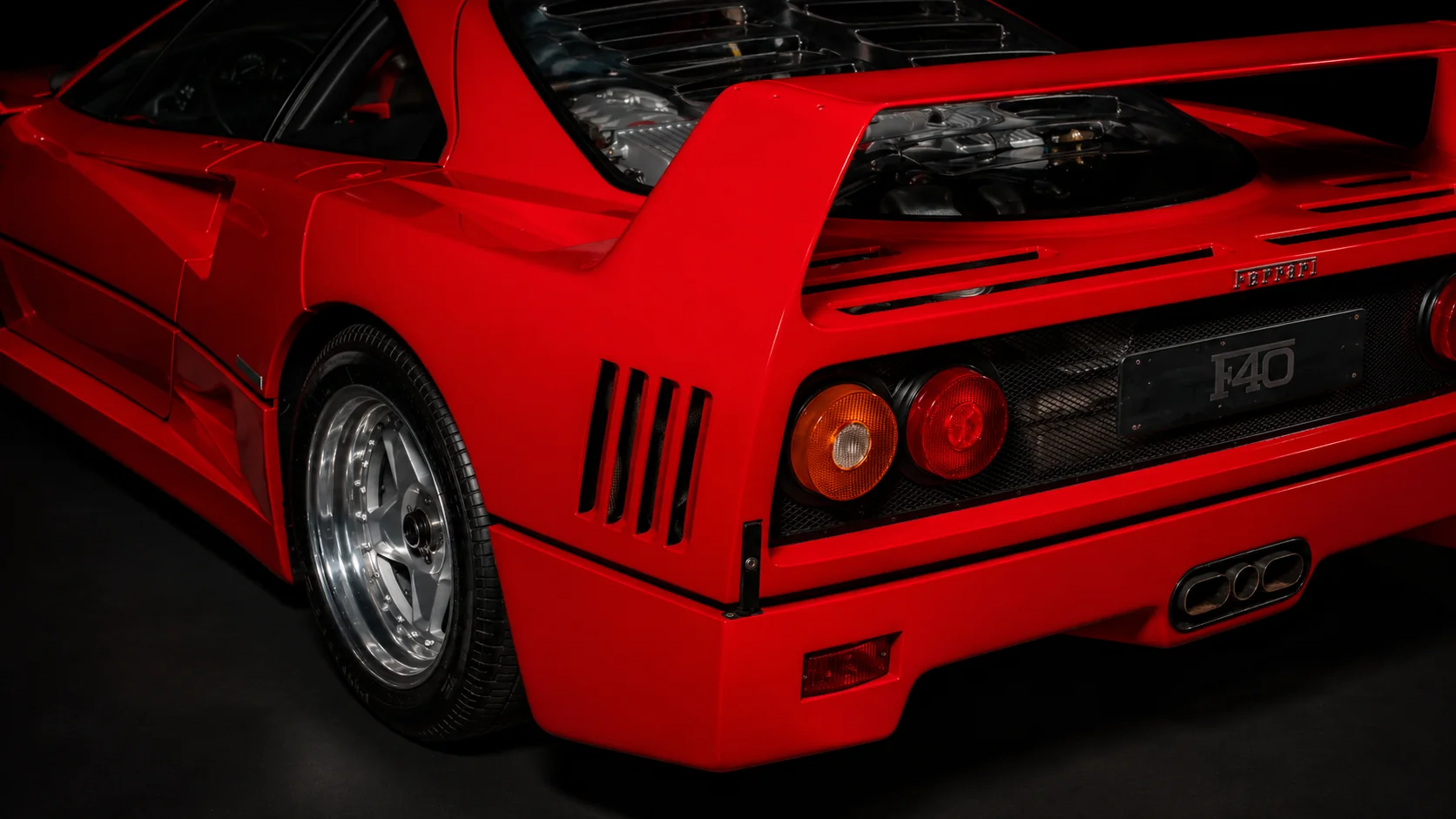
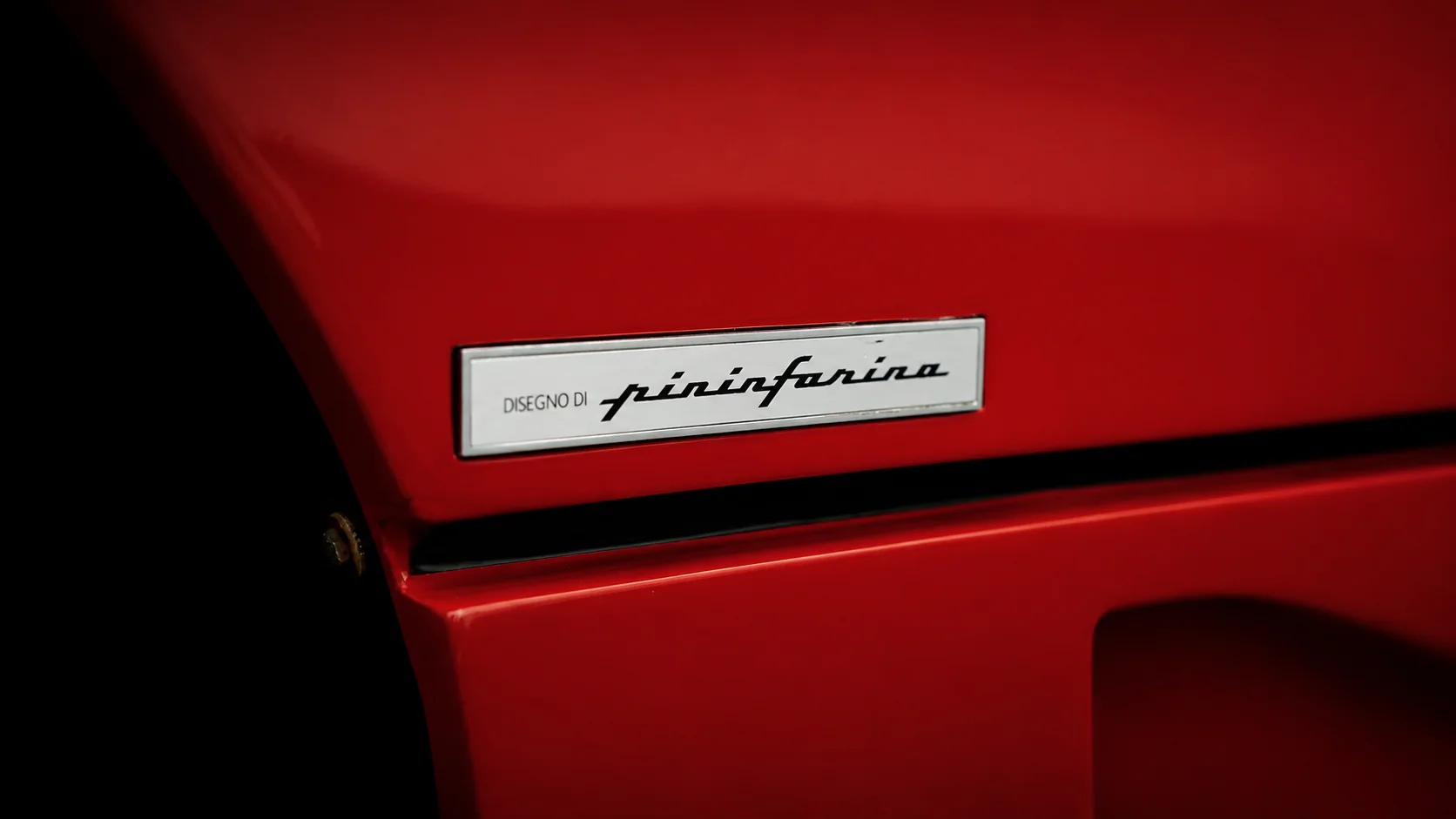
The shape came from Pininfarina, drawn by Pietro Camardella, and it borrowed only a cabin profile and a satin black side crease from the 288 GTO that preceded it. Everything else was new, pulled tight over the mechanical package and pierced wherever air needed to enter or leave. The drag coefficient came out at 0.34, a modest figure, and entirely beside the point.
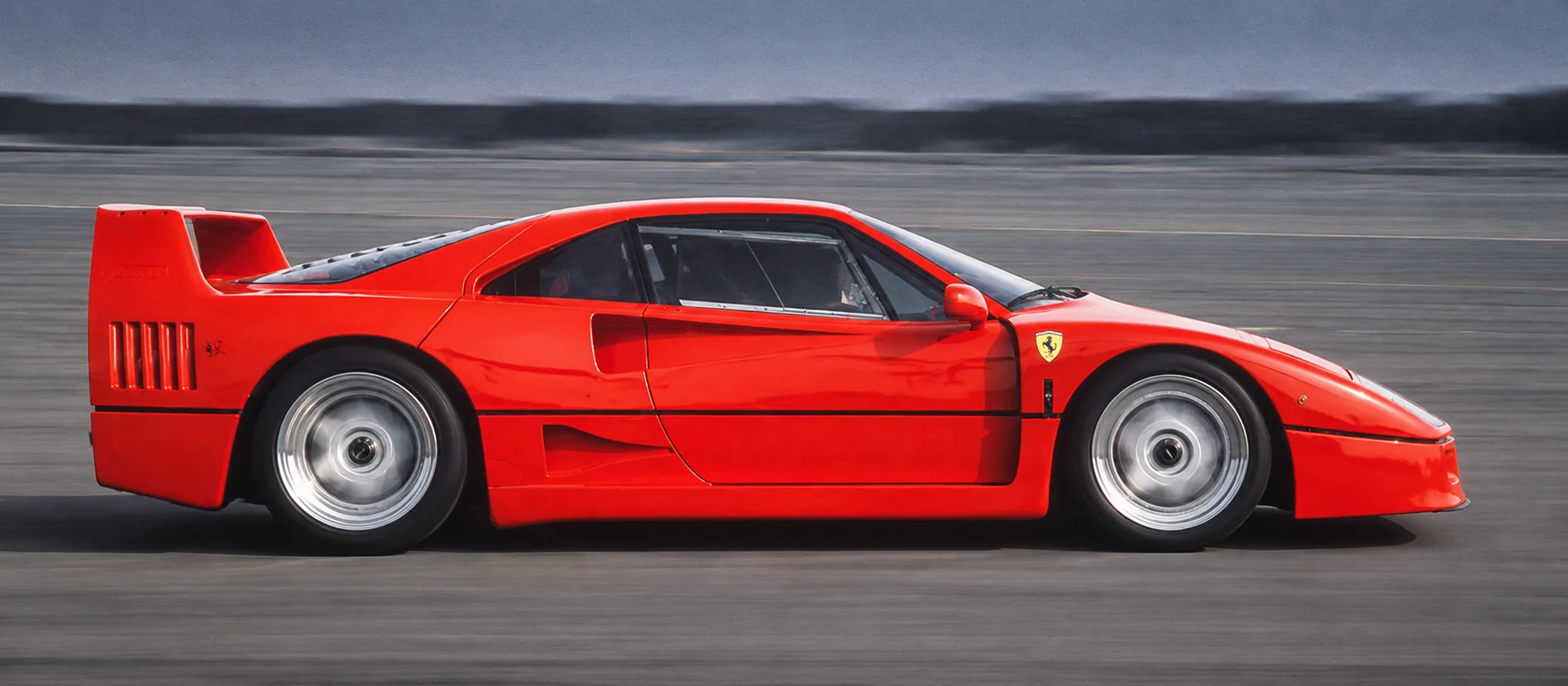
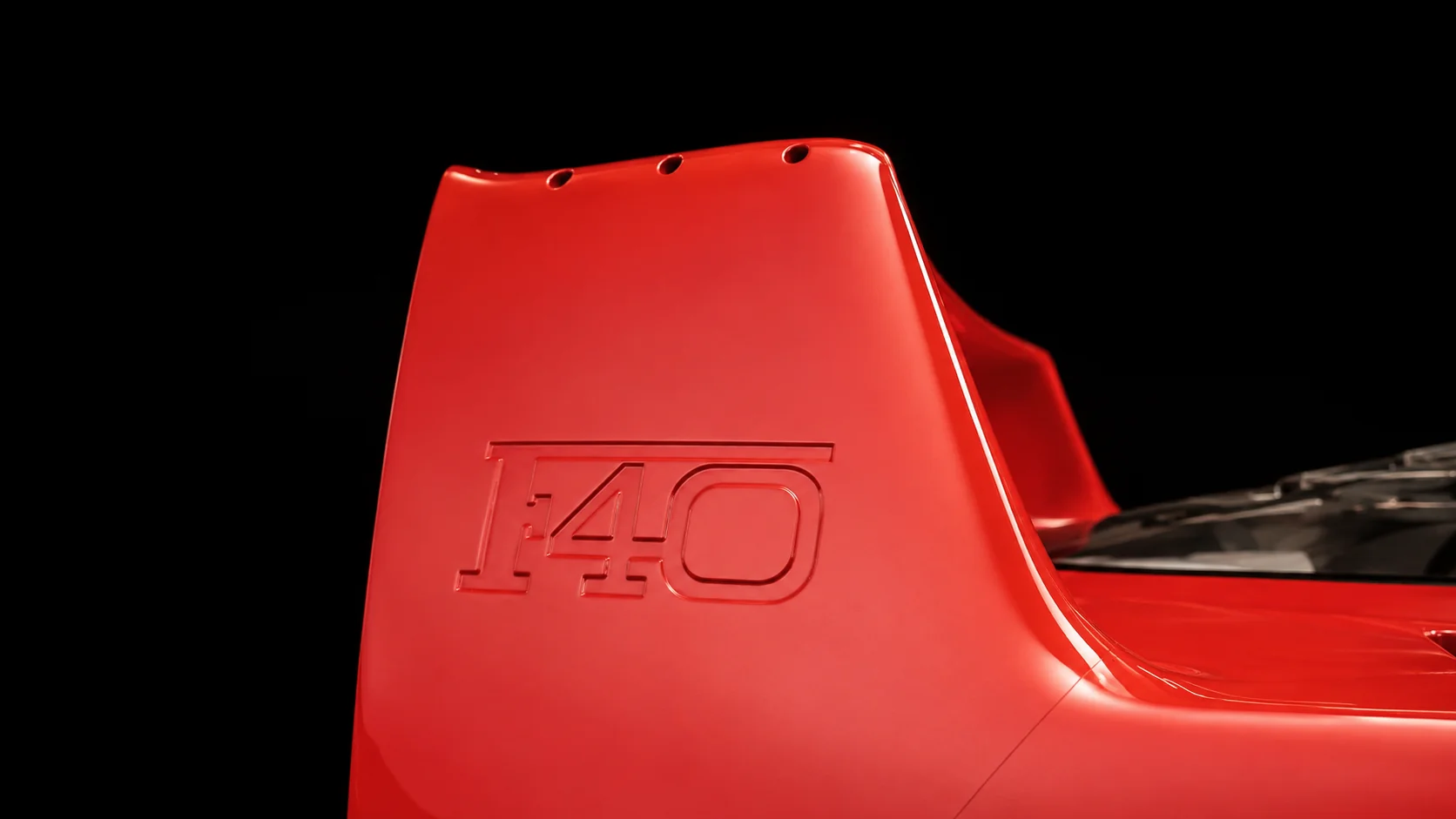
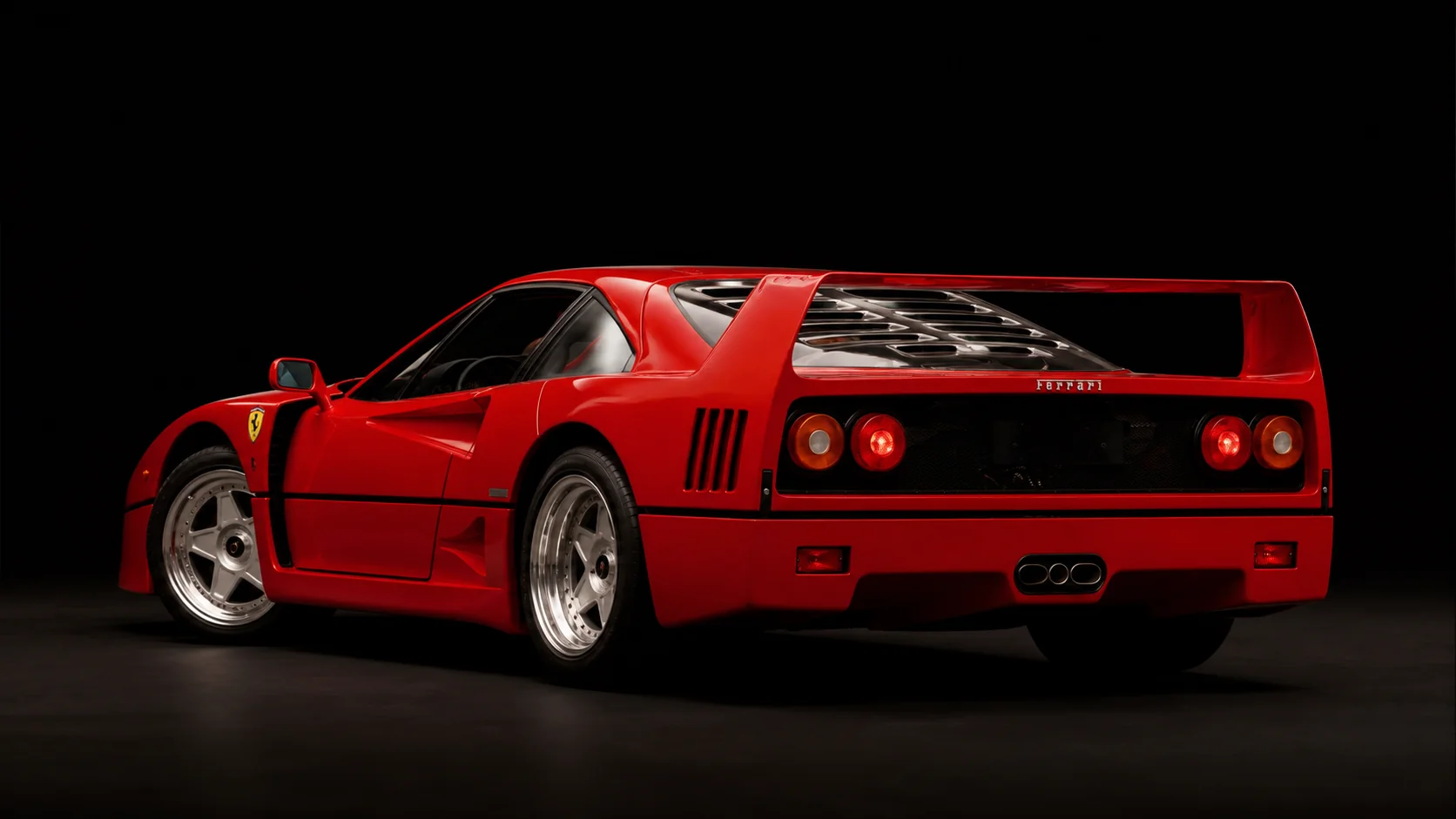
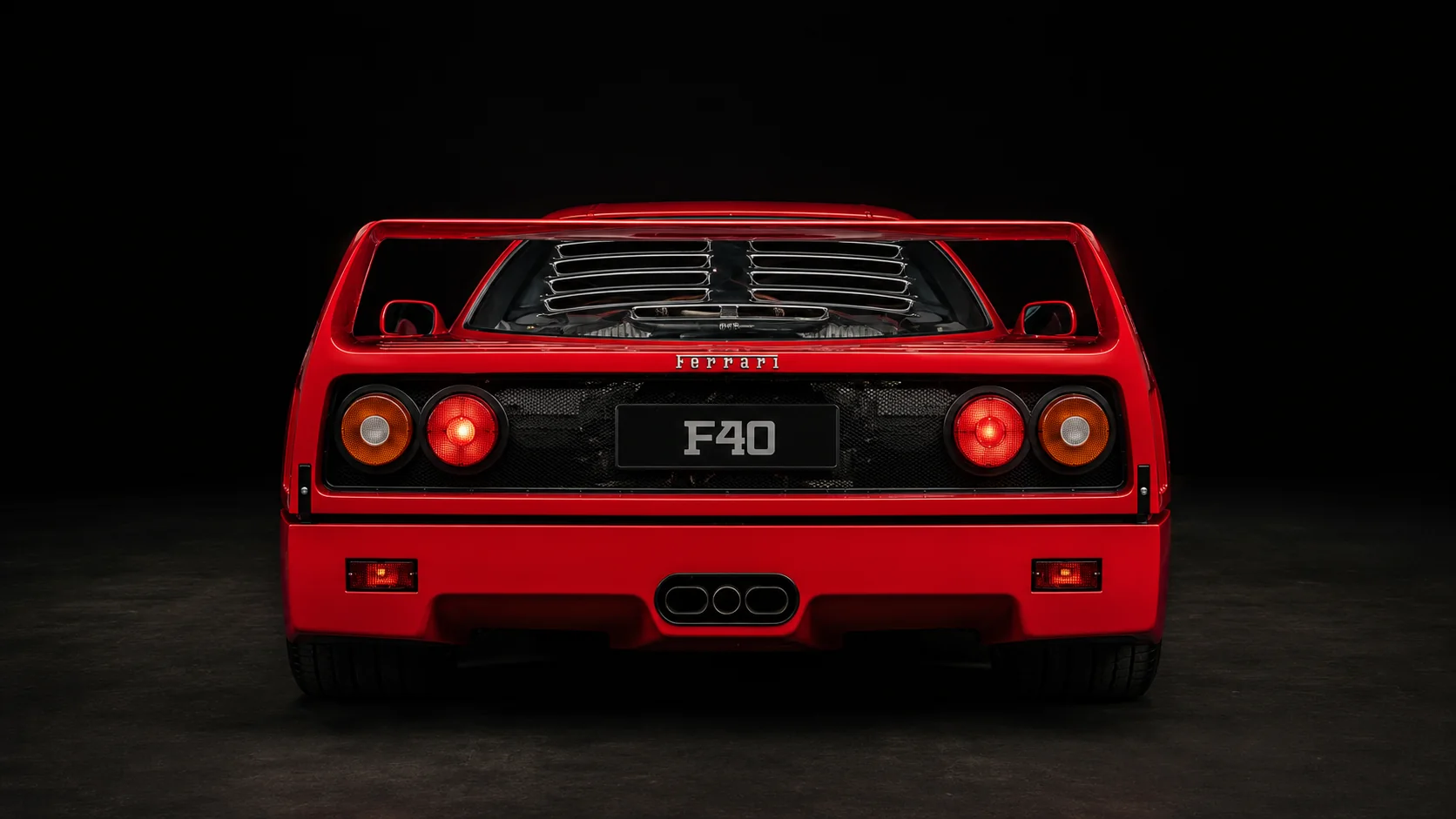
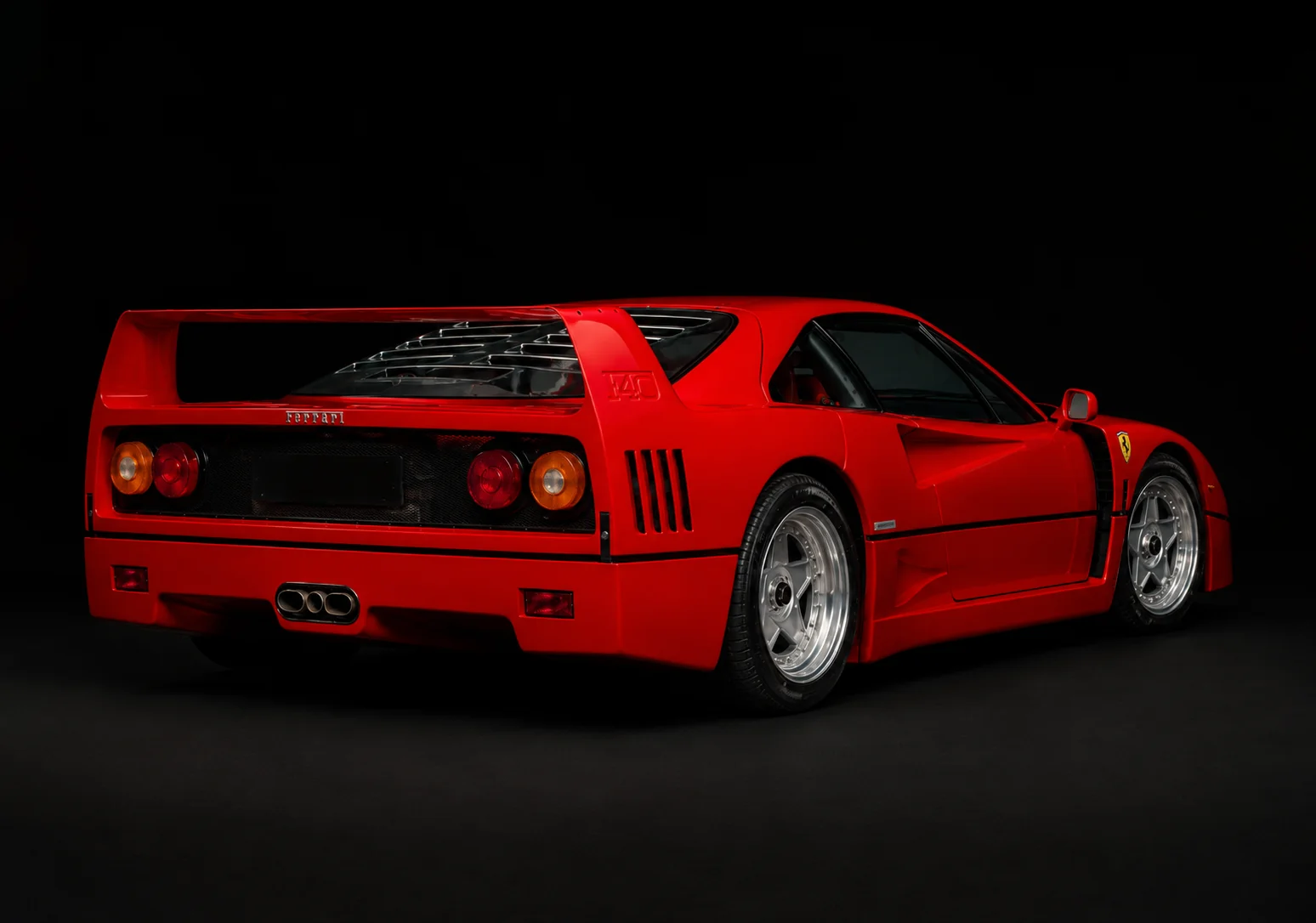
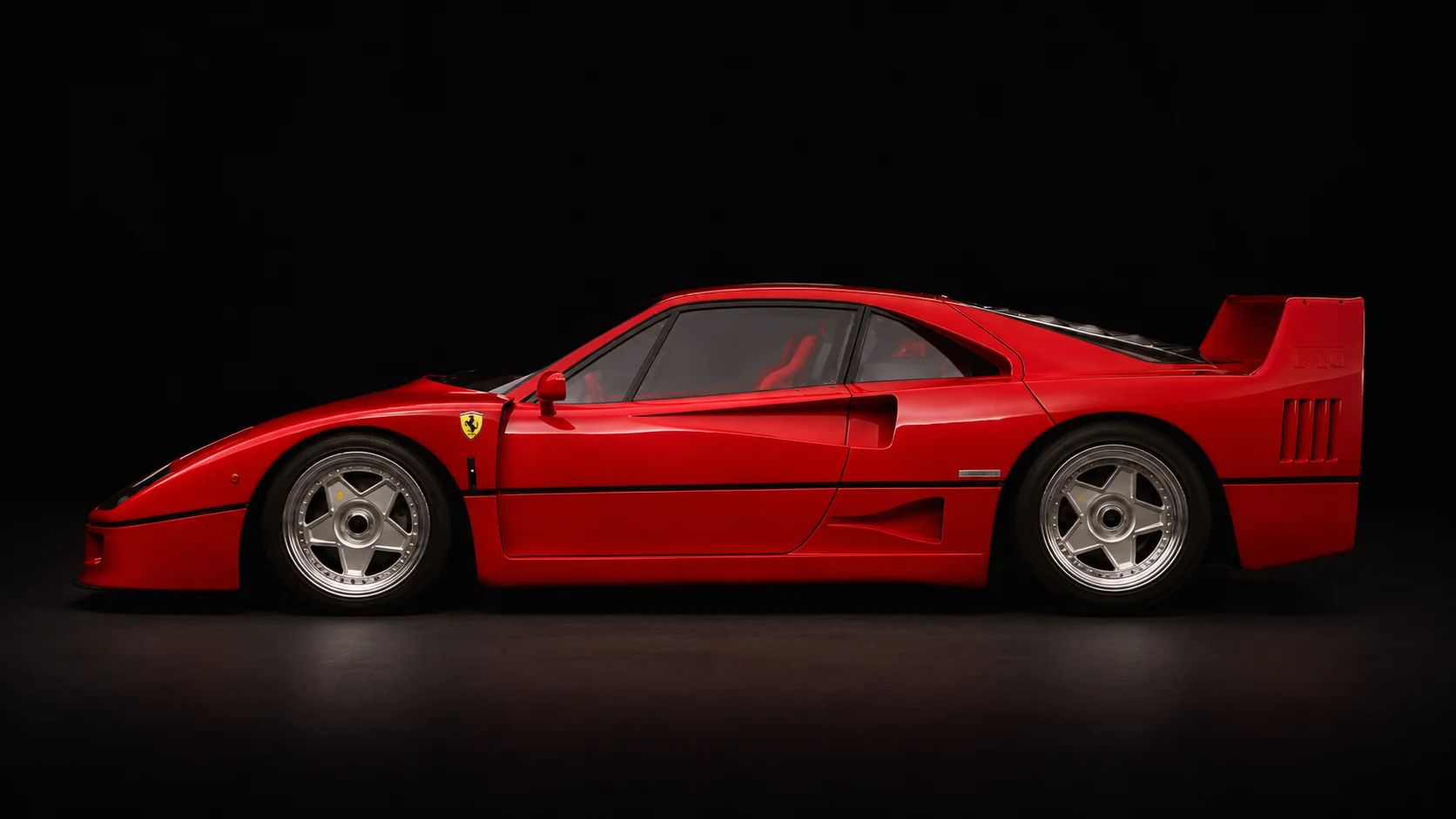
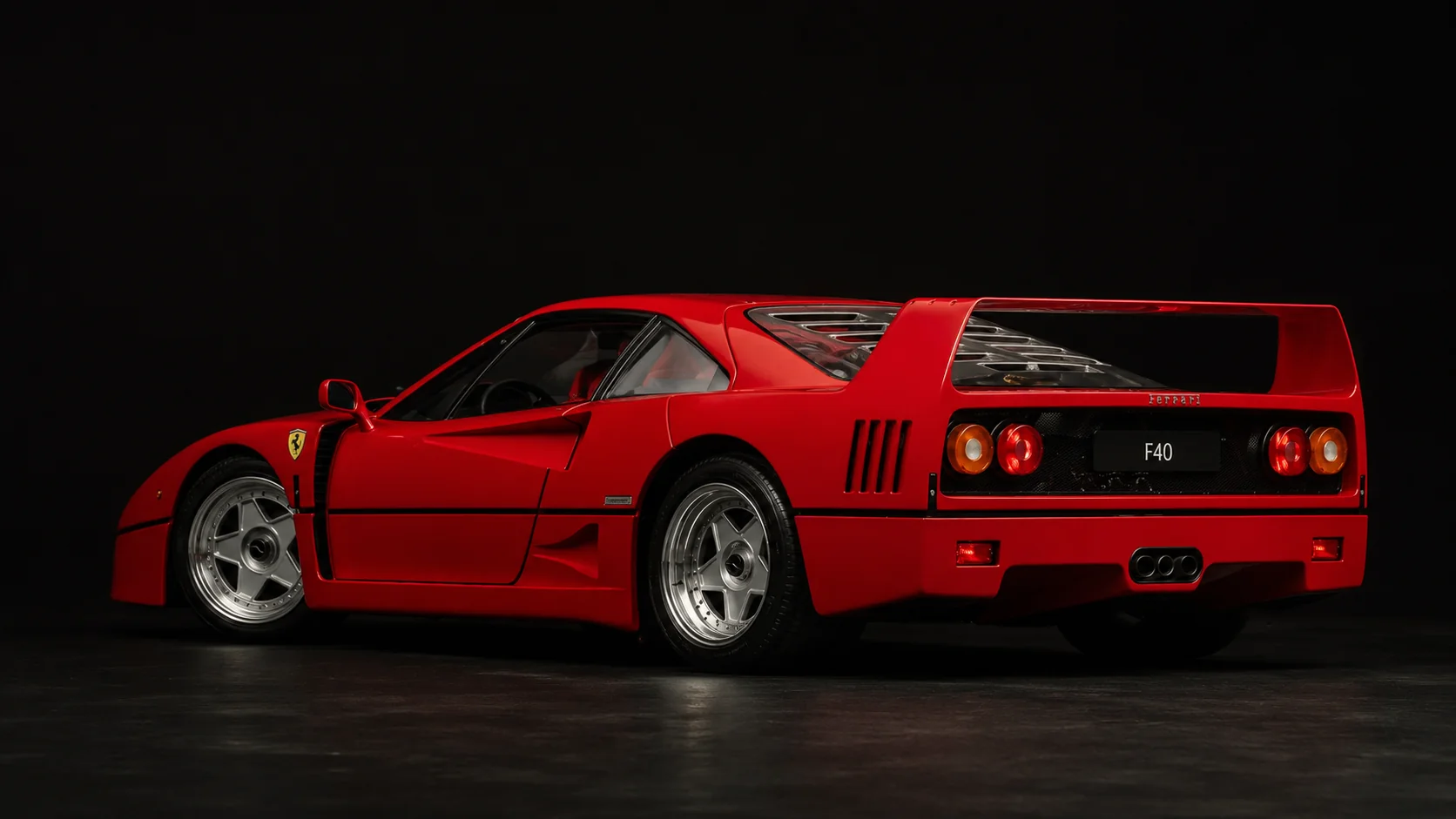
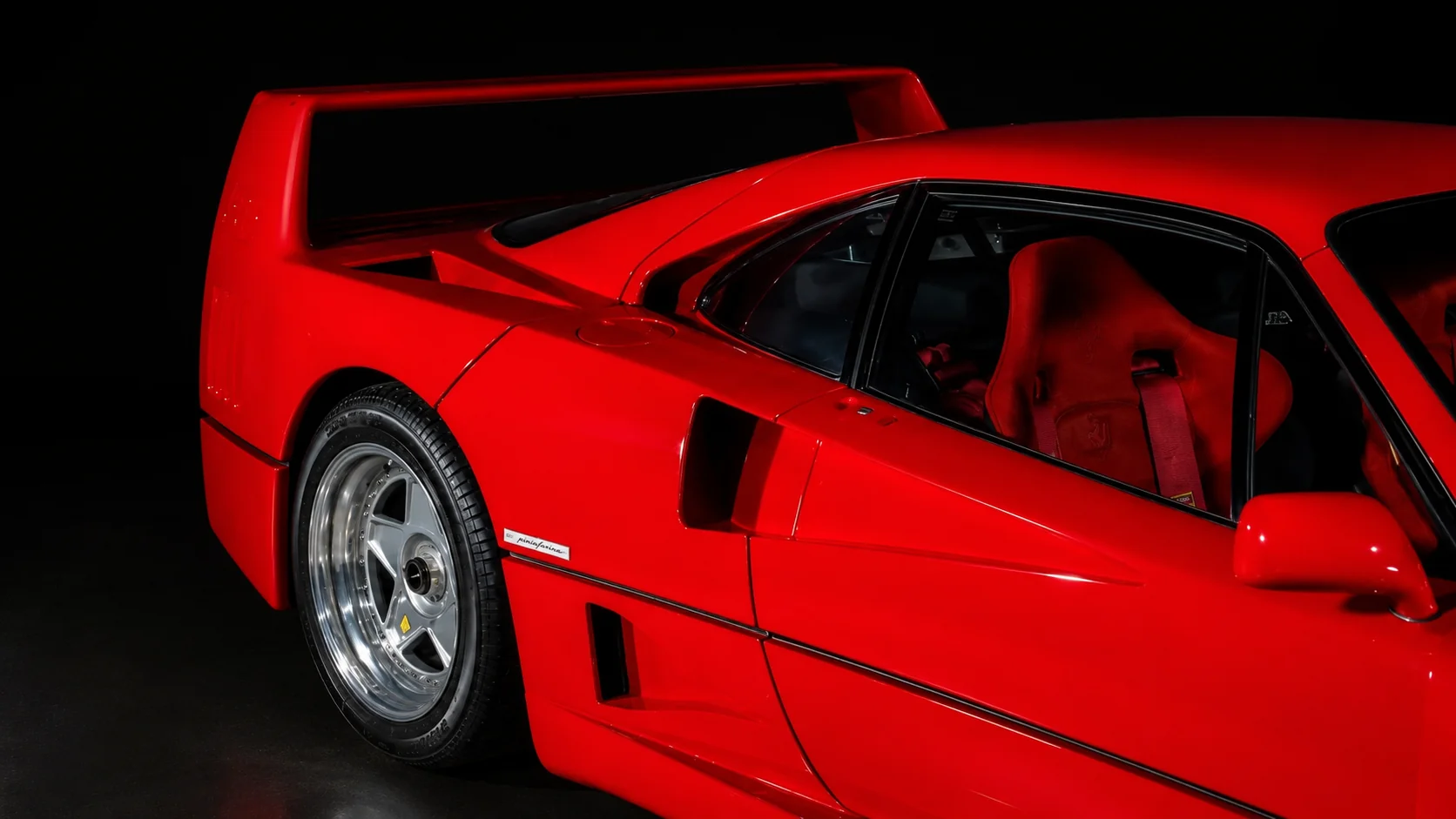
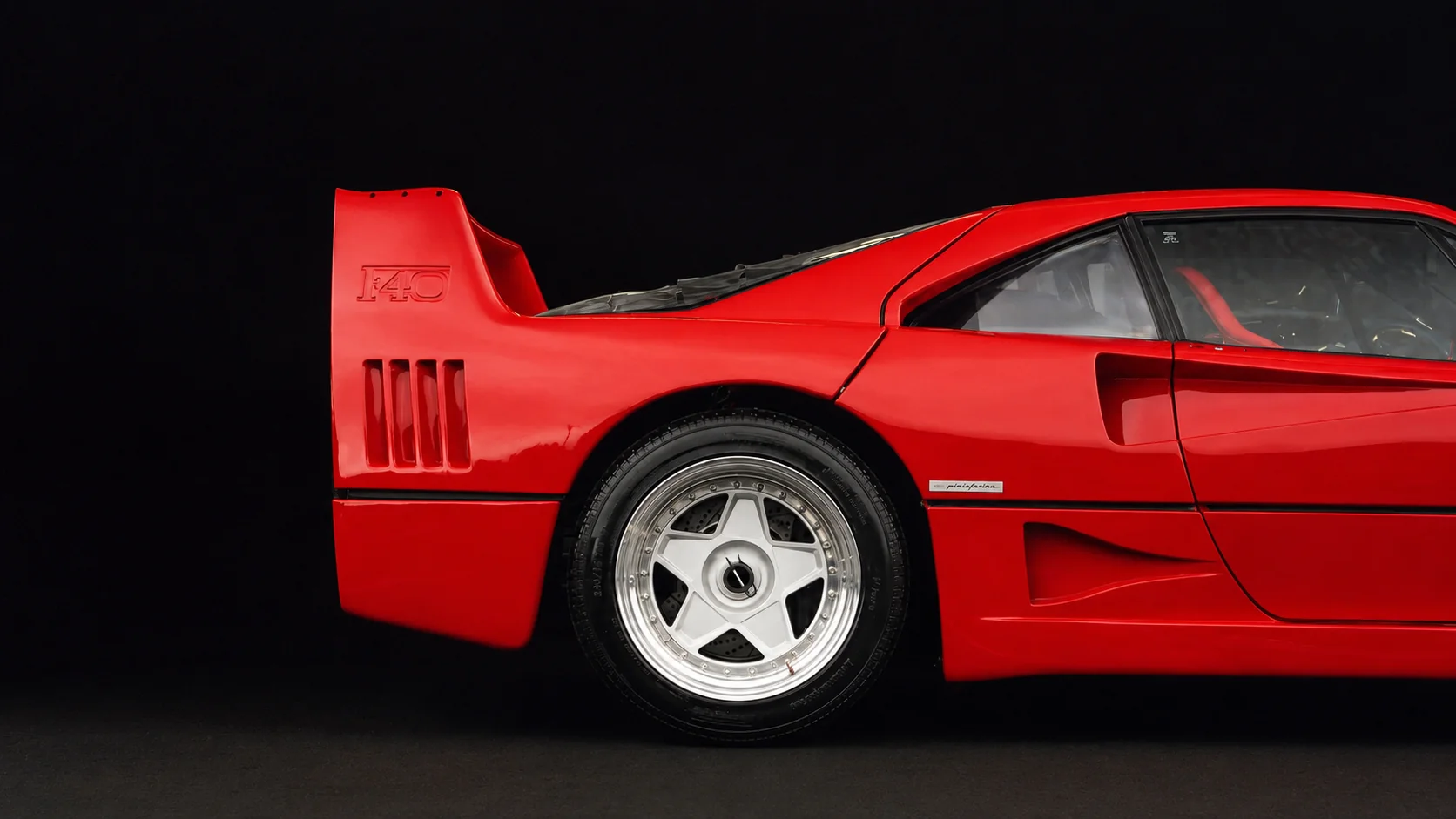
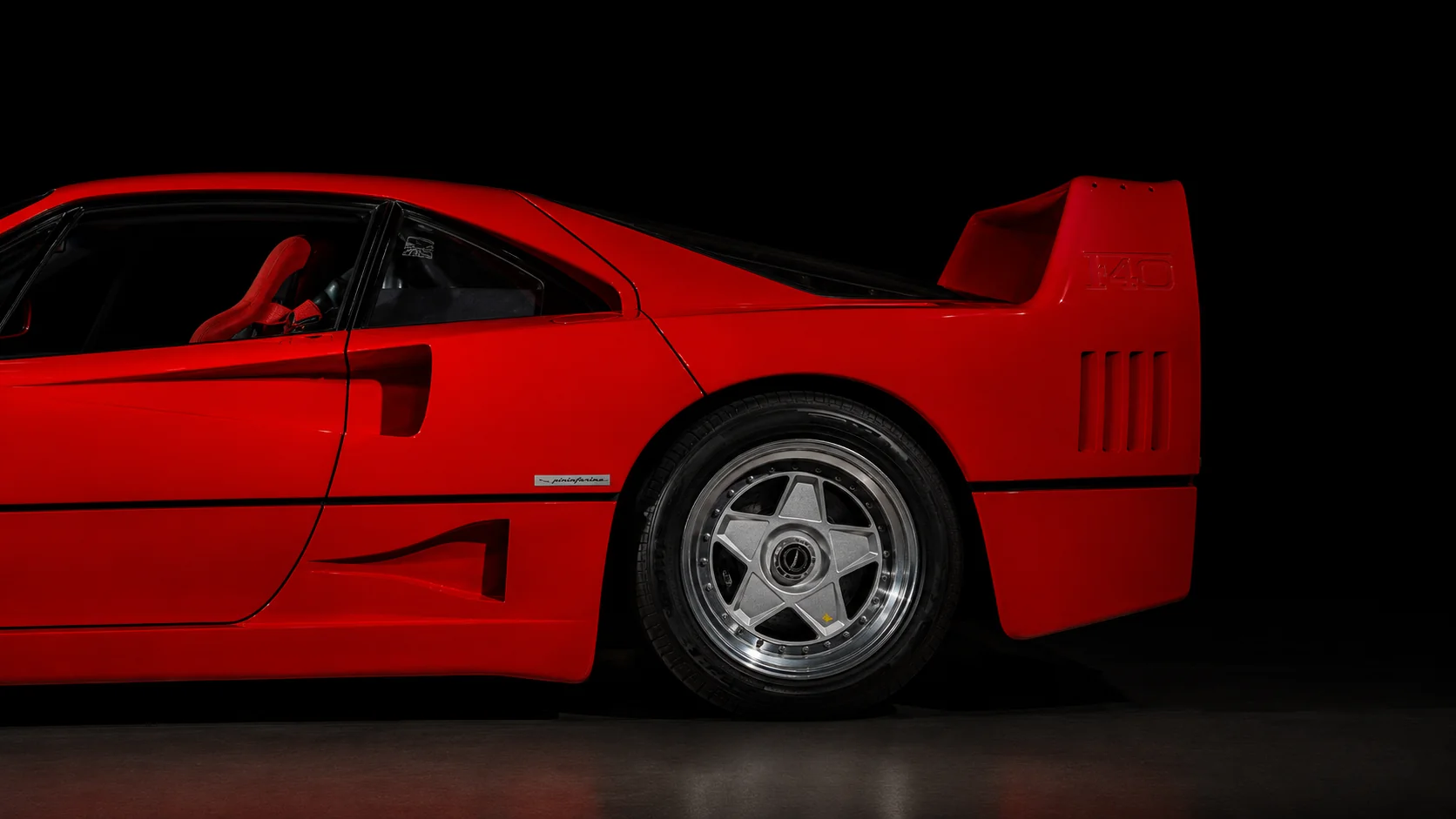
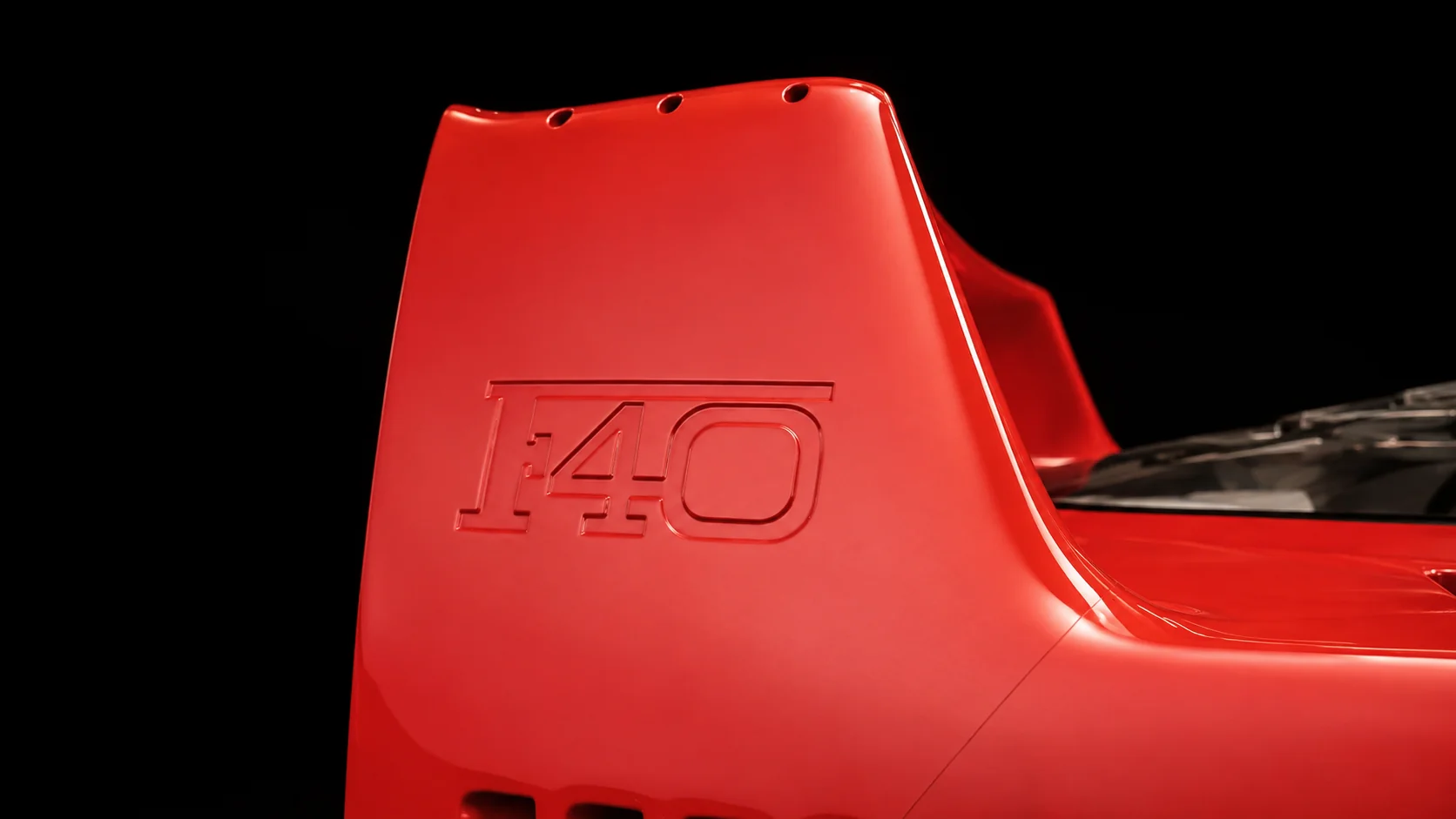
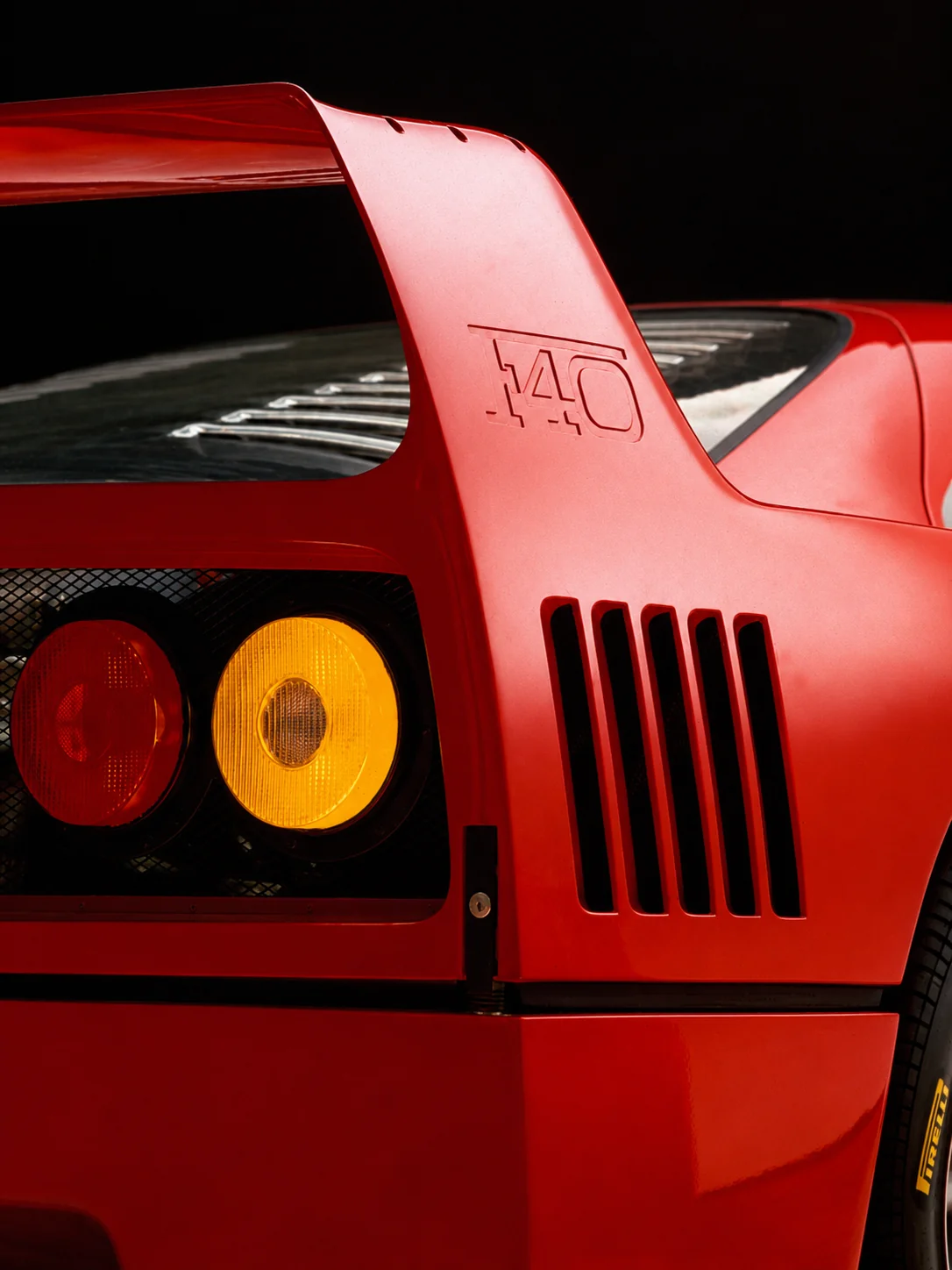
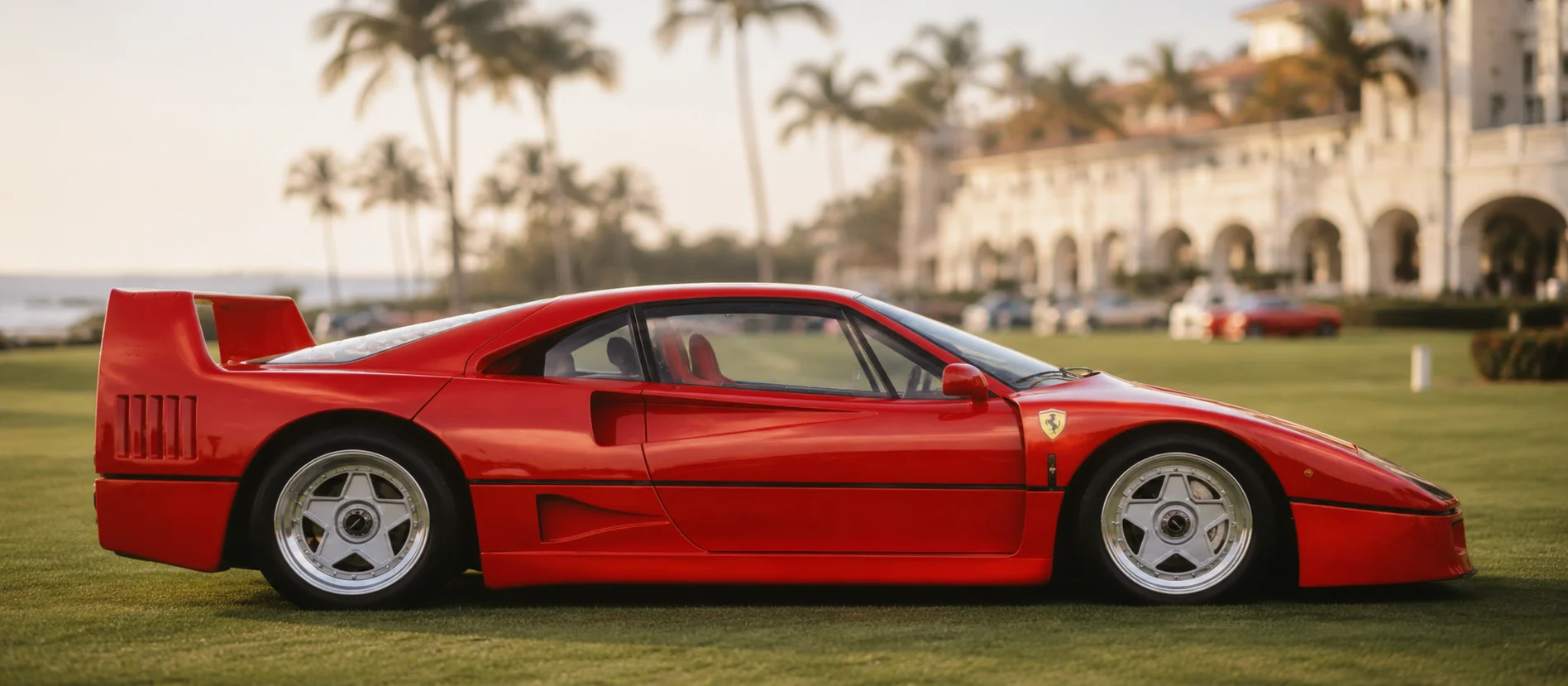
The F40 was never built to slip through the air. The wing is the part everyone remembers and the part that was never decoration: integral, full width, high mounted, there because a car this fast has to be pressed down onto its tyres. That it also became the silhouette of a decade was a consequence, not an intention.
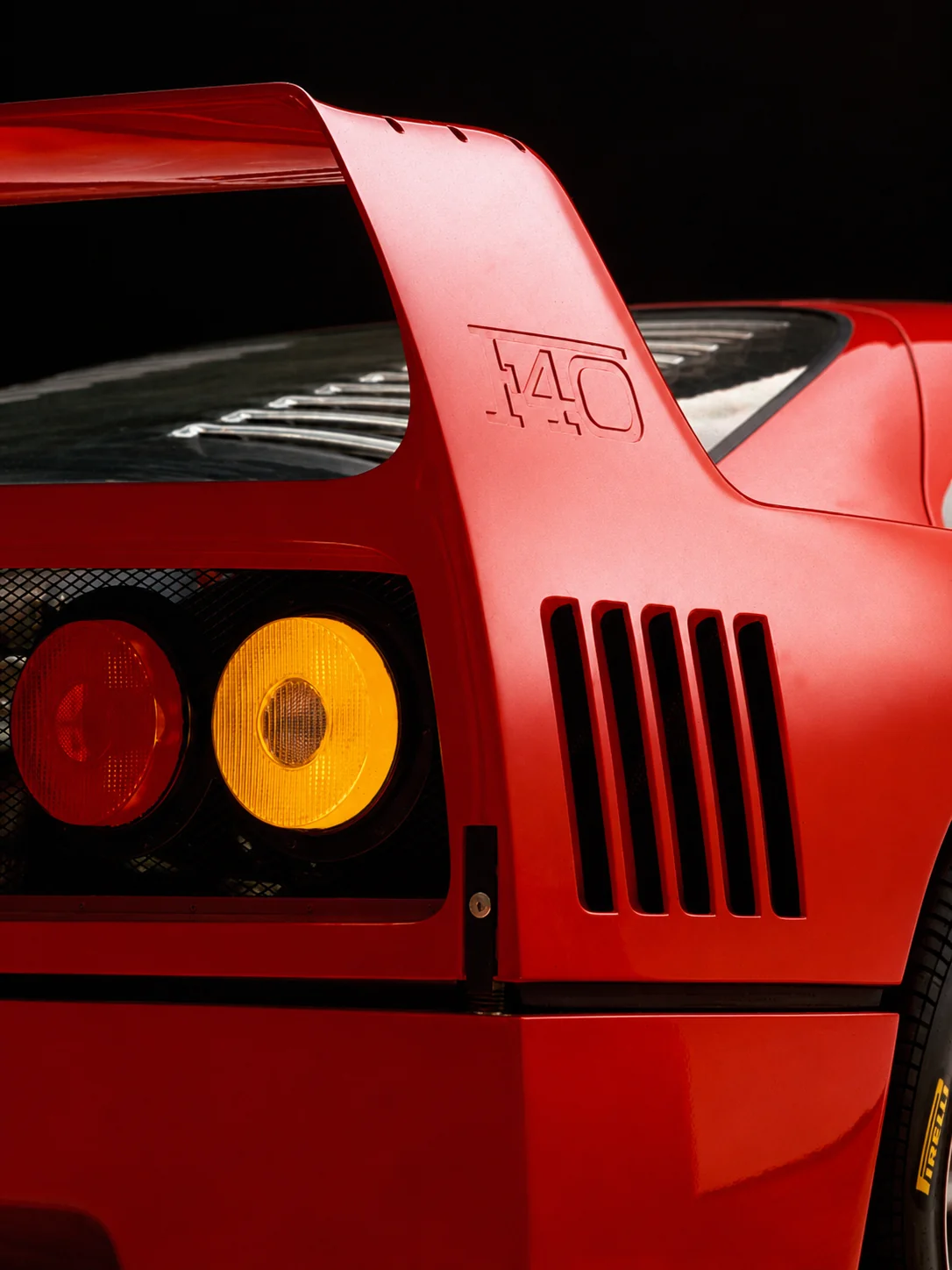
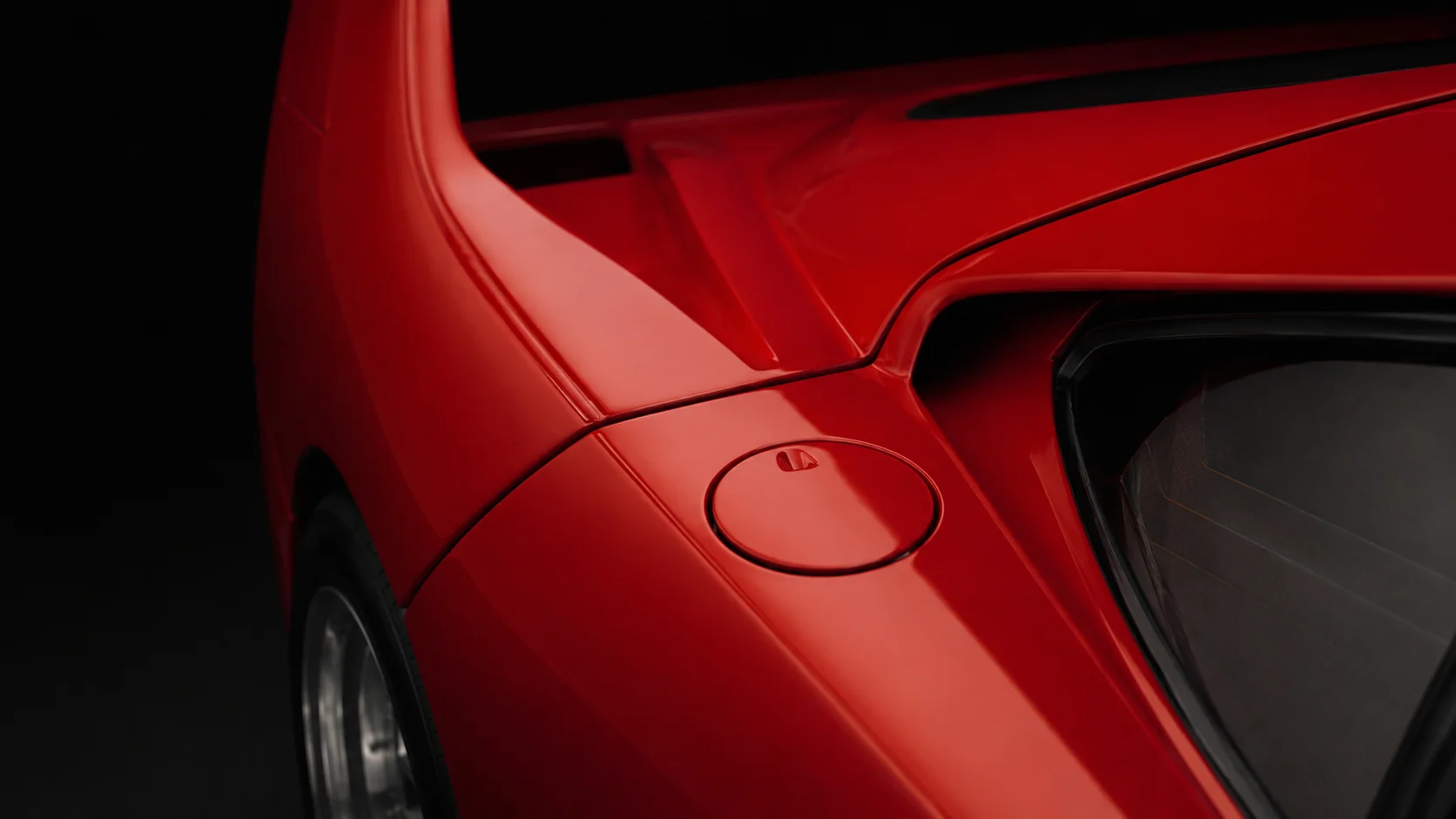
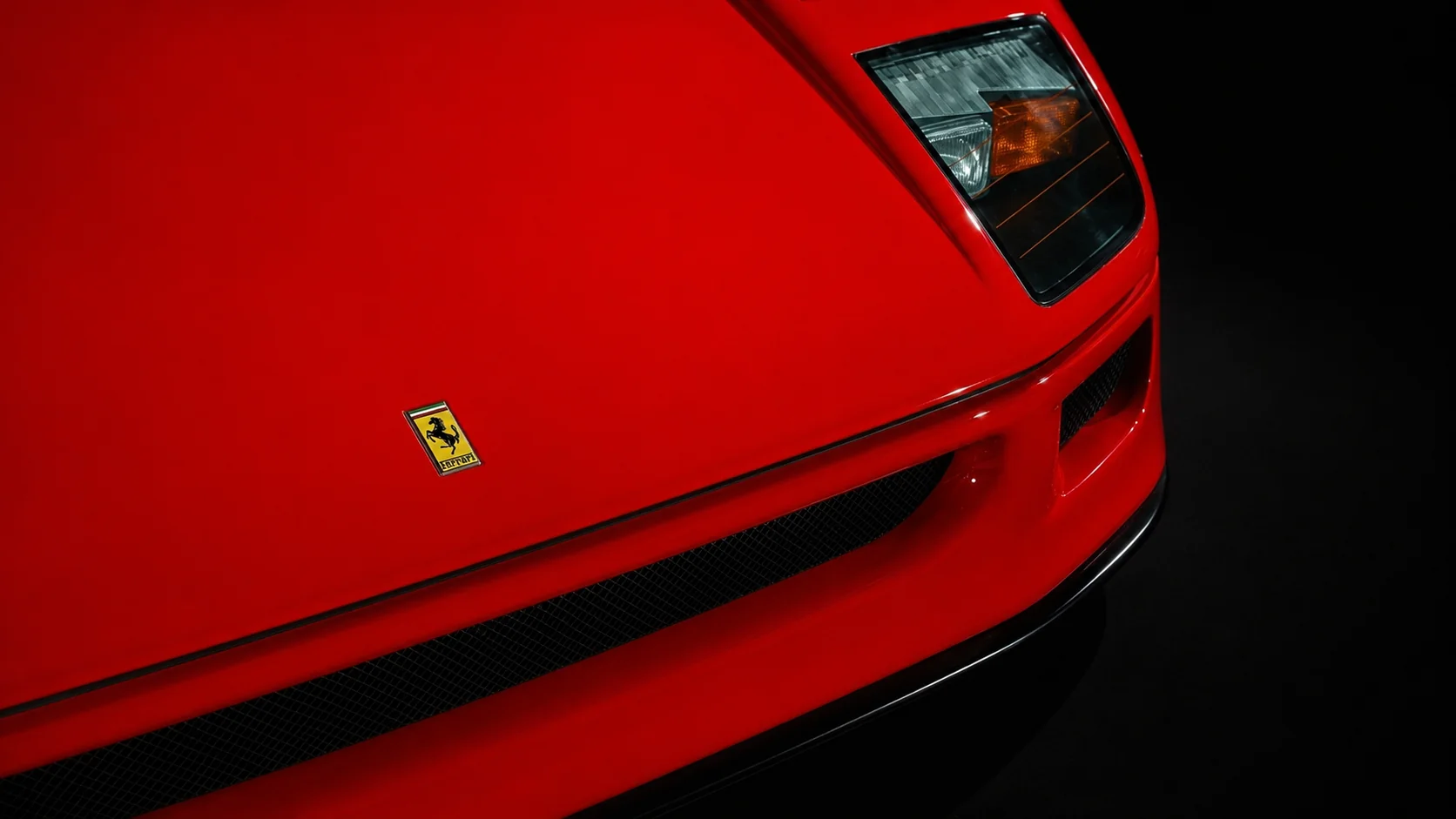
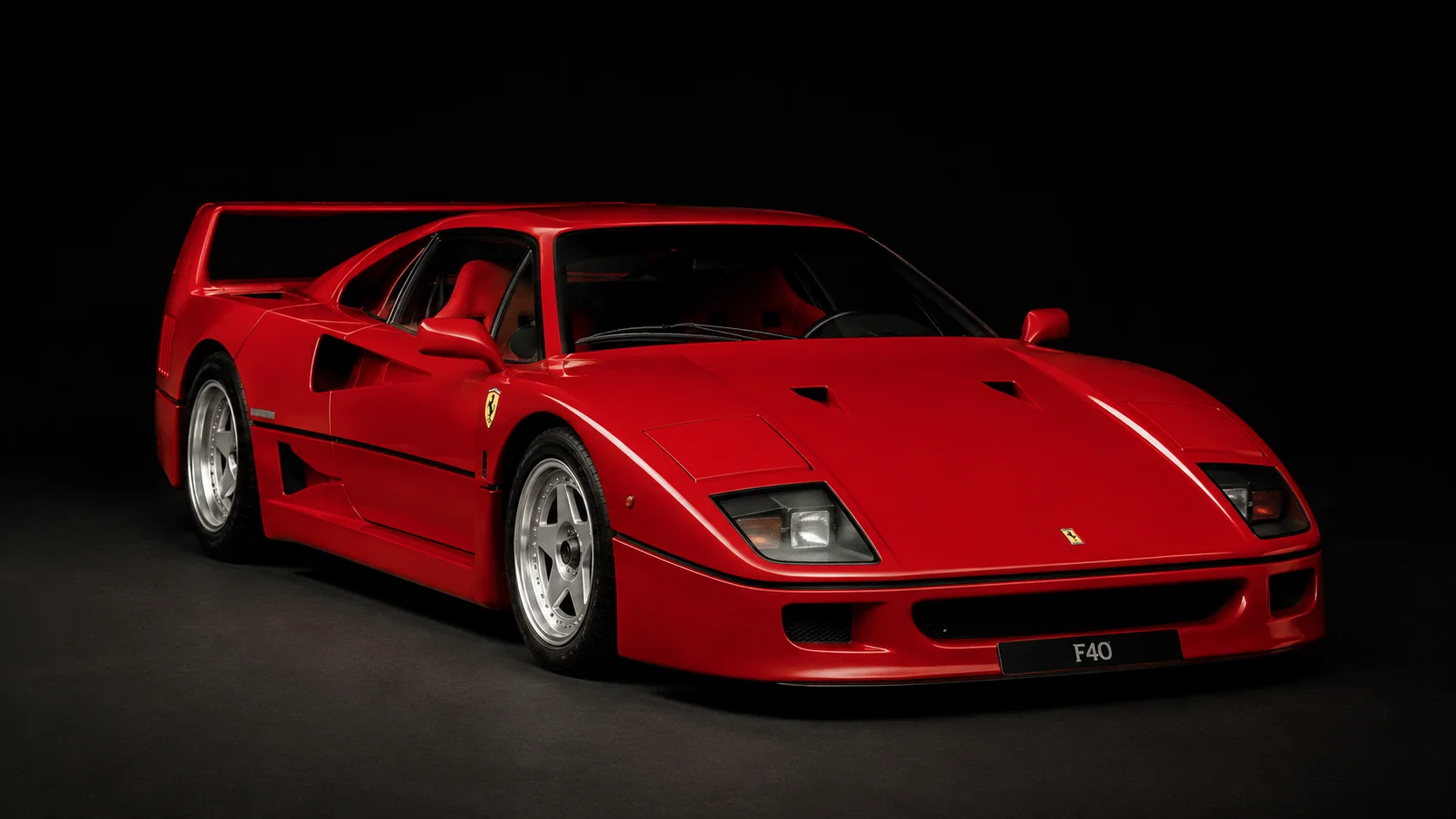
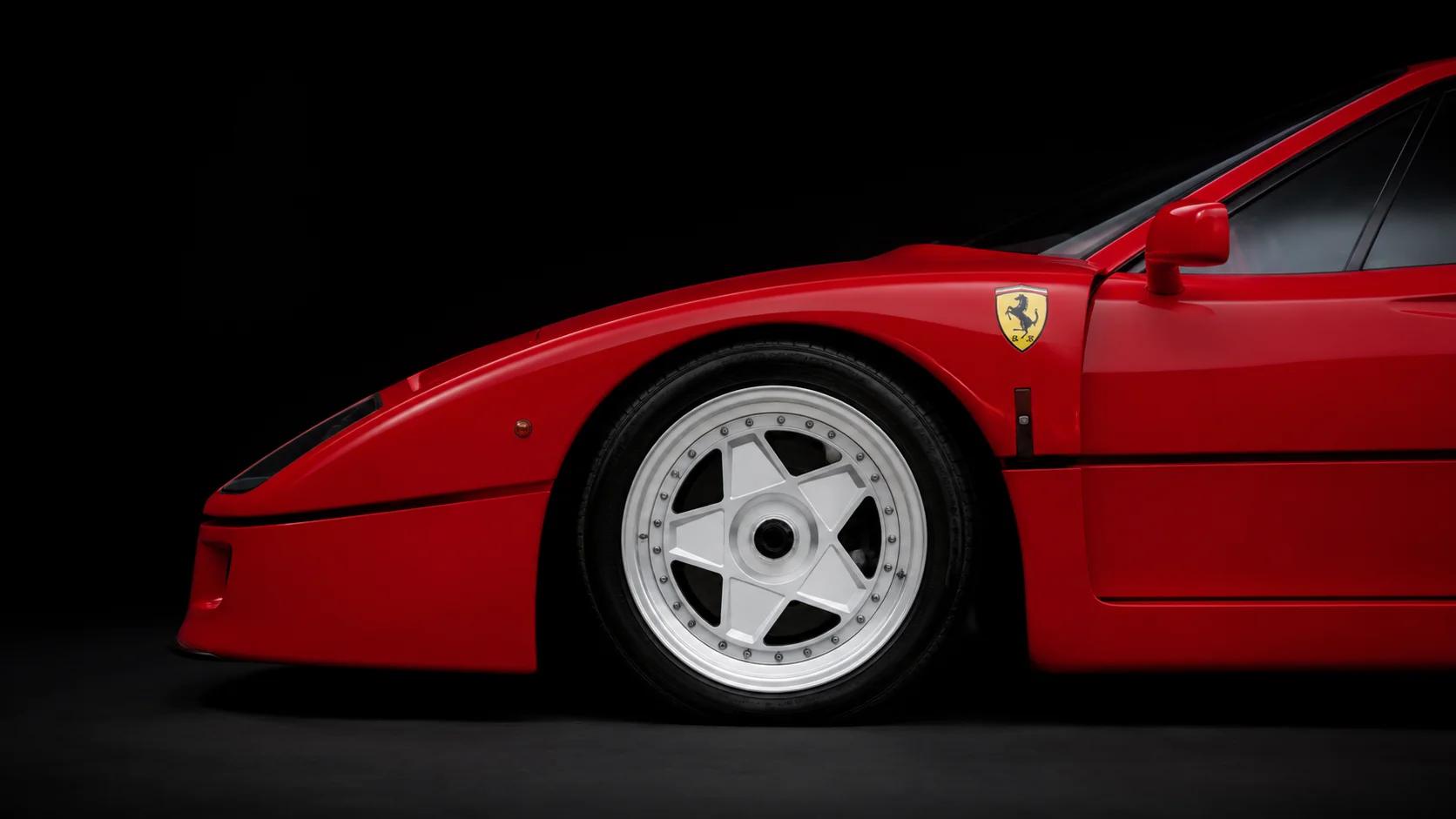
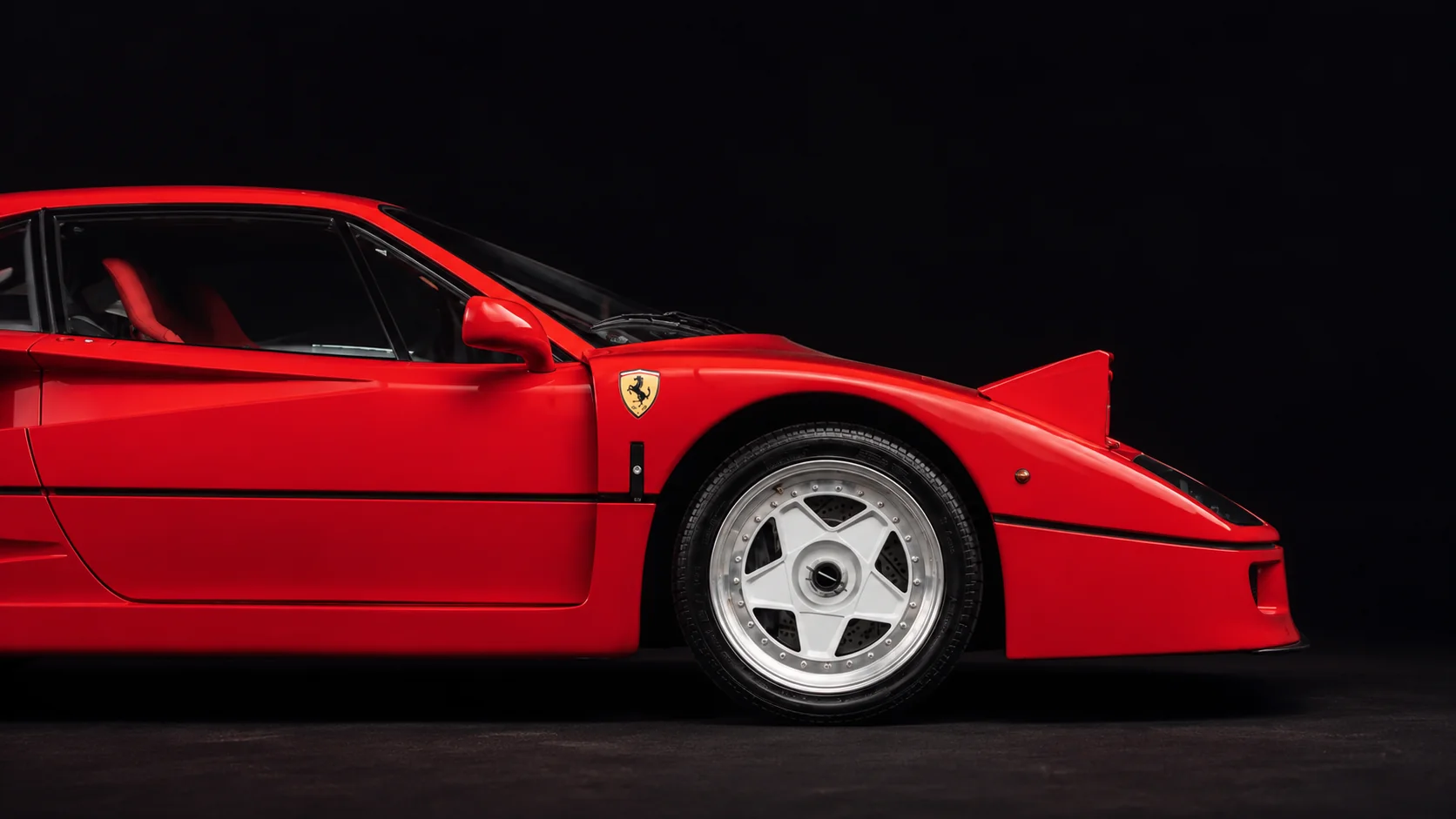
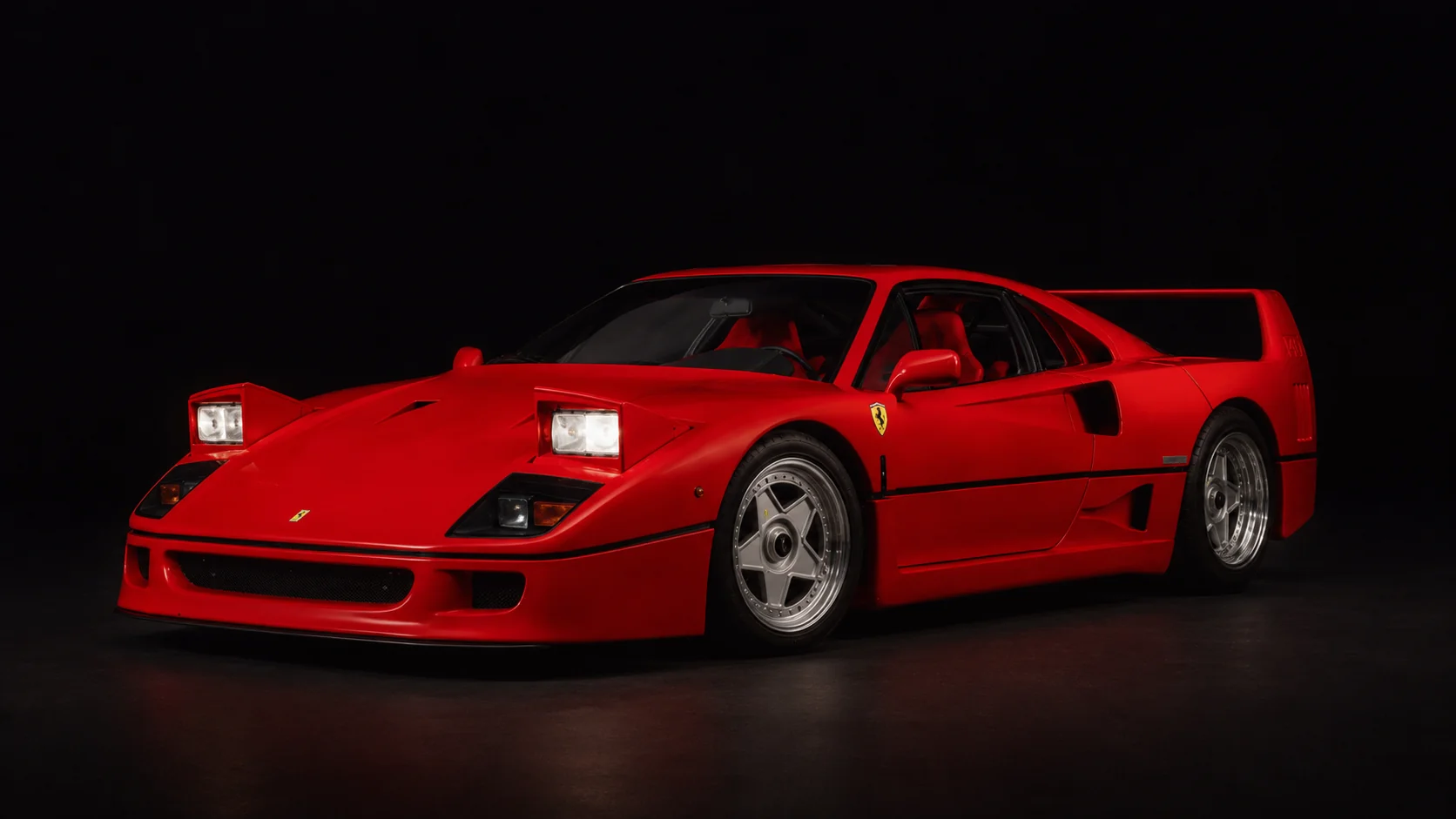
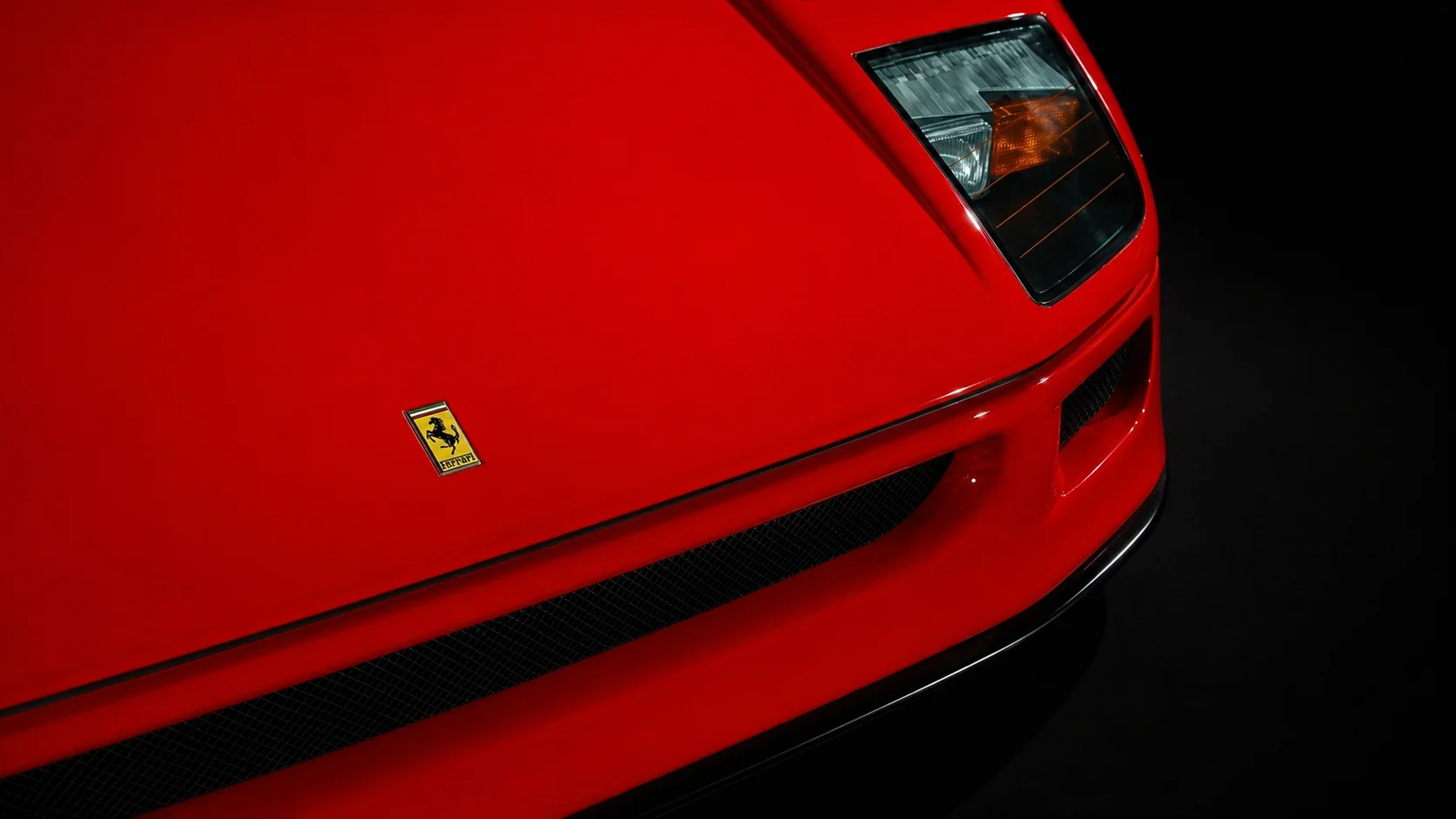
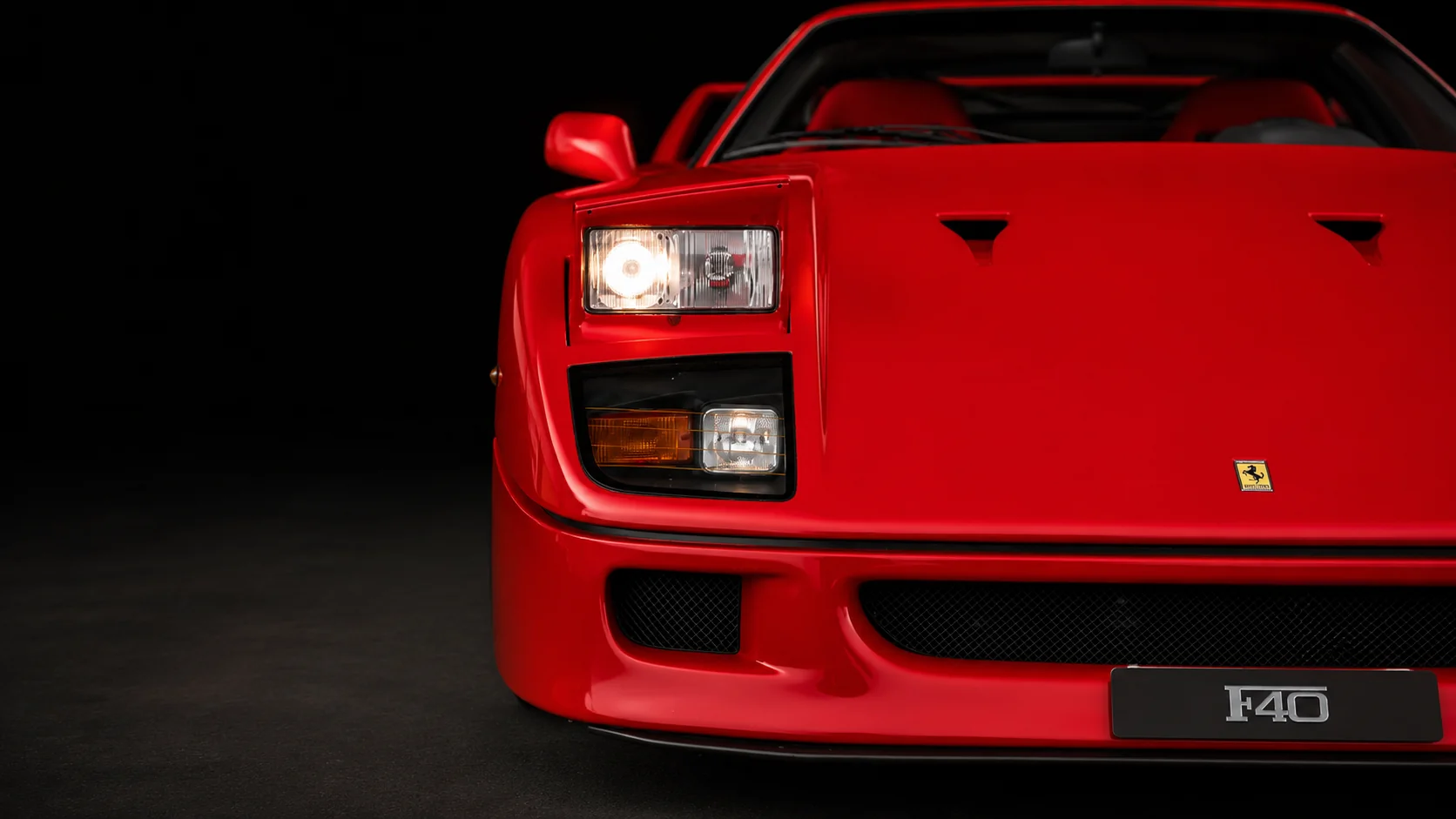
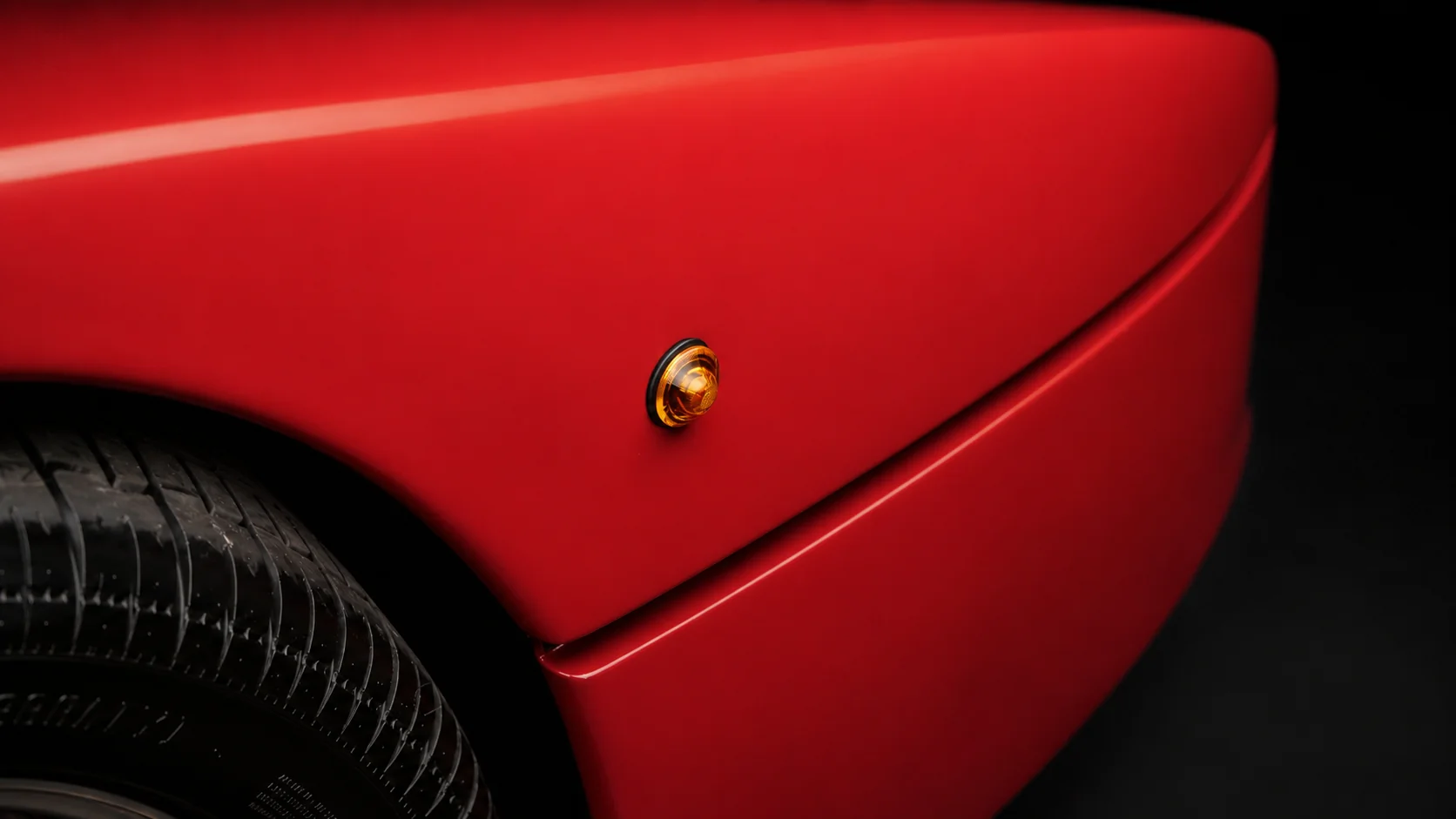
There was one colour on the order form. Every F40 built for series production left Maranello in red, and this car has never worn anything else.
You hear the turbochargers before you hear the engine. Both arrive later than you expect.
Hear the V8
2.9L Twin-Turbo · 478 hp · 7,000 rpm
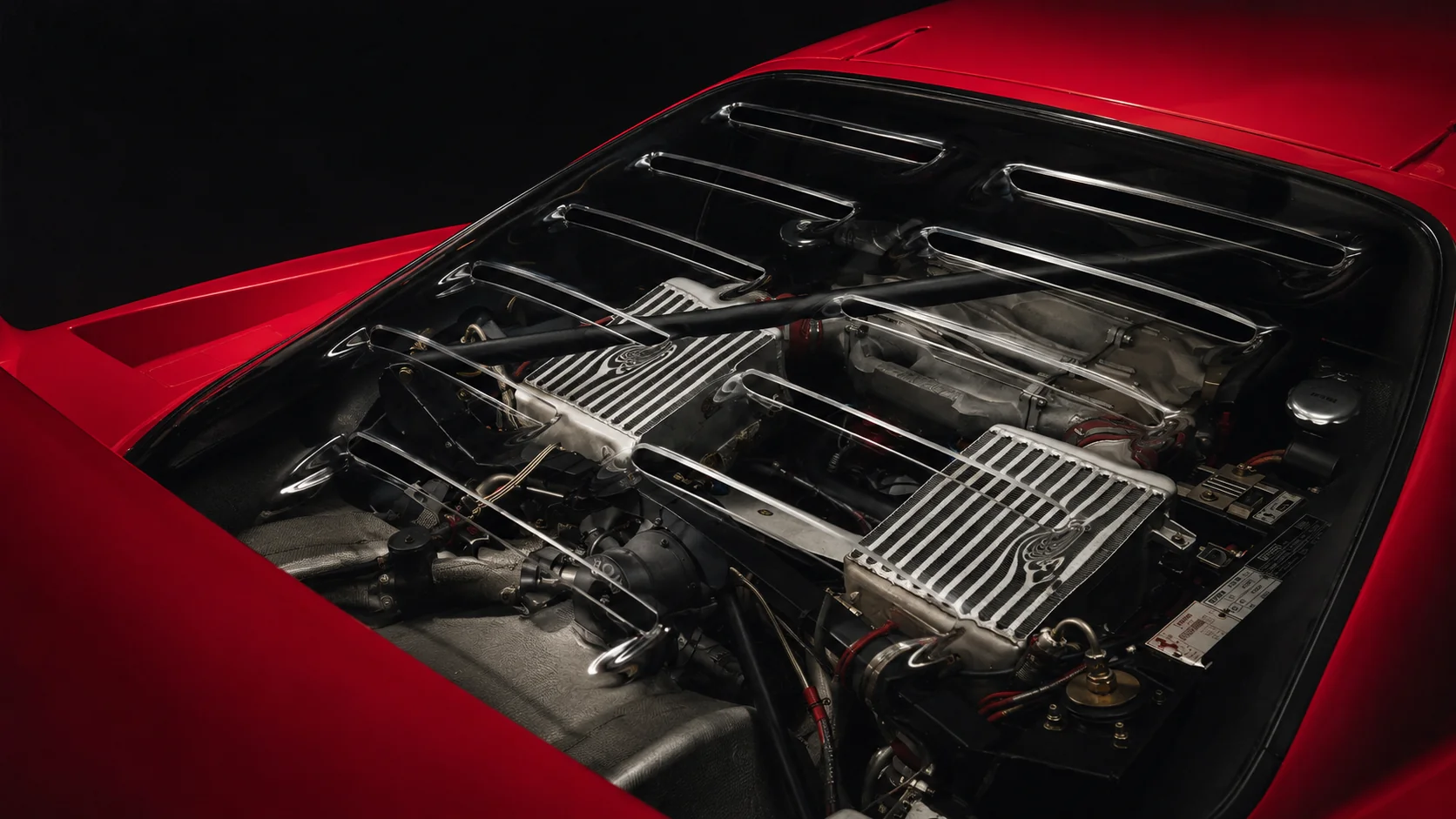
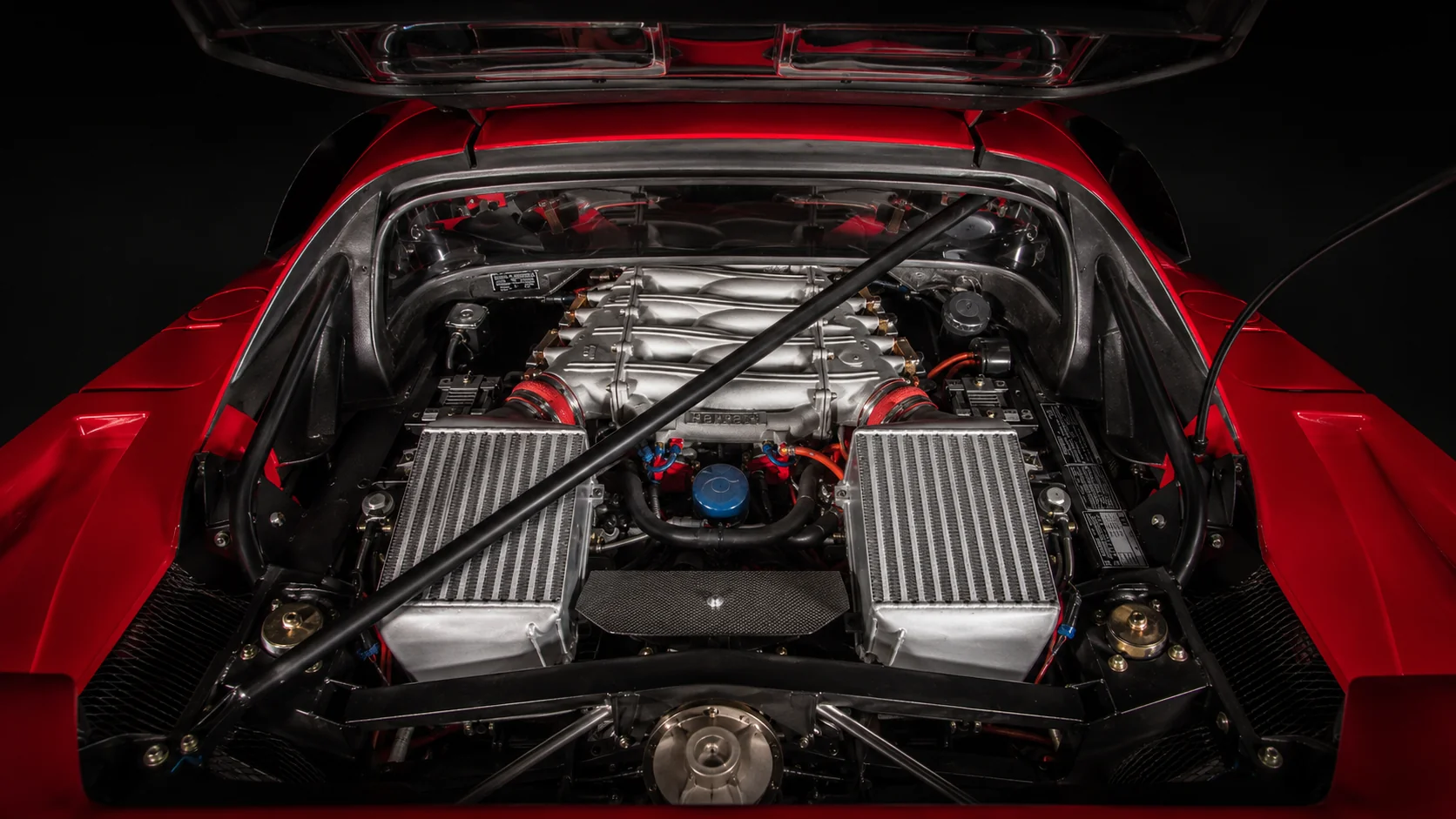
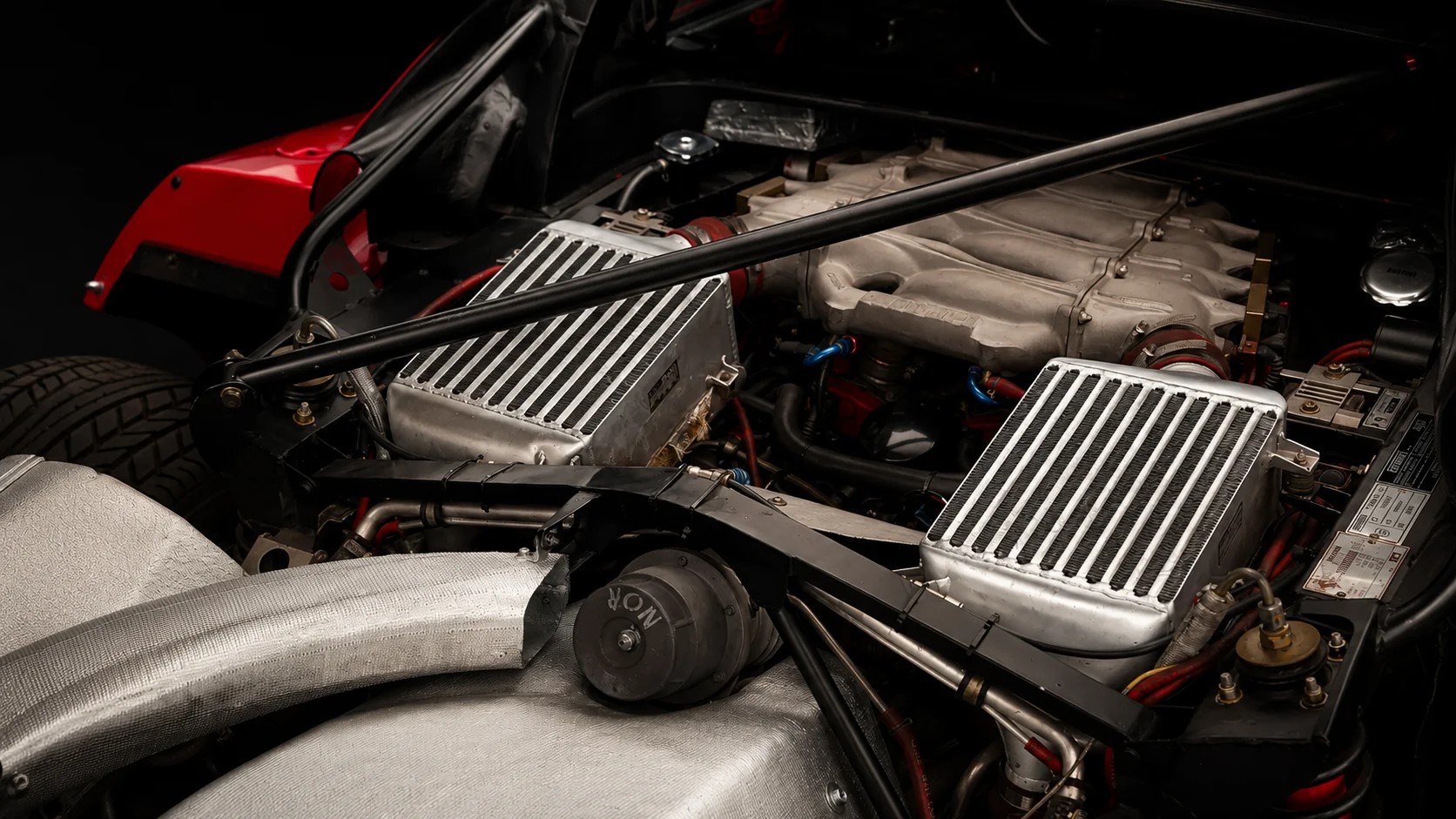
Almost every great Ferrari before this one used a V12. The F40 does not. It carries a 2.9 litre V8, enlarged from the 288 GTO, mounted longitudinally behind the cabin and boosted hard by a pair of water-cooled turbochargers.
Below three thousand revolutions it is mild, almost apologetic, and gives away nothing of what it is holding back. Then the boost arrives, all of it, inside a few hundred revolutions. The car does not build speed so much as change state. Nothing about the delivery is progressive and nothing about it was meant to be.
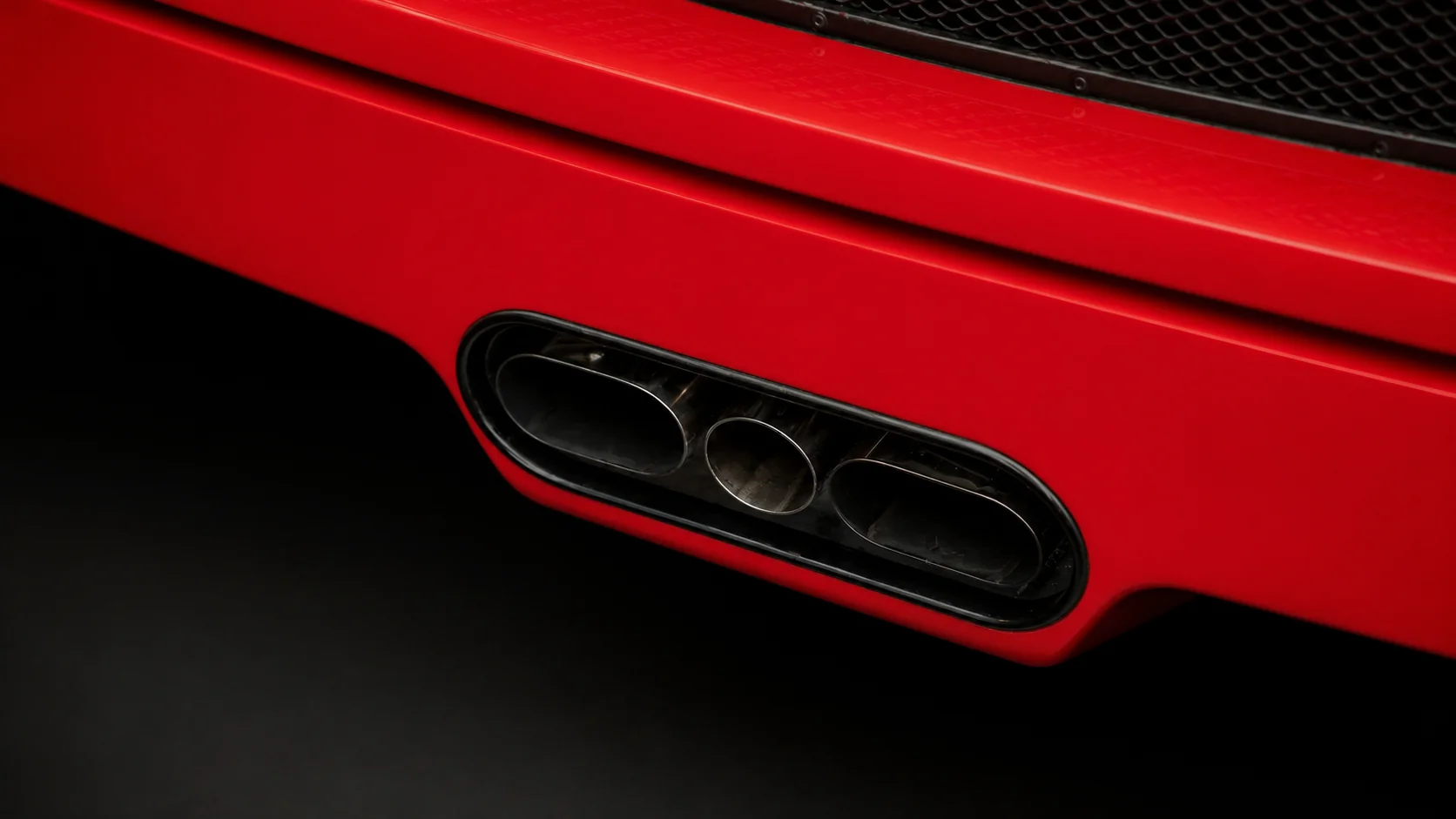
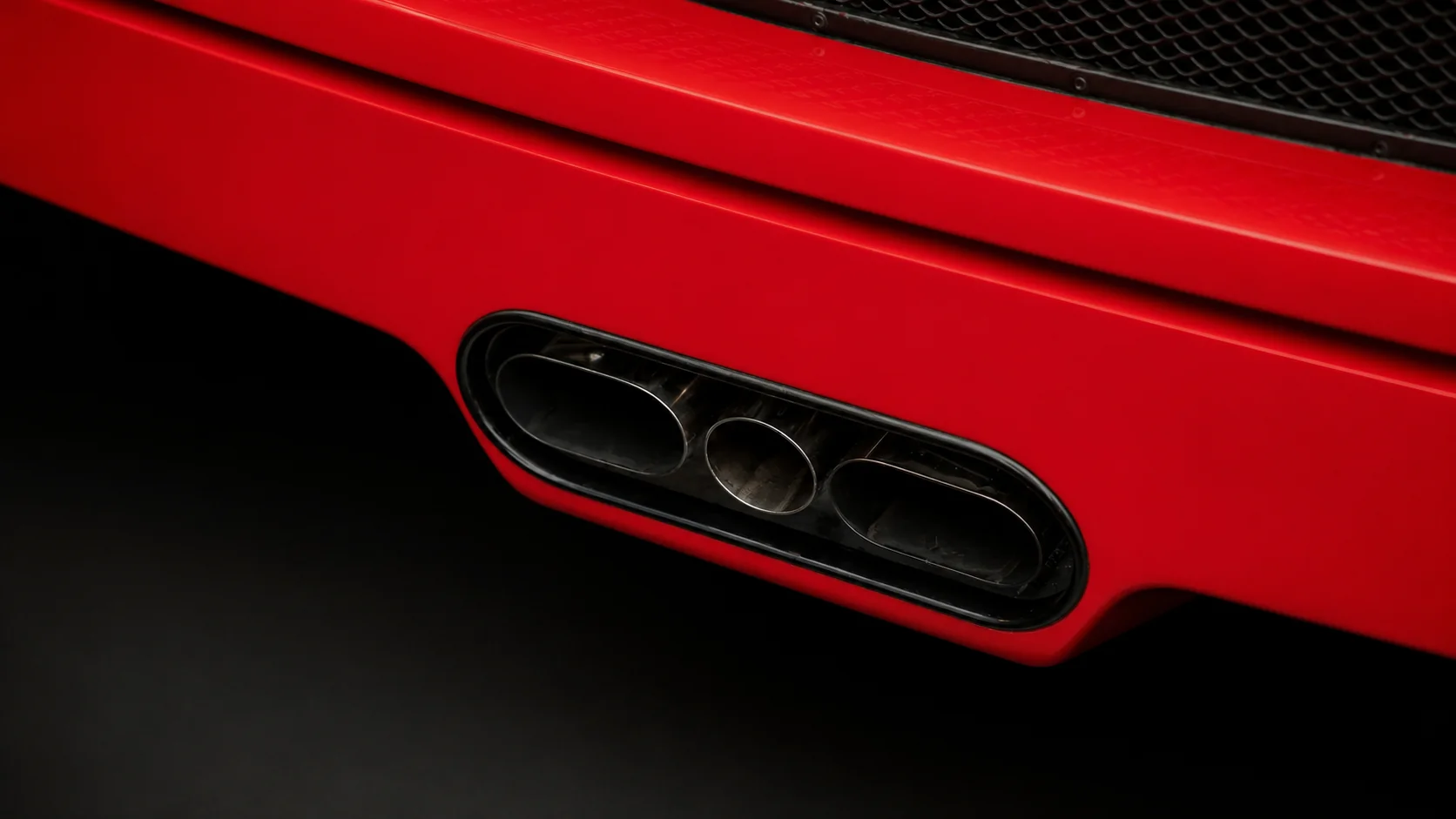
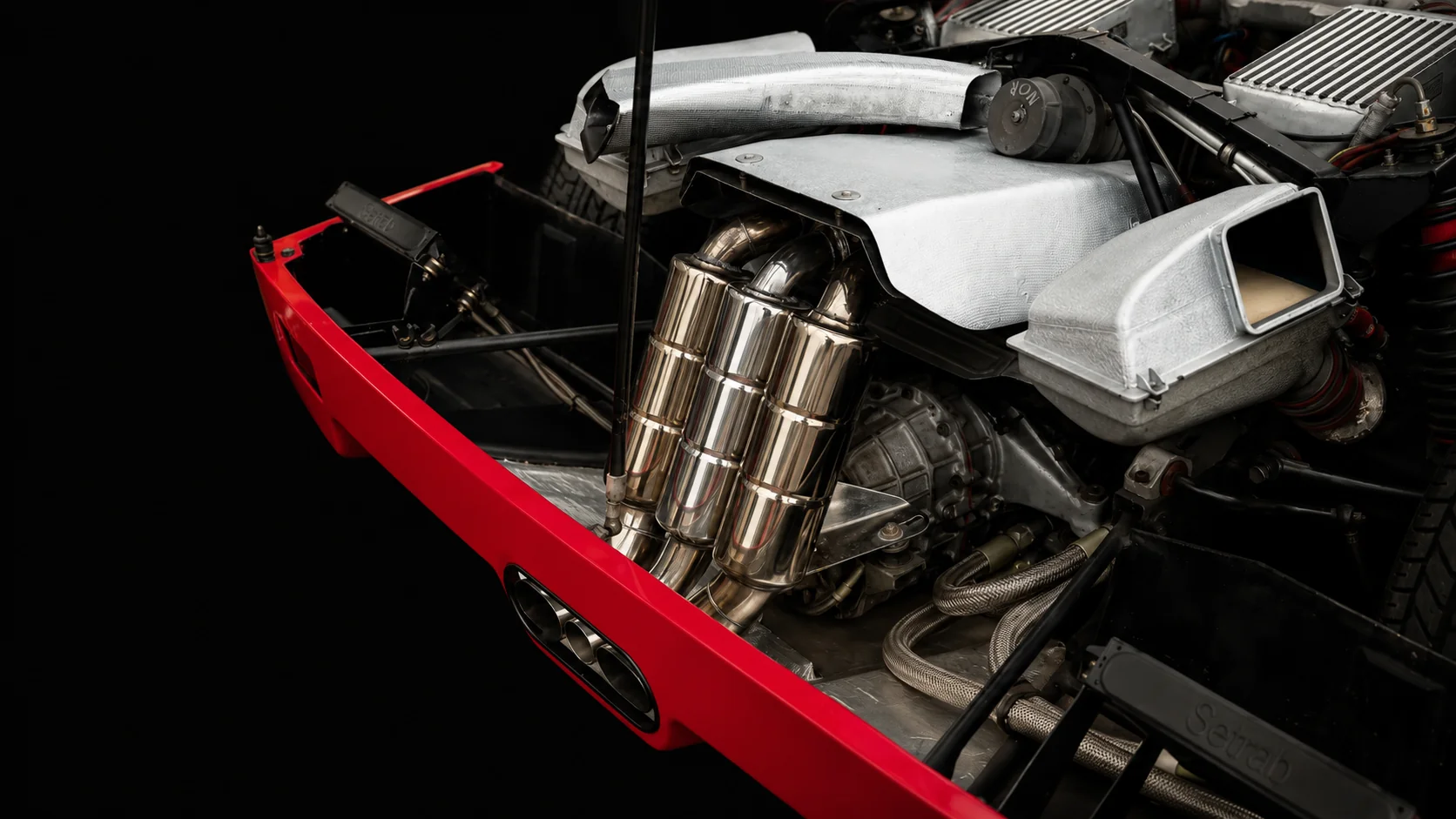
The published output was a decision rather than a limit. The same architecture, barely altered, produced well over 700 hp in the LM cars campaigned later in the decade. Three pipes leave the tail: the outer pair from the cylinder banks, the centre from the wastegate.
It was the last turbocharged engine Ferrari built for the road until the California T of 2014, twenty-two years after this car left Maranello.
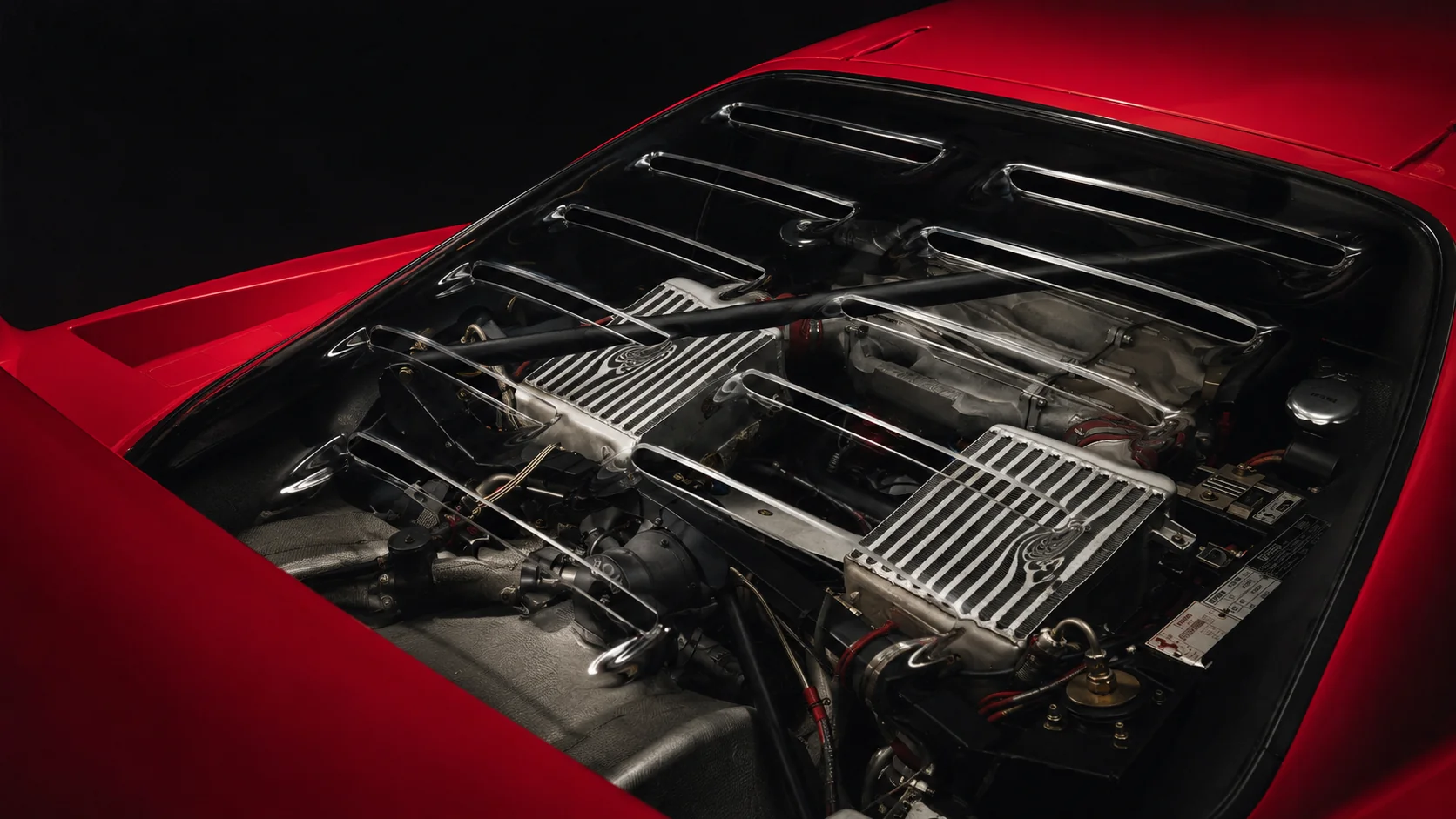
Twin IHIThe turbos double the air the V8 breathes. Everything else about the car exists to survive it.
From the outside you cannot see in. That is the last thing this car makes easy.
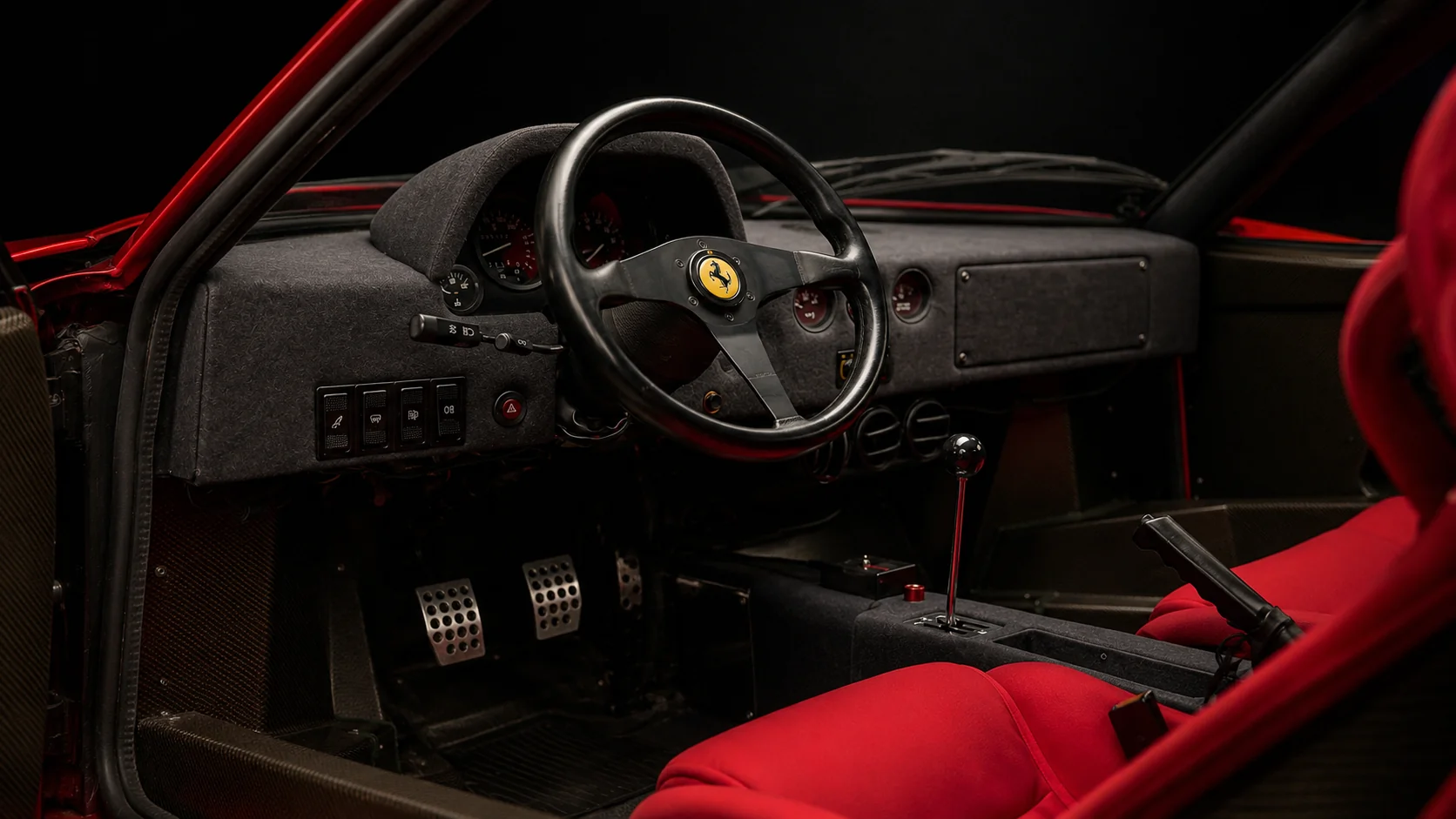
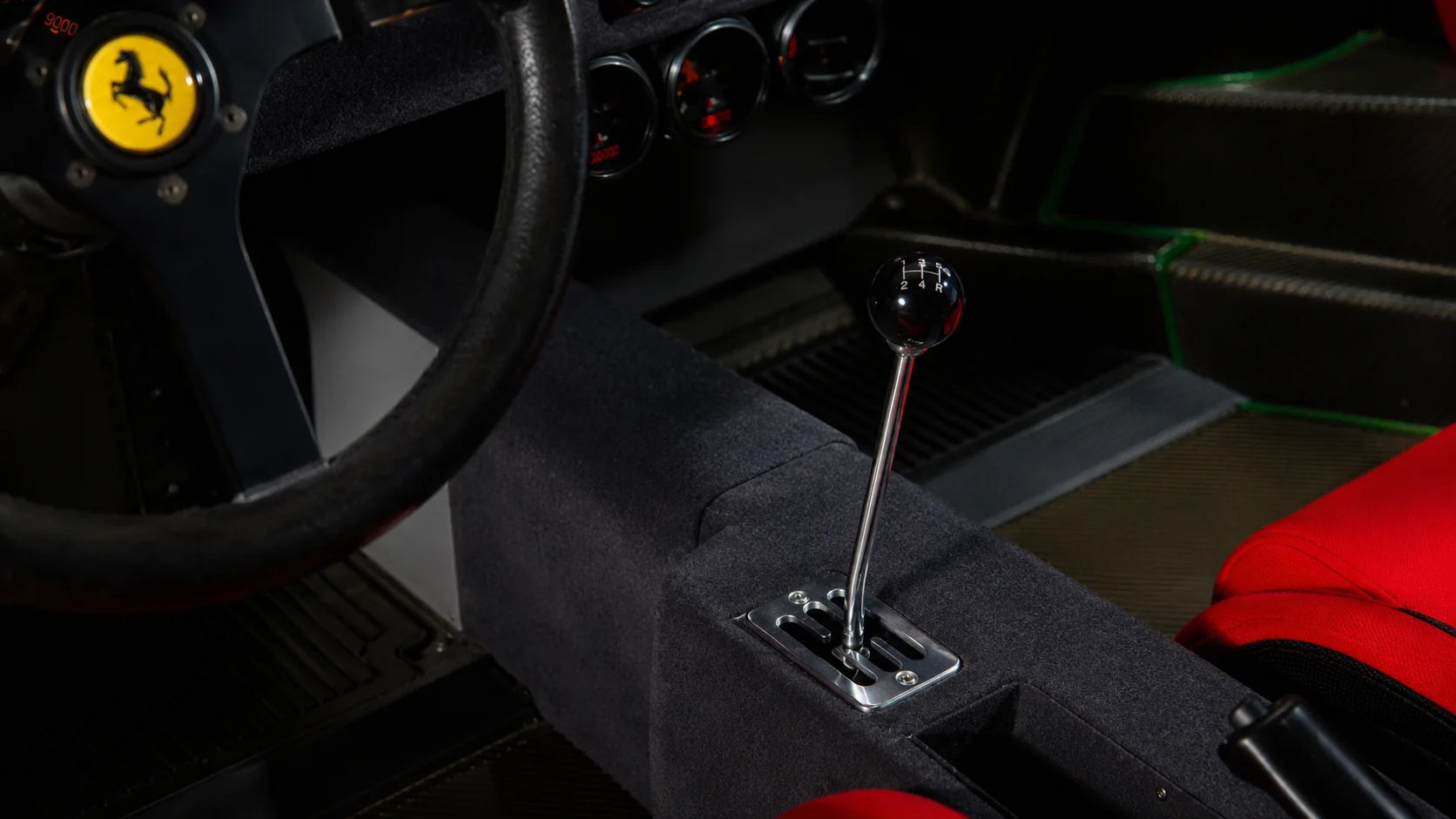
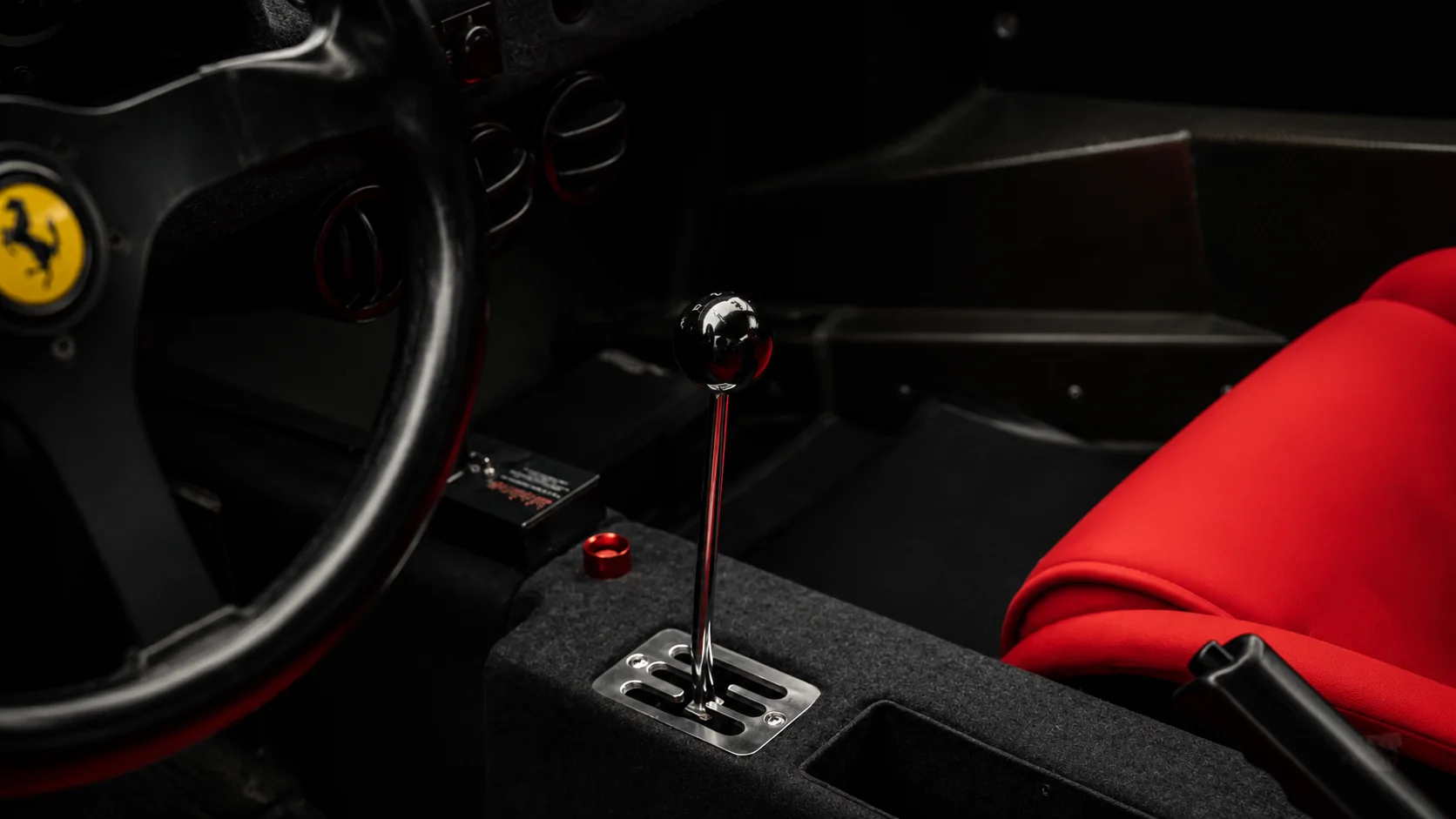
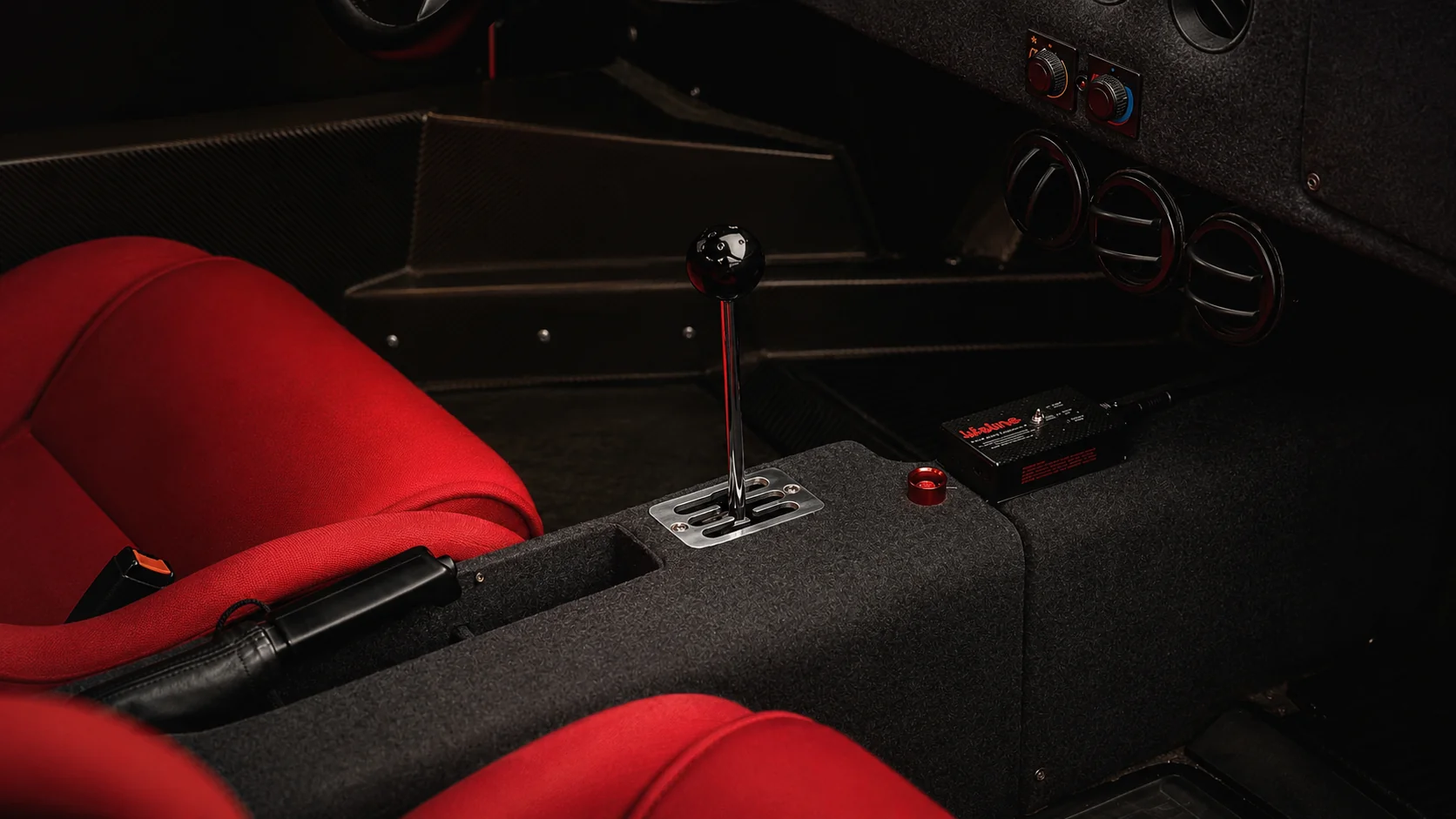
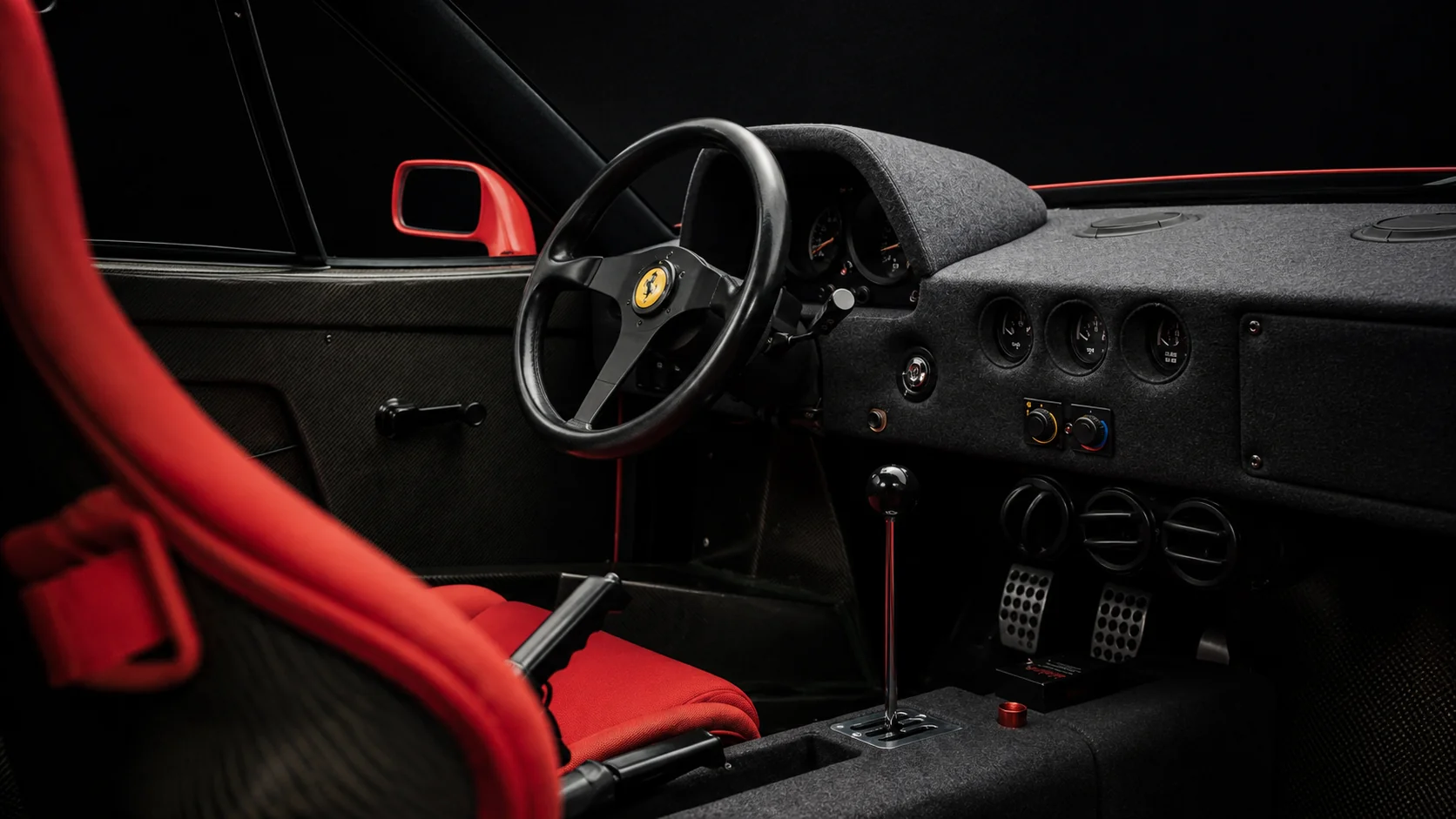
The GateFive speeds, an open metal gate, and a shift that is heard as much as felt.
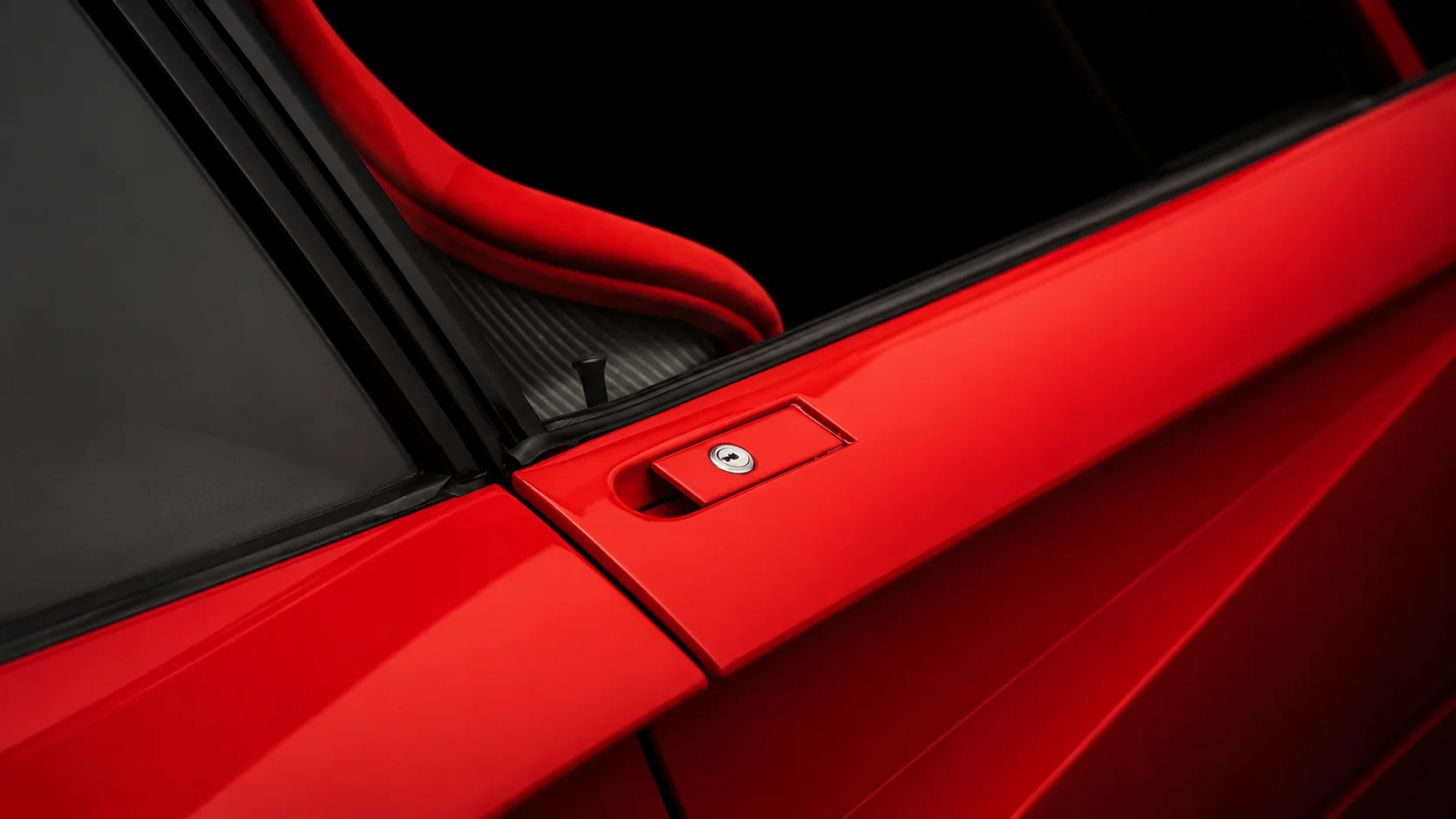
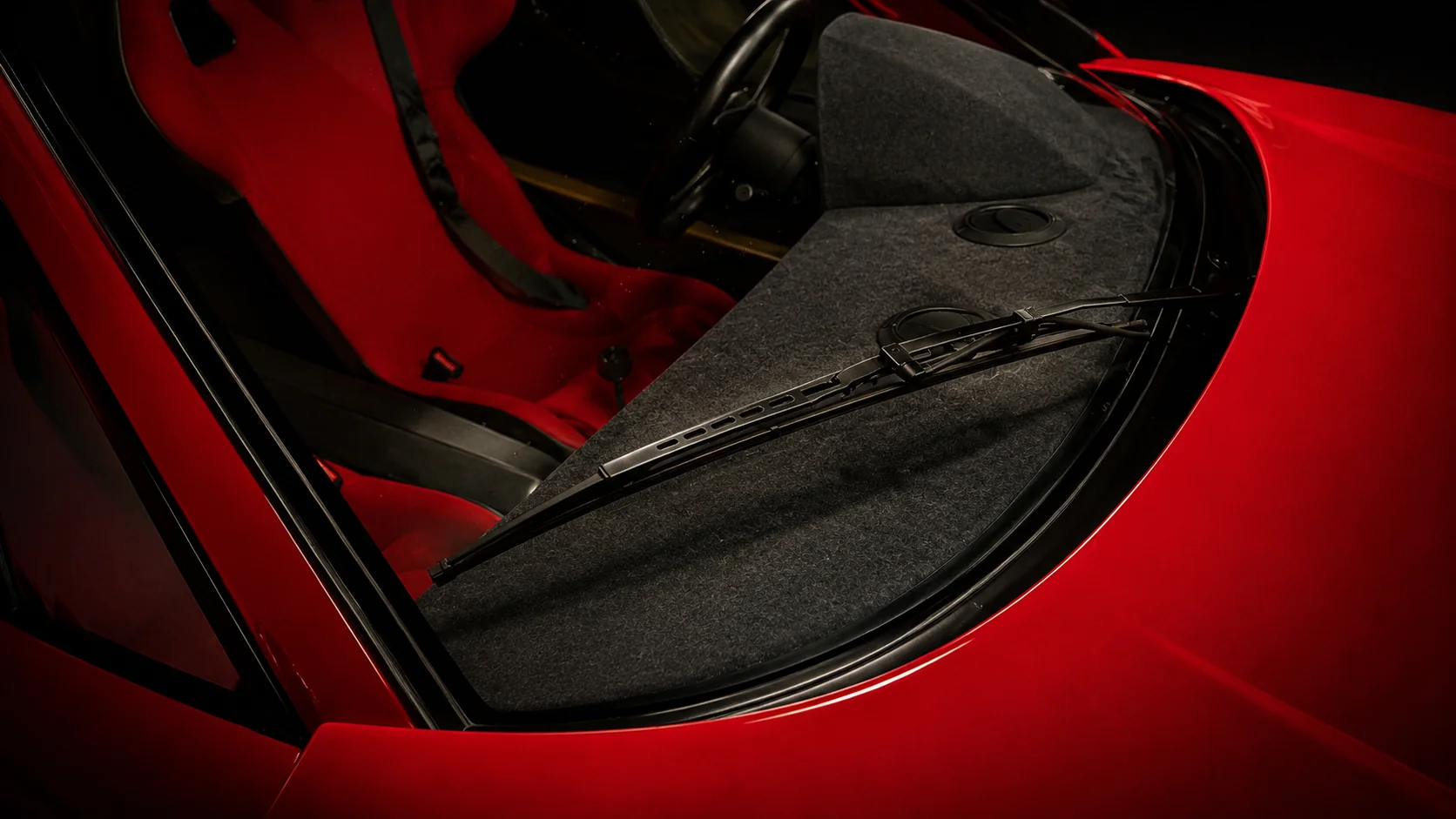
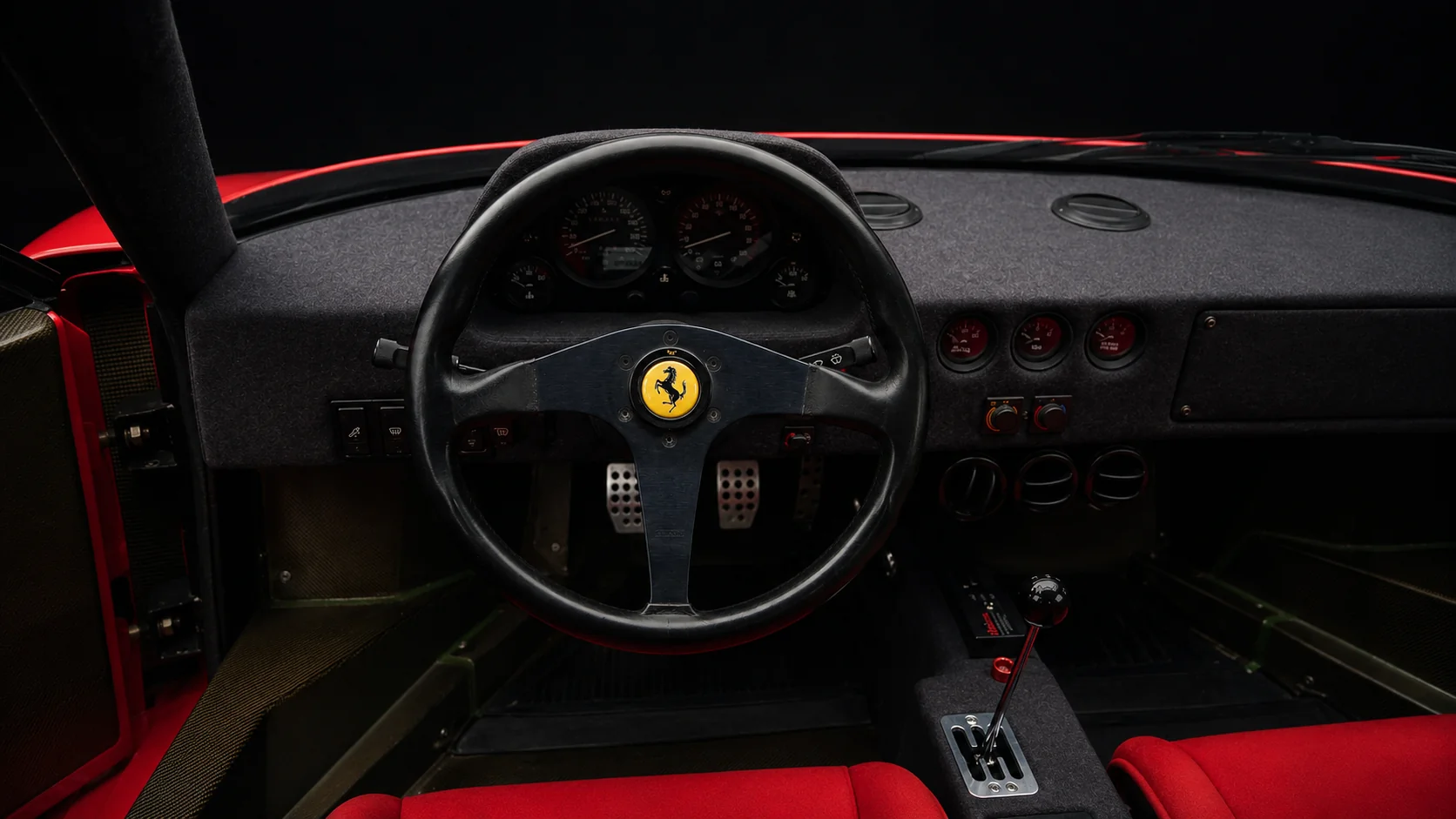
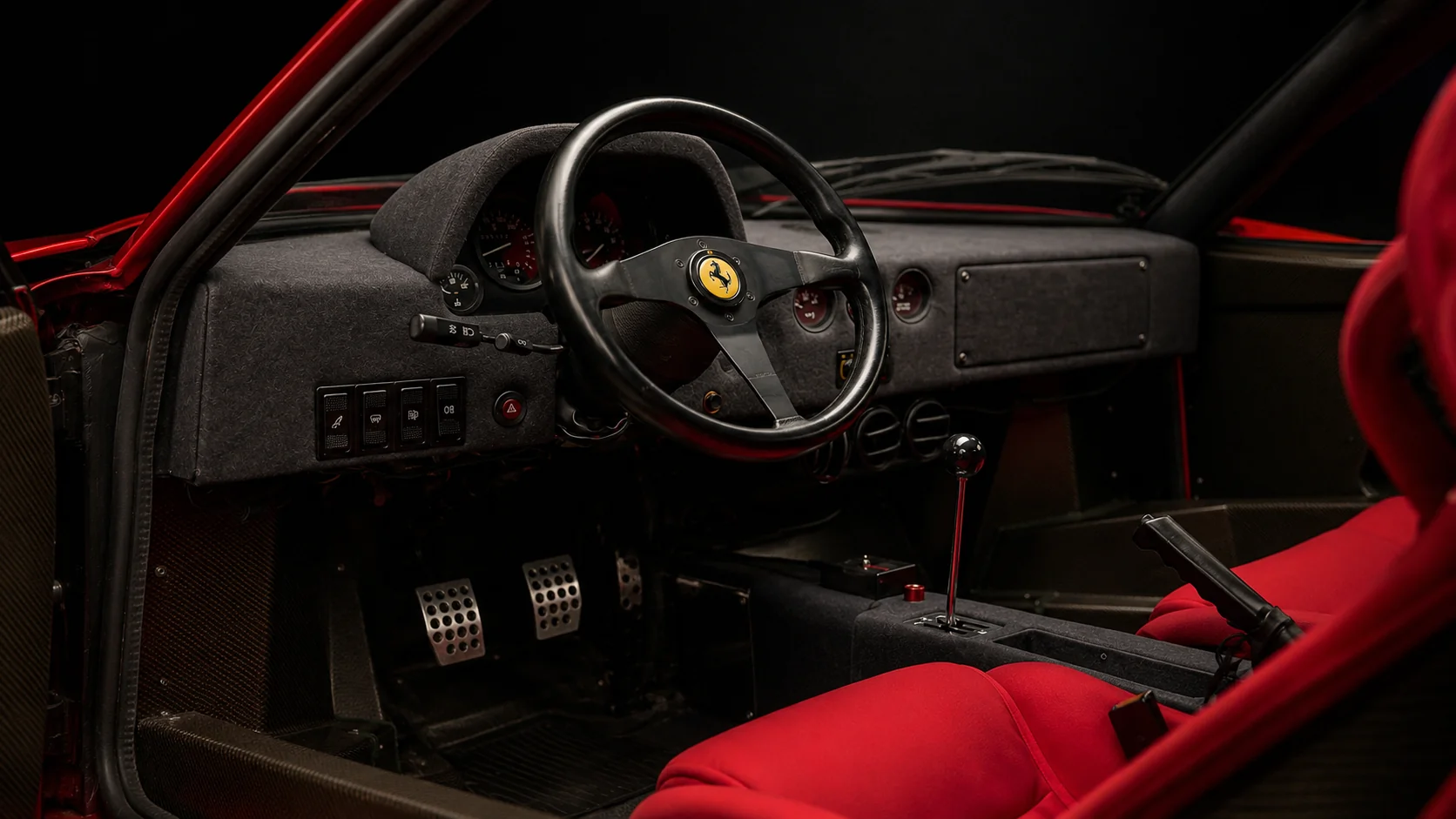
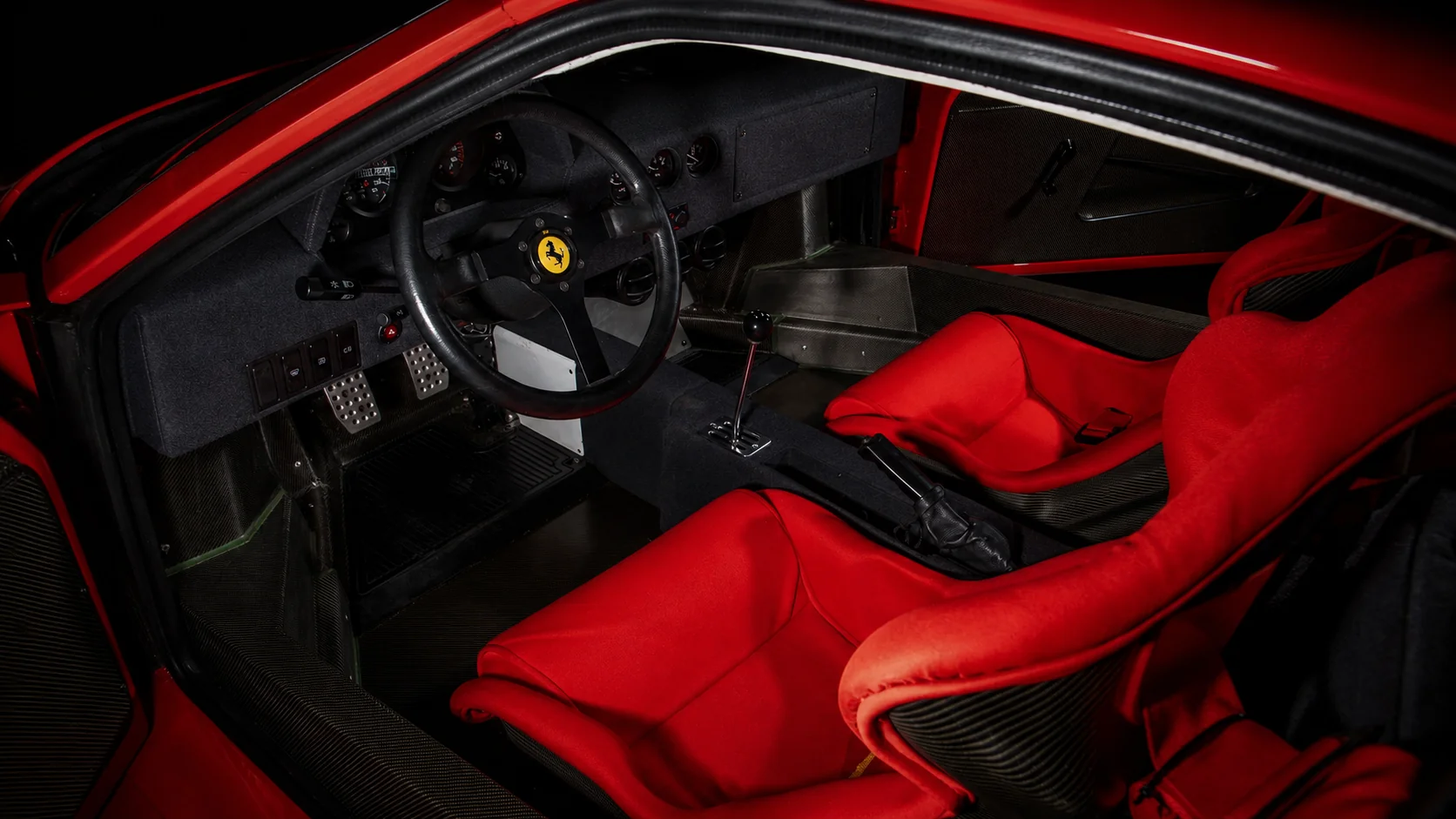
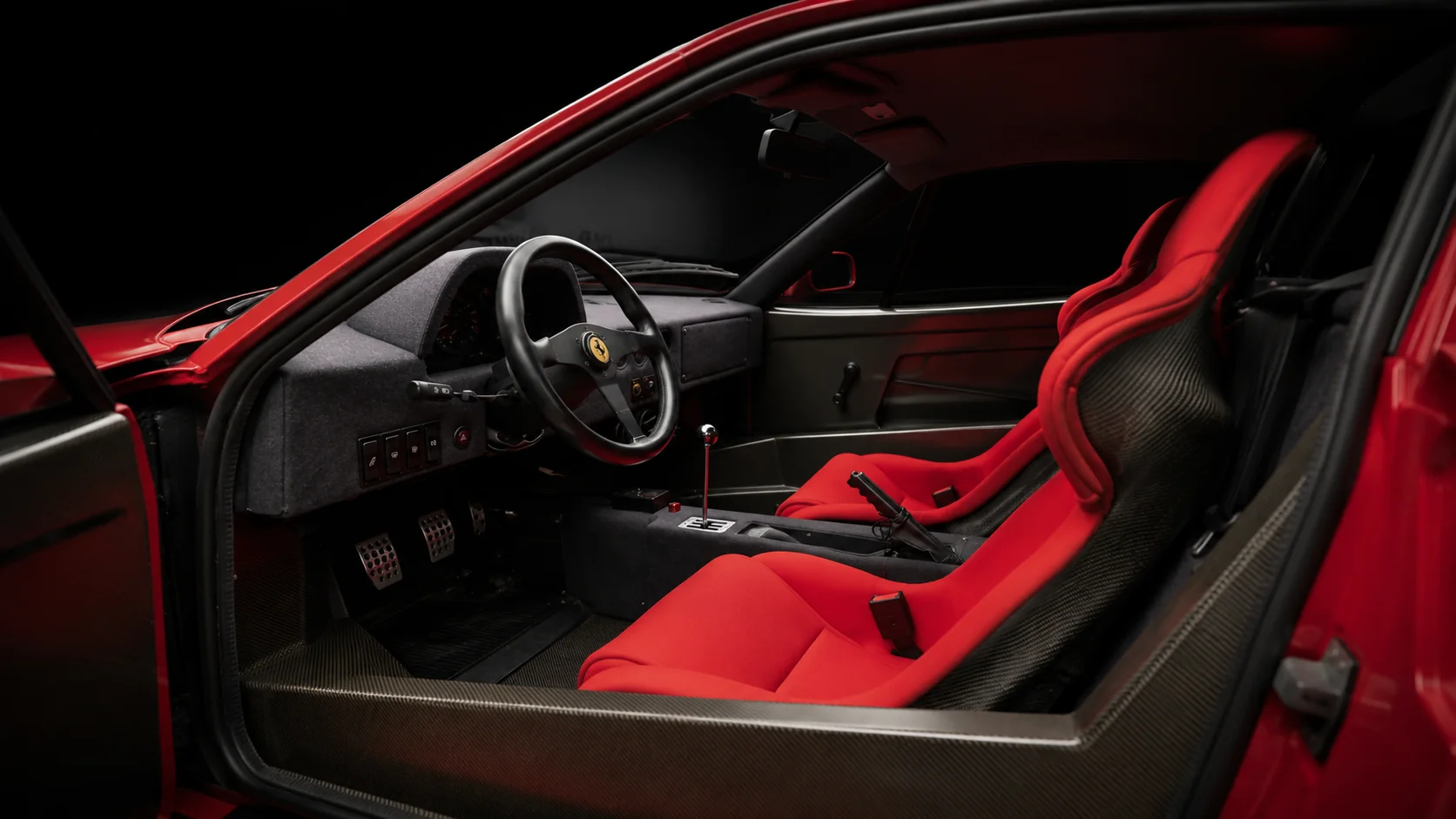
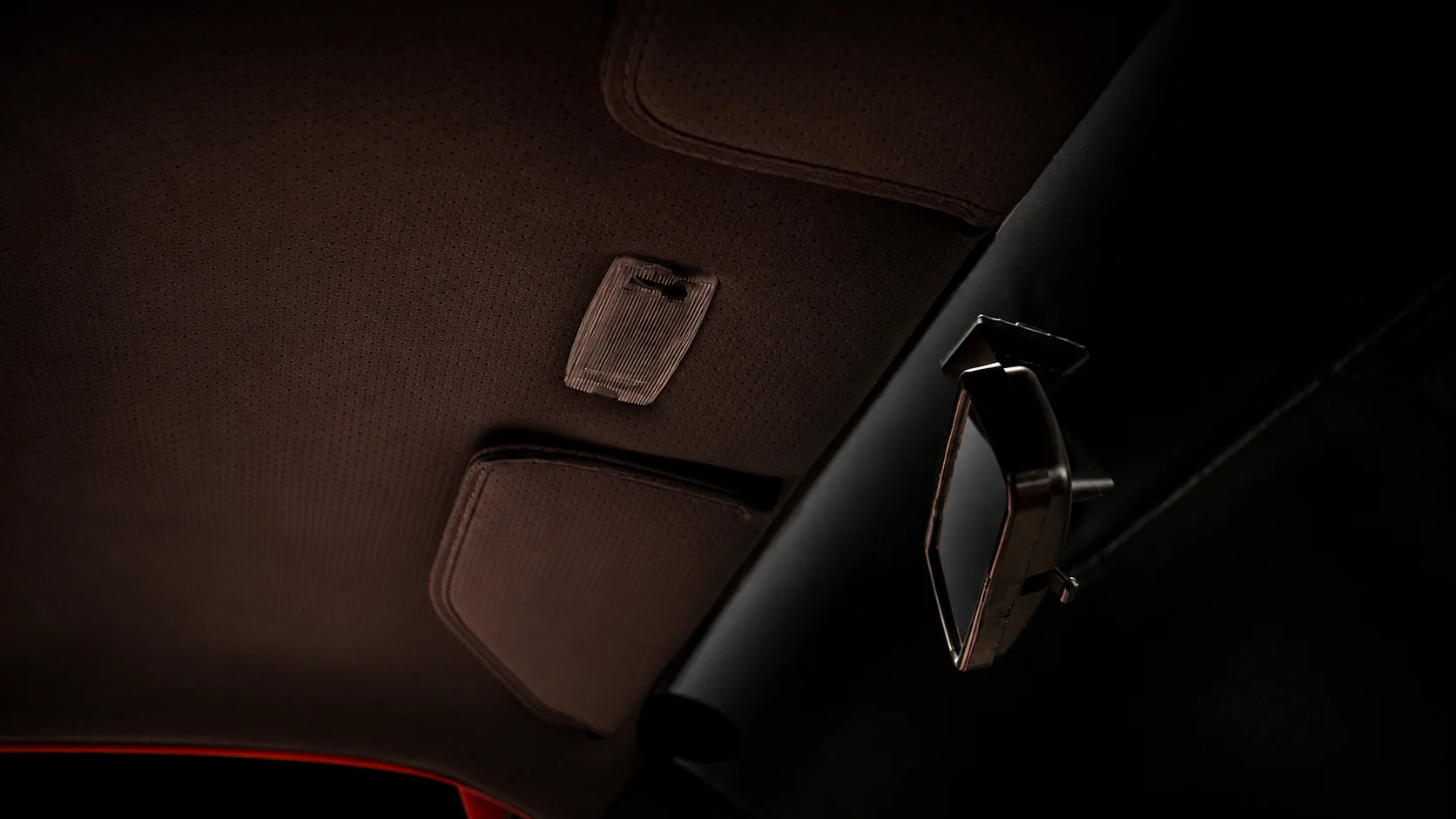
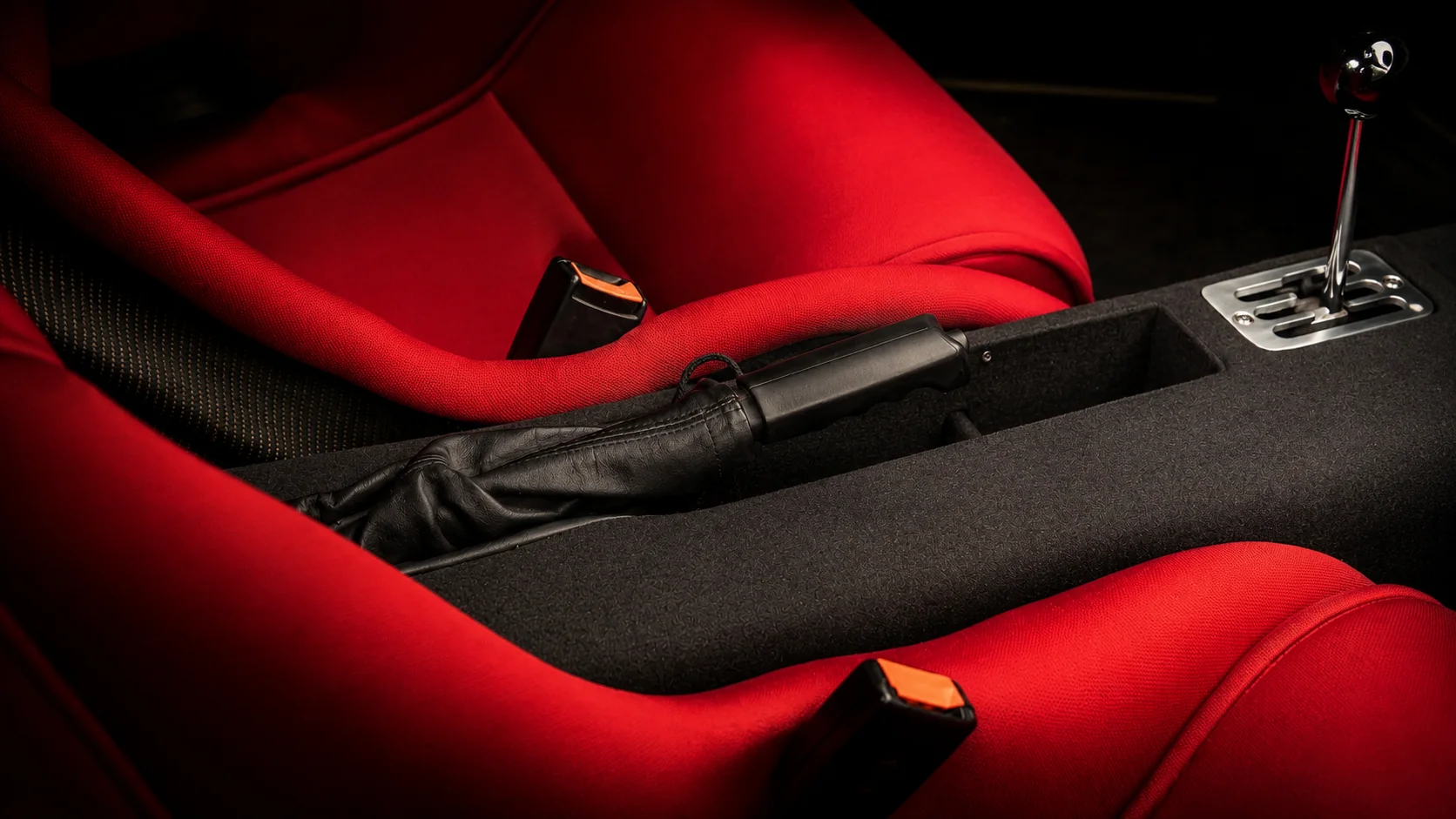
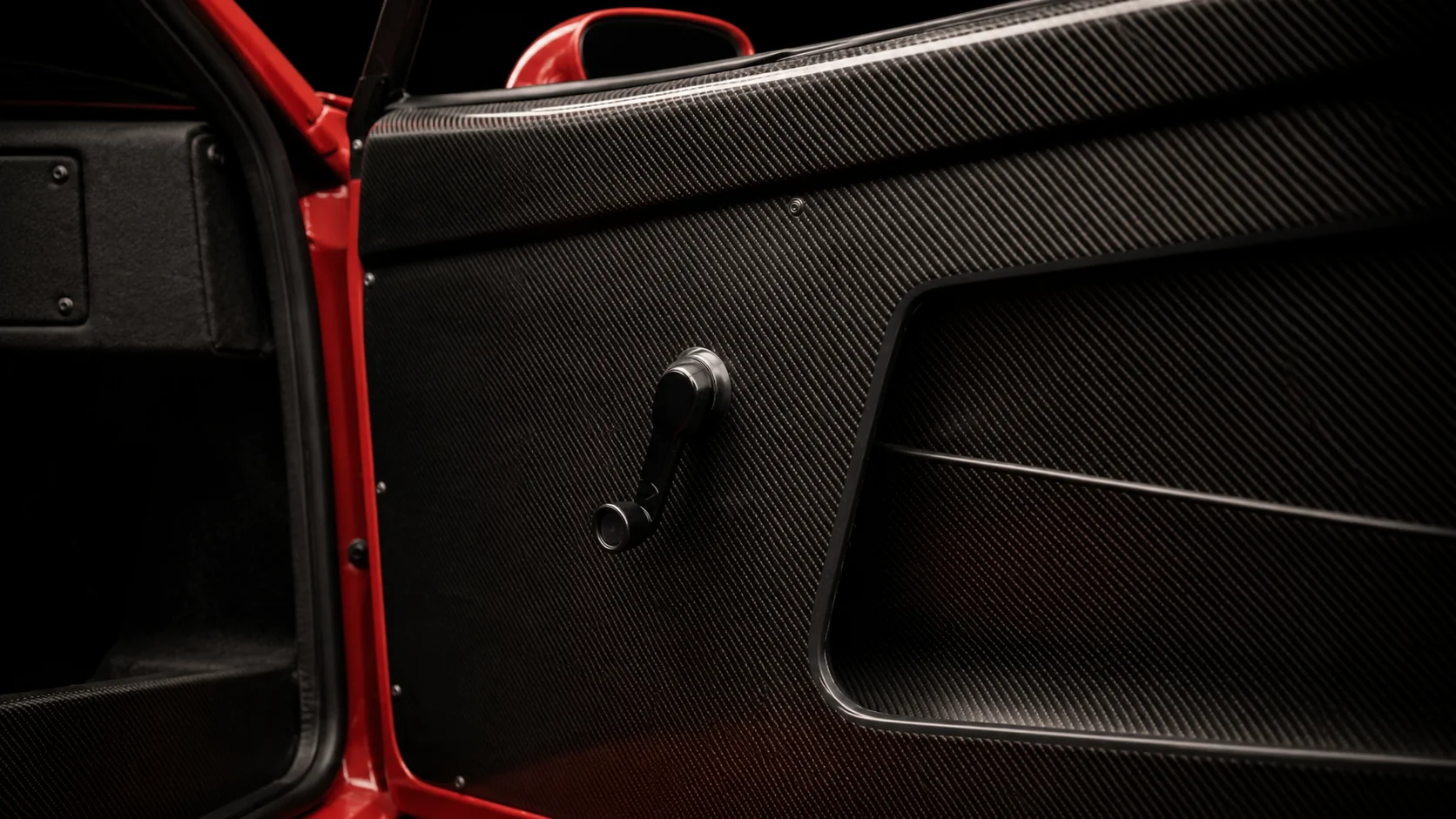
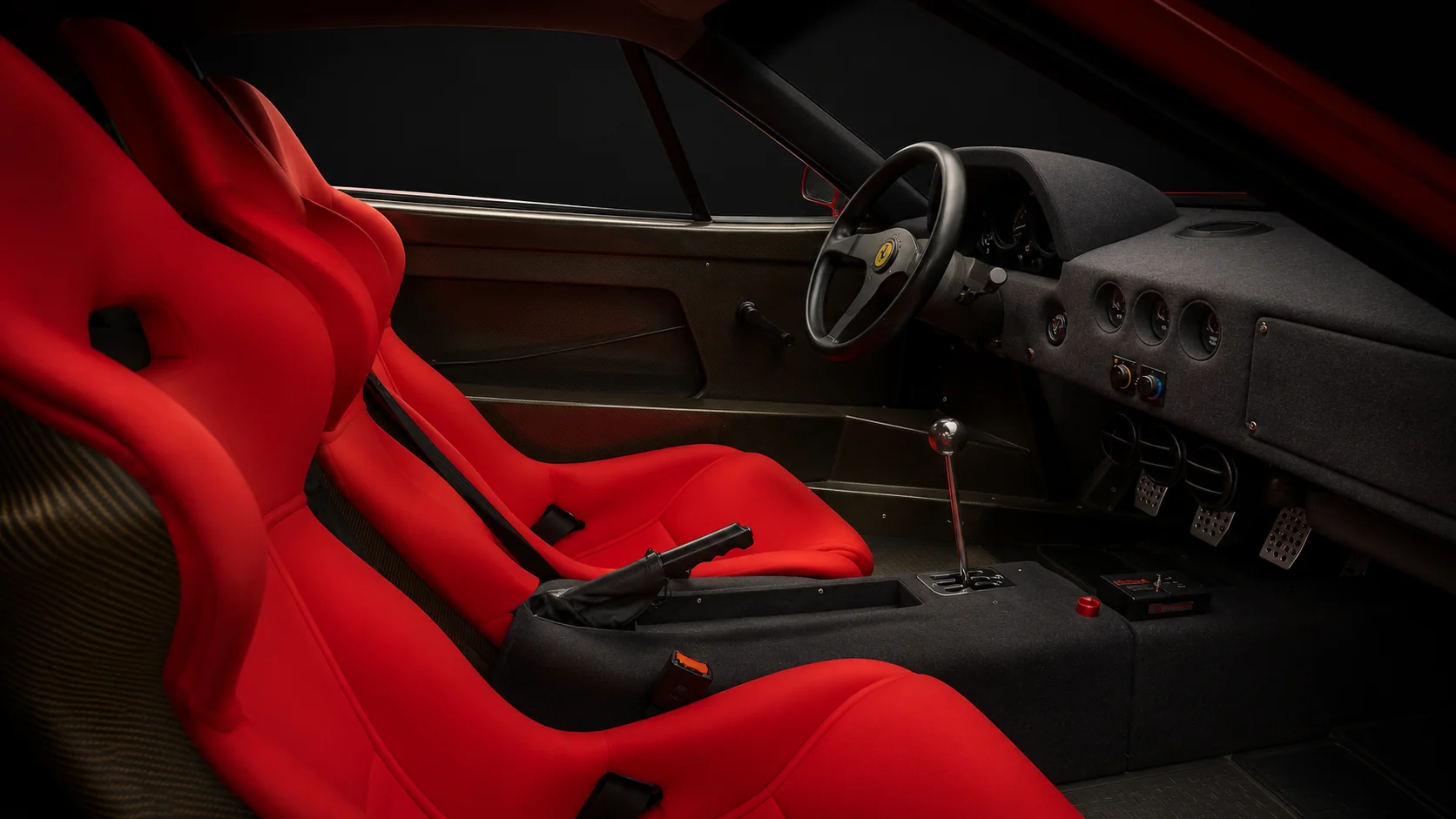
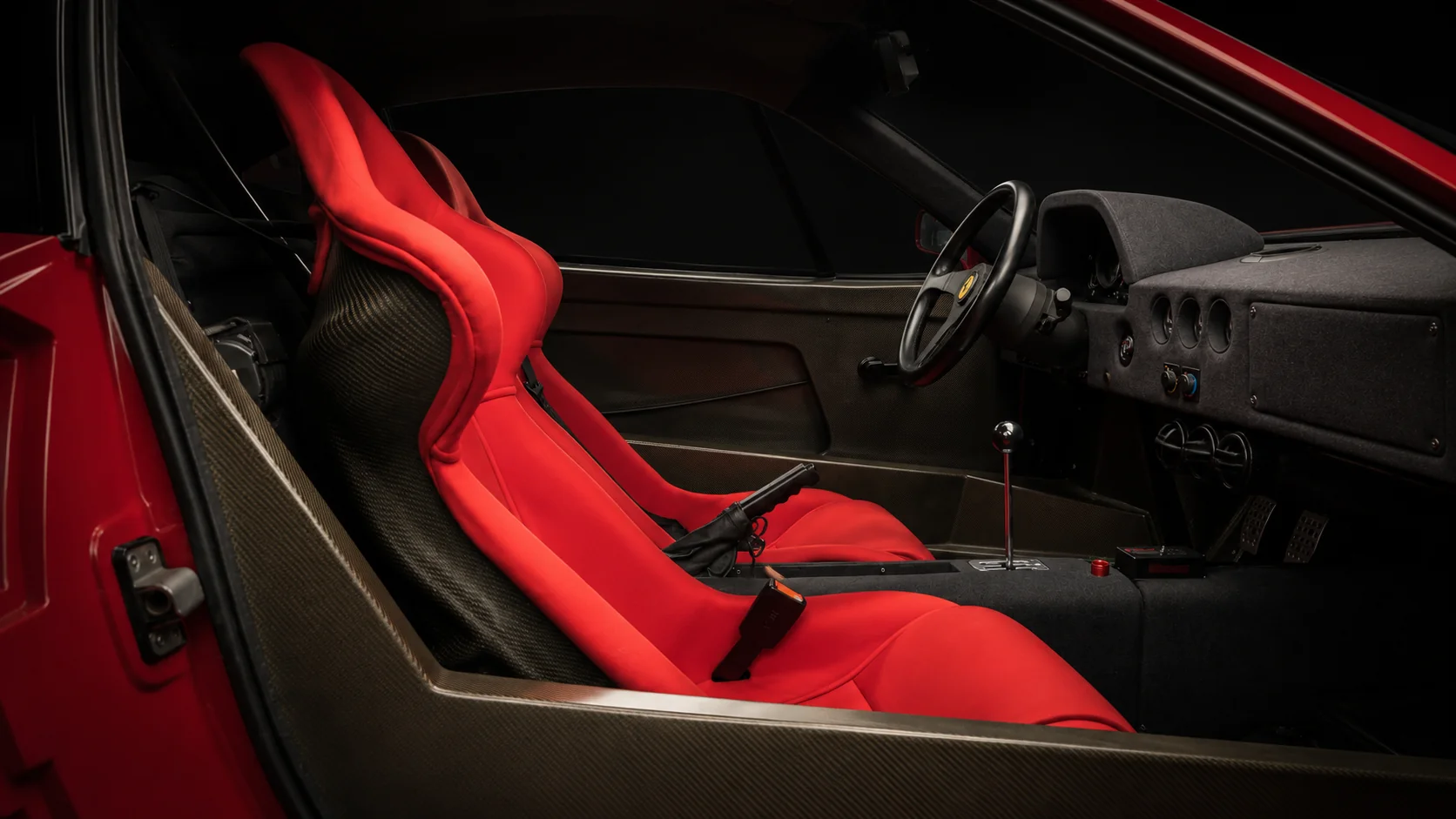
There is no carpet, no sound insulation, no glovebox, no stereo and no leather anywhere in it. The doors have no panels in the conventional sense and no inner handle, only a fabric strap where the handle would be. Every one of those absences bought back weight from a car that had none to spare.
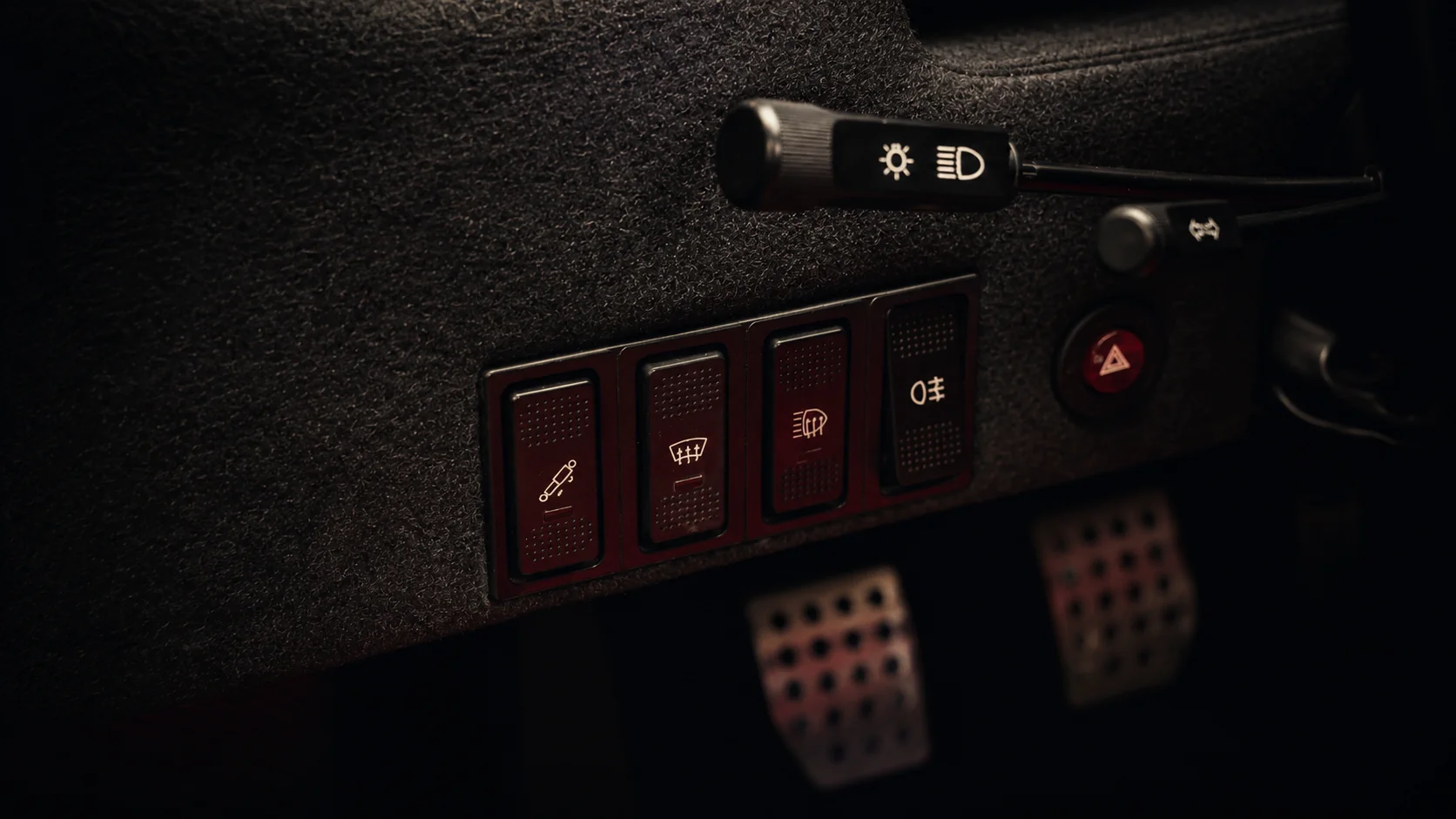
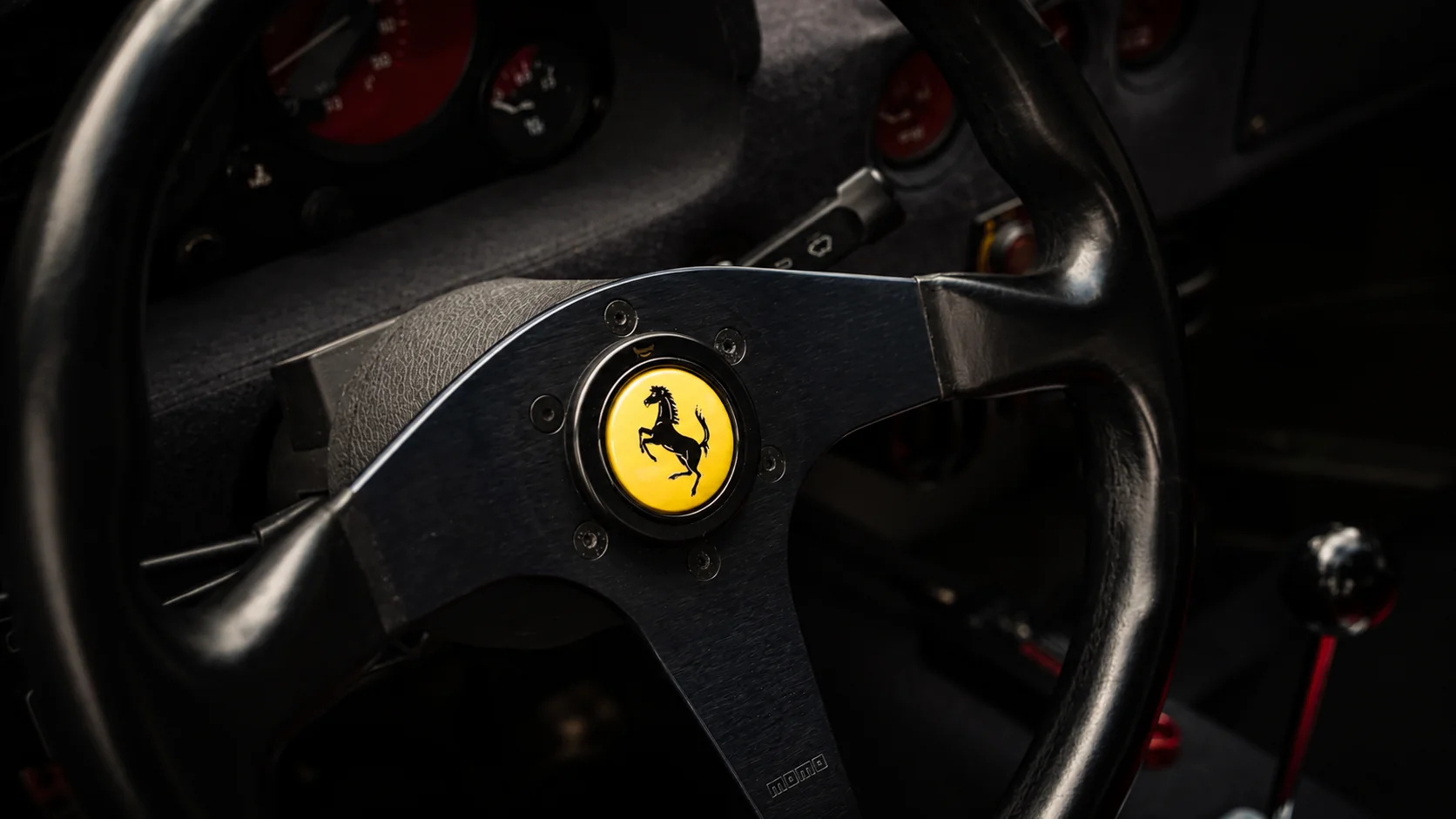
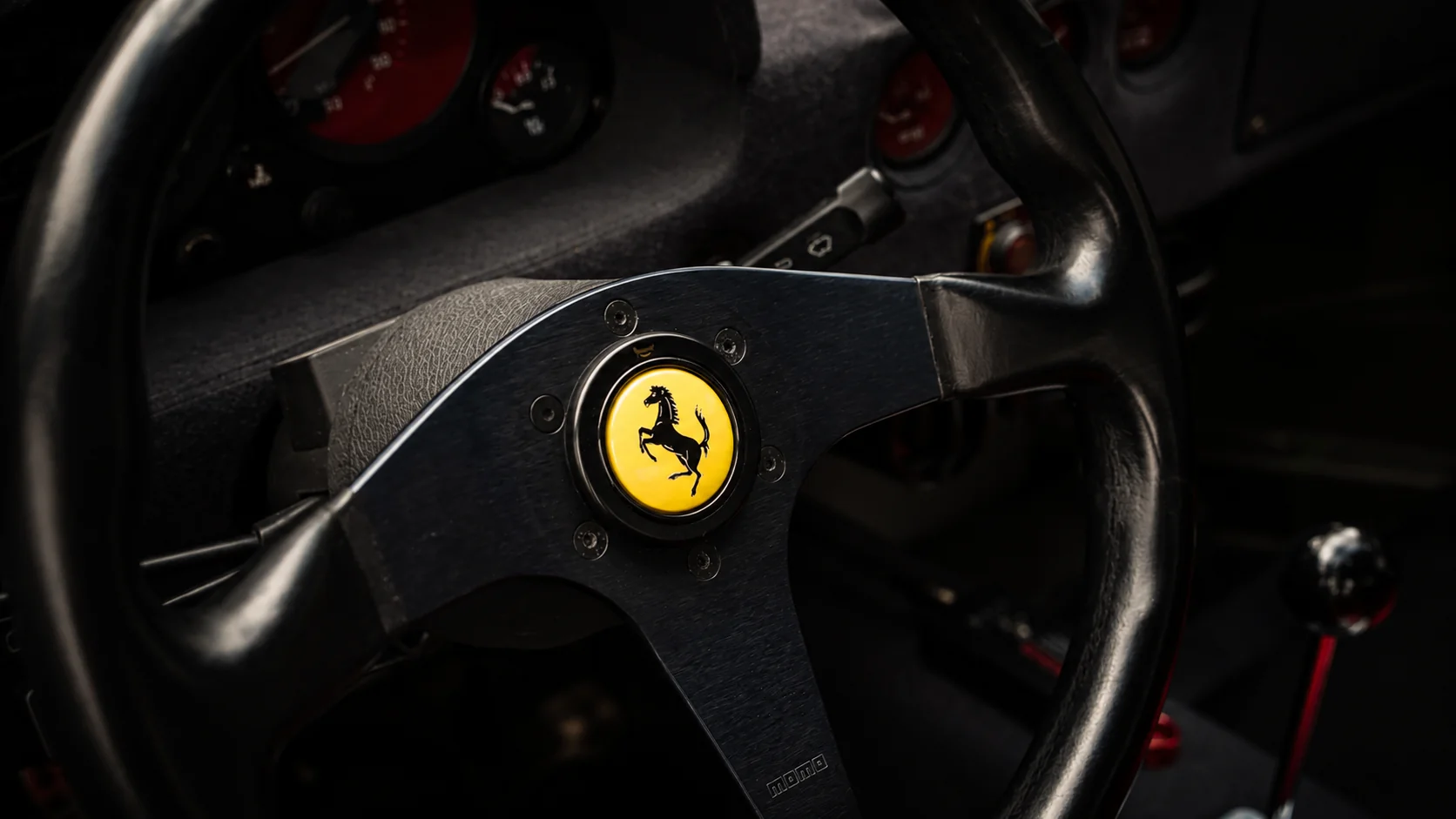
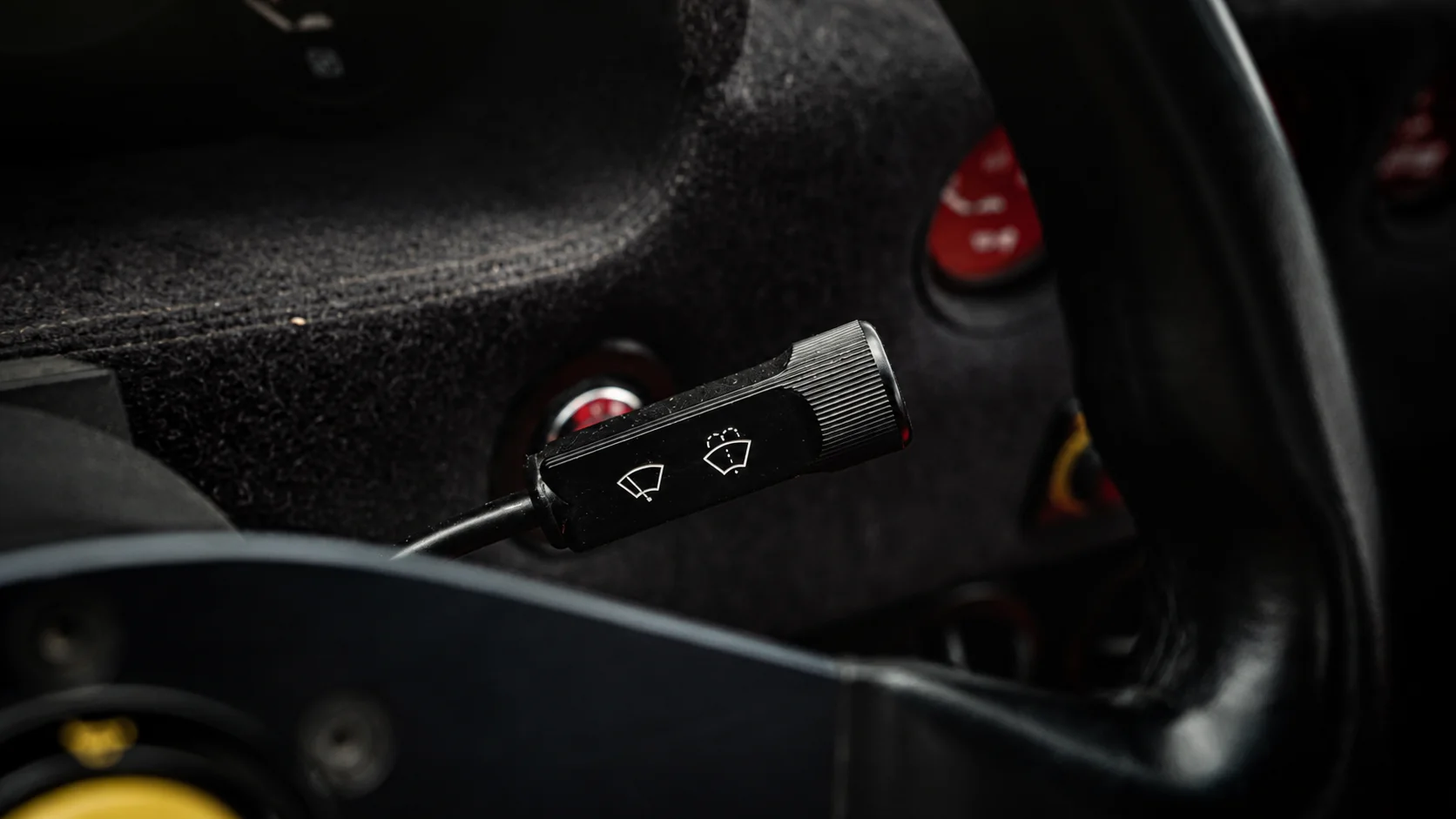
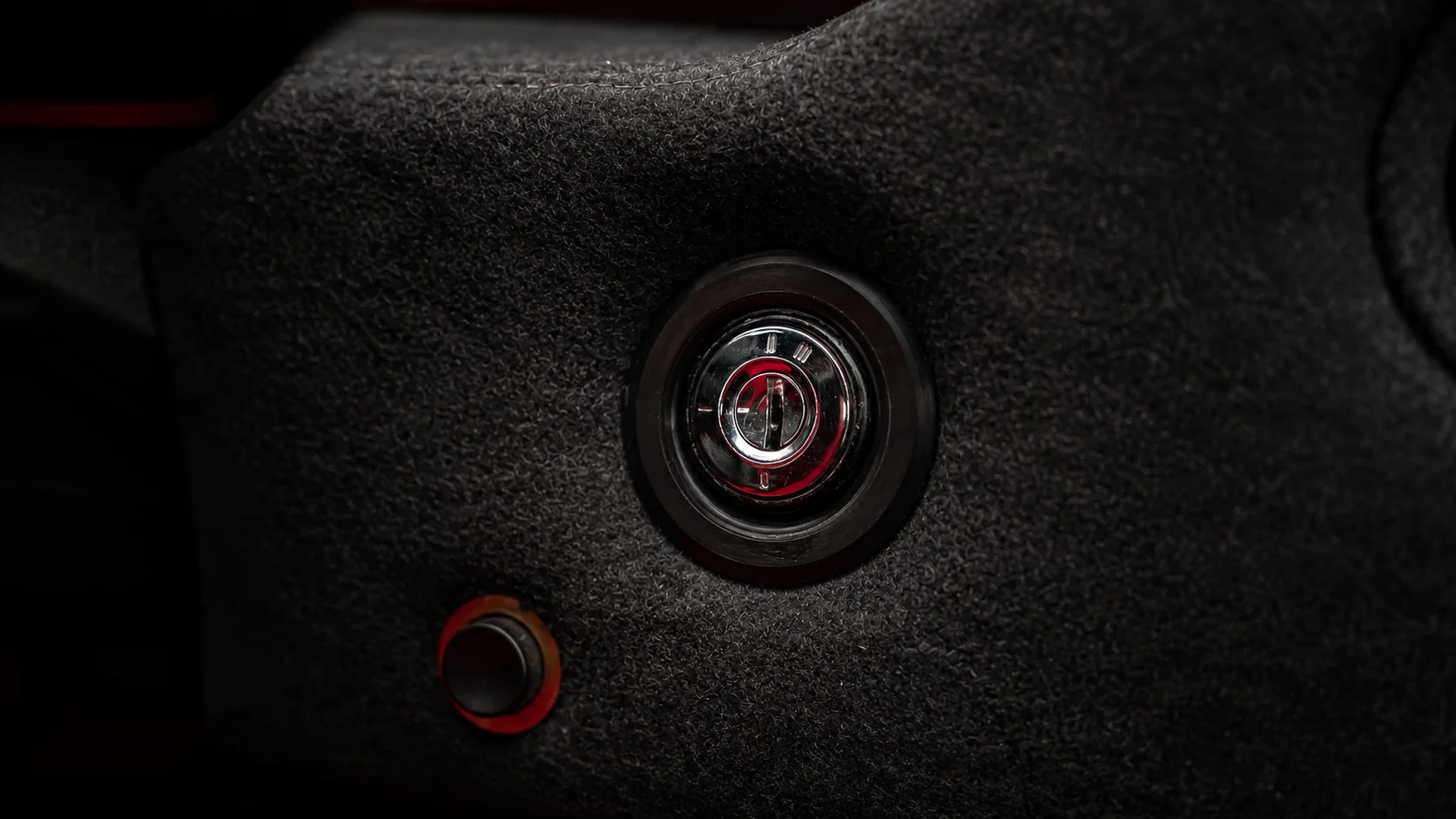
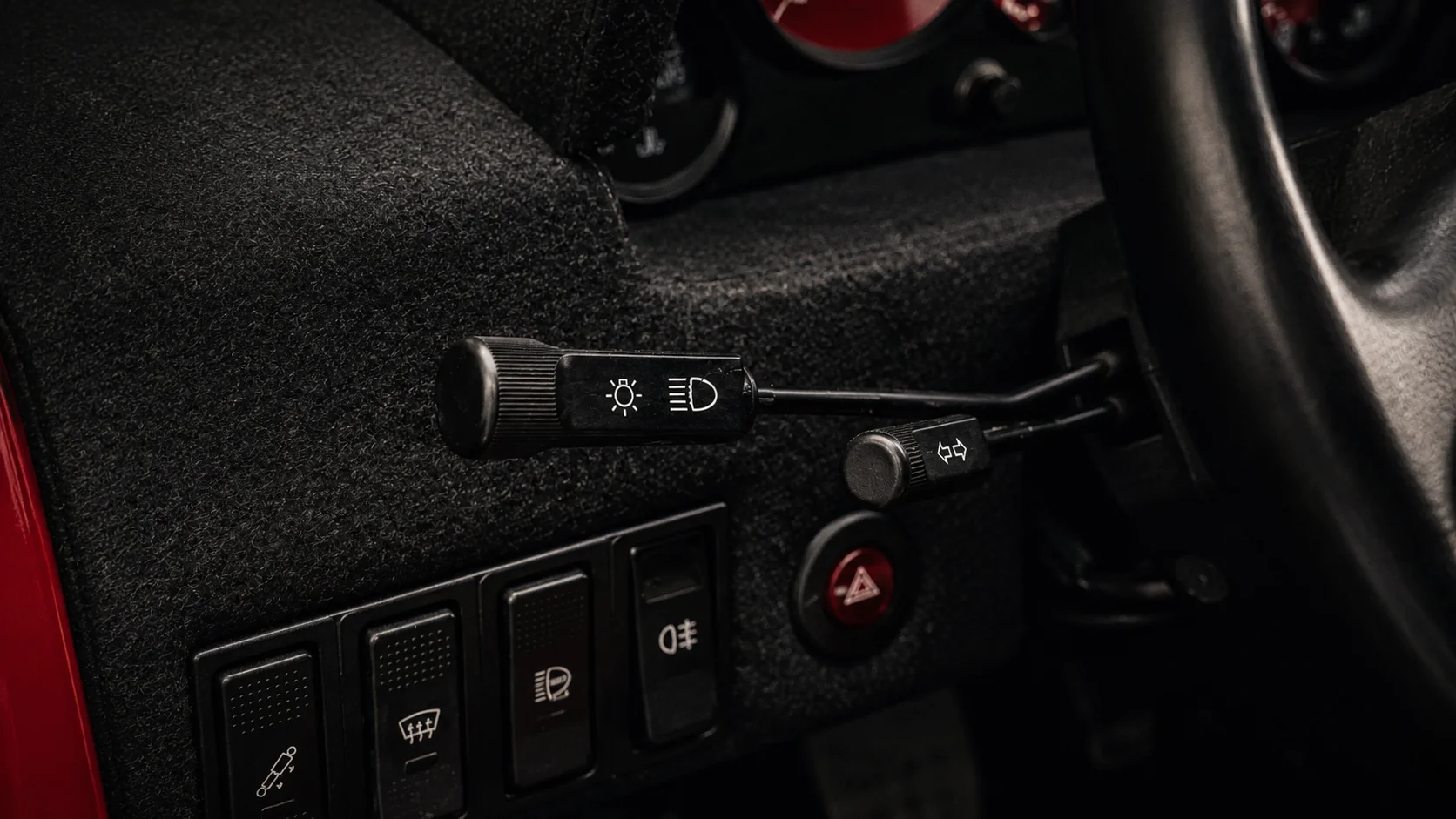
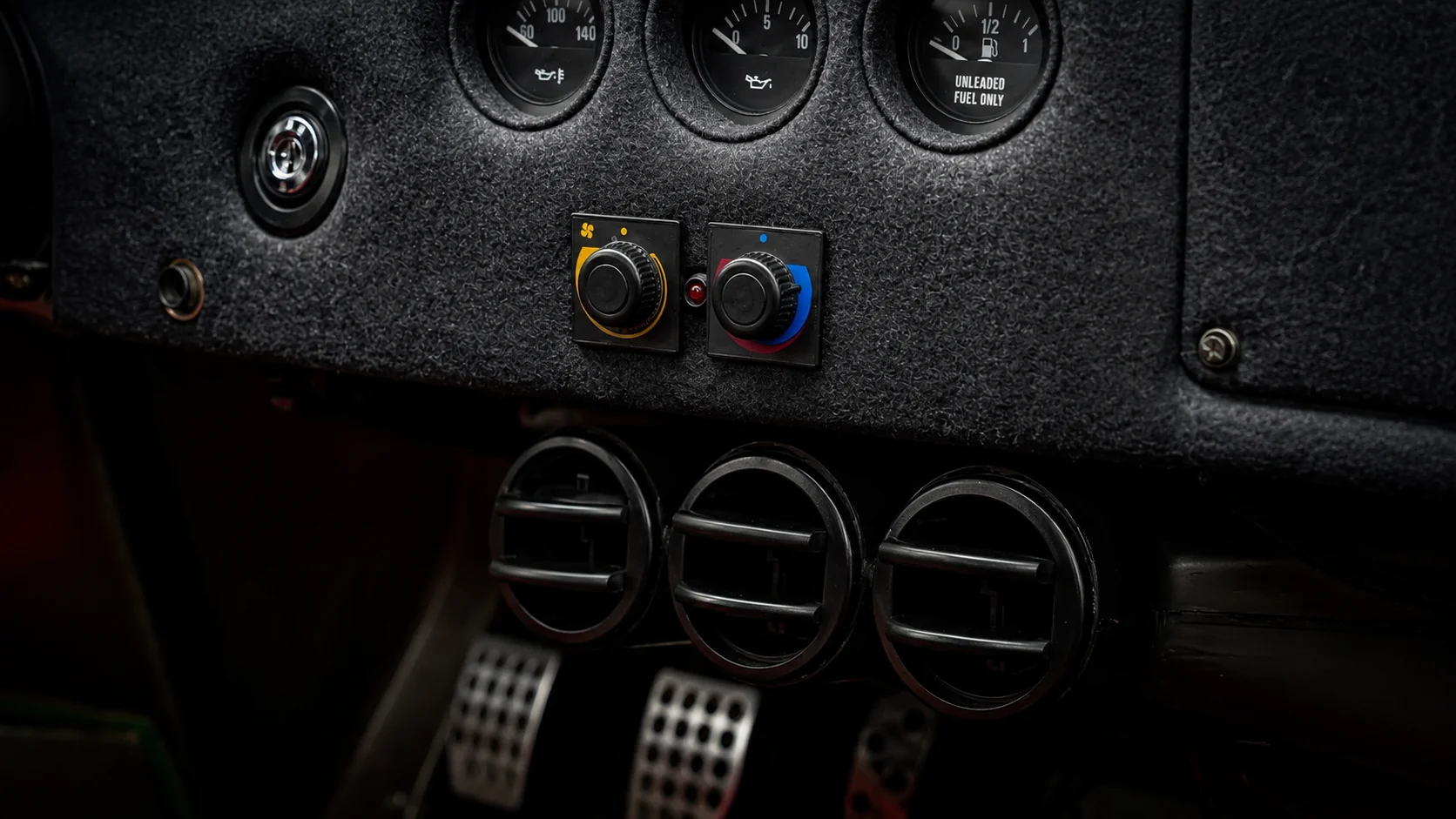
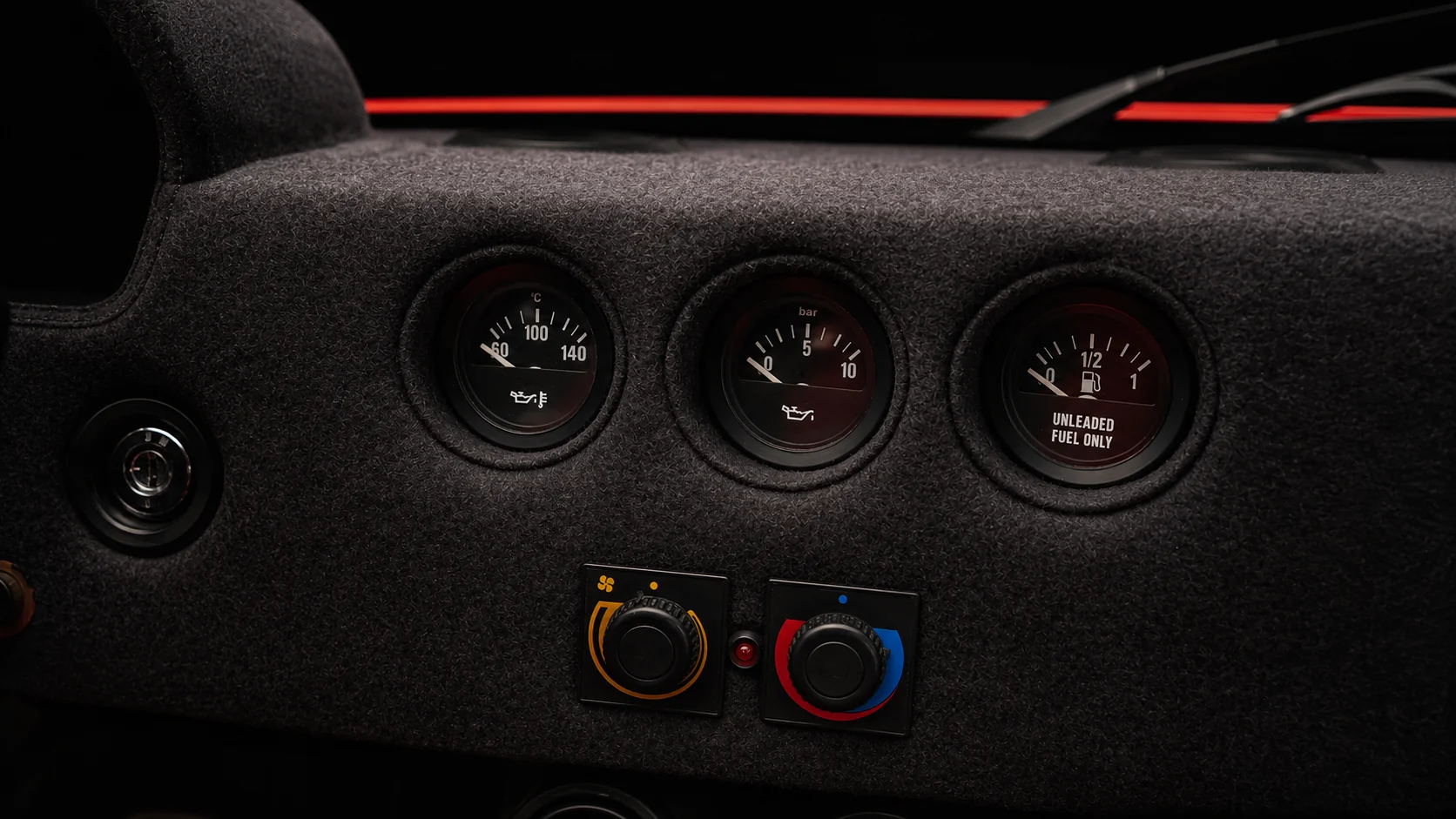
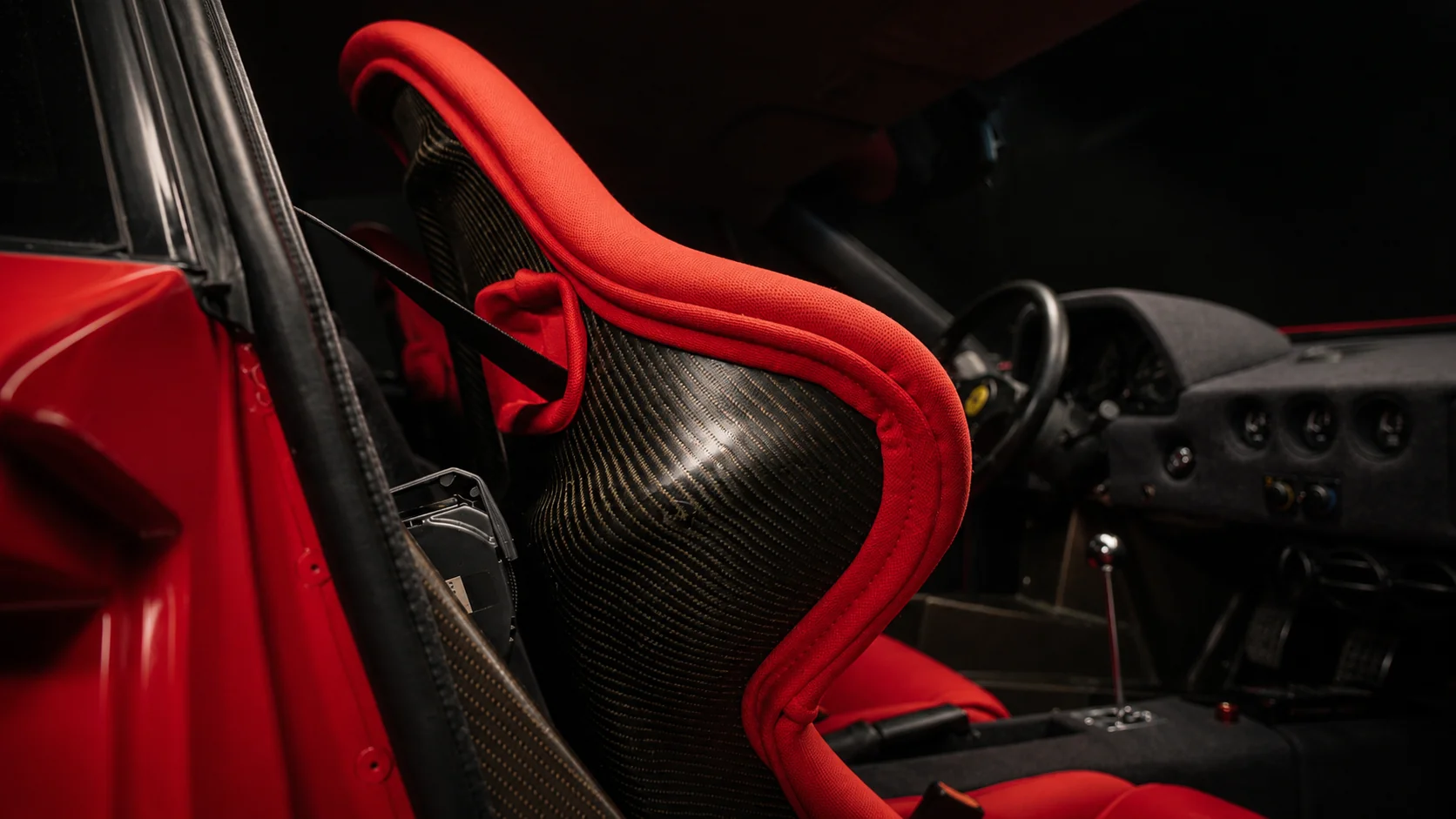
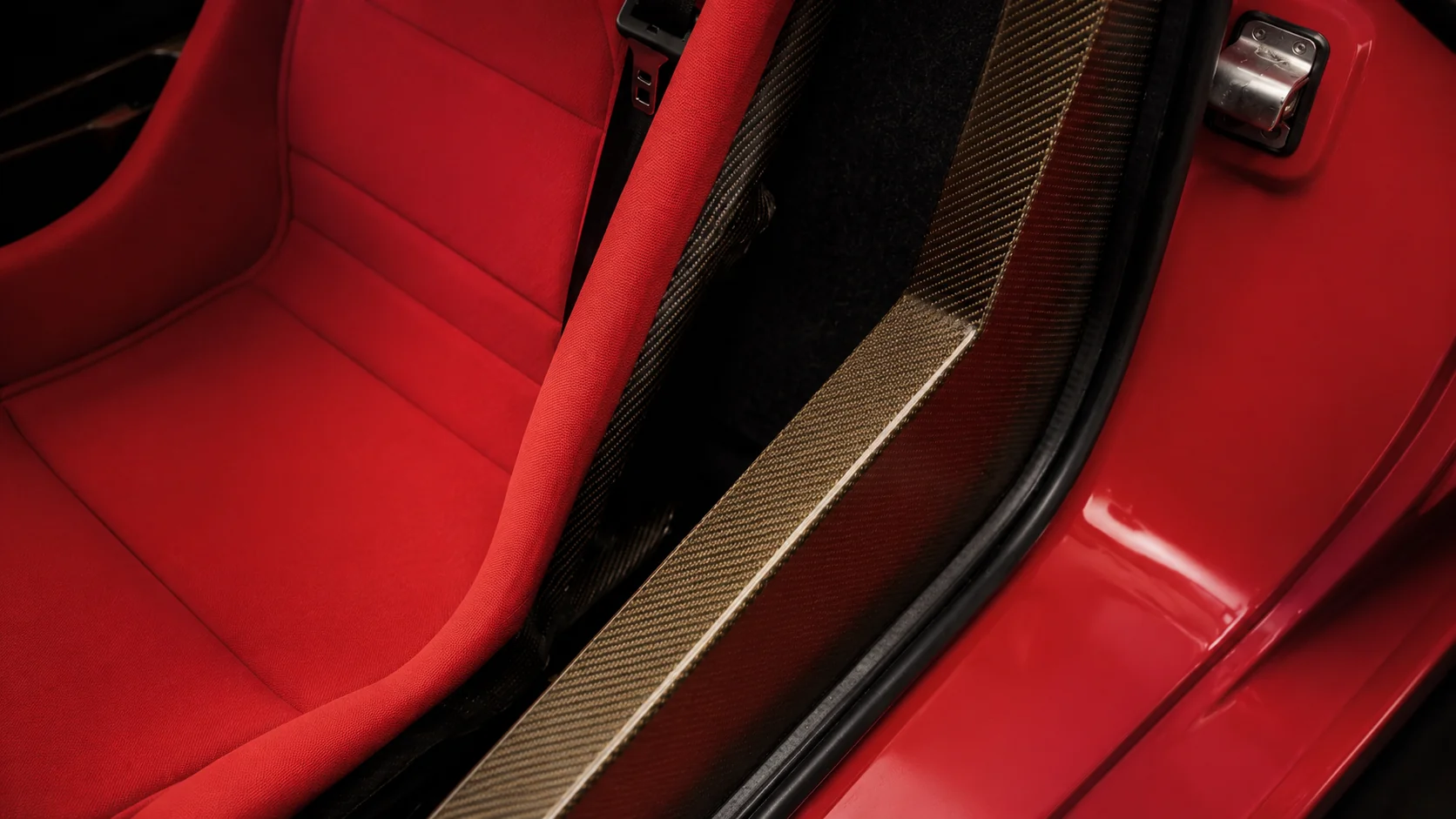
A grey felt dash and a Momo wheel with the Prancing Horse at its centre. A row of red rocker switches. Drilled aluminium pedals. Bare woven Kevlar across the sills and floor, left unpainted because paint weighs something and because covering it would have hidden the point.
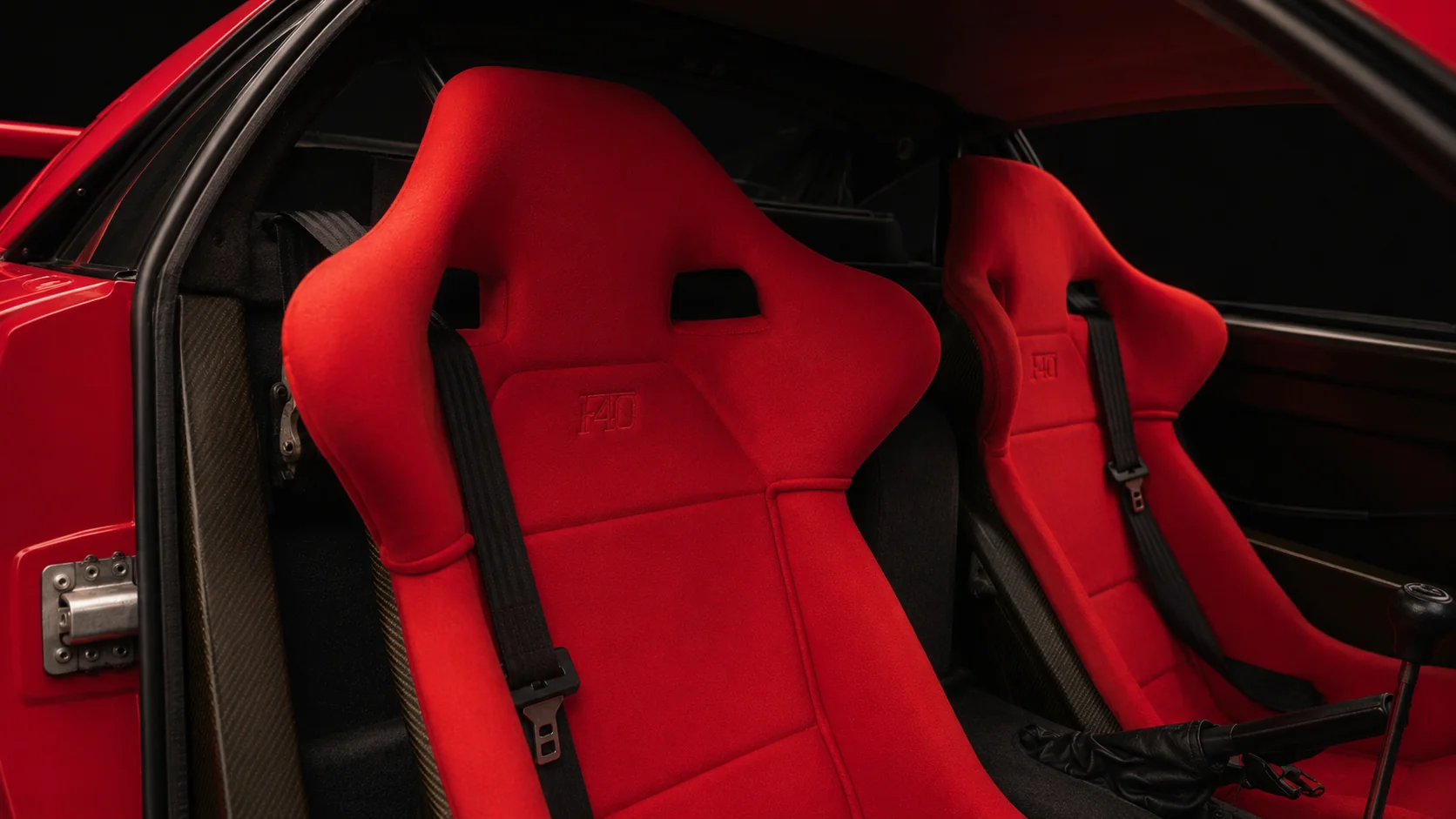
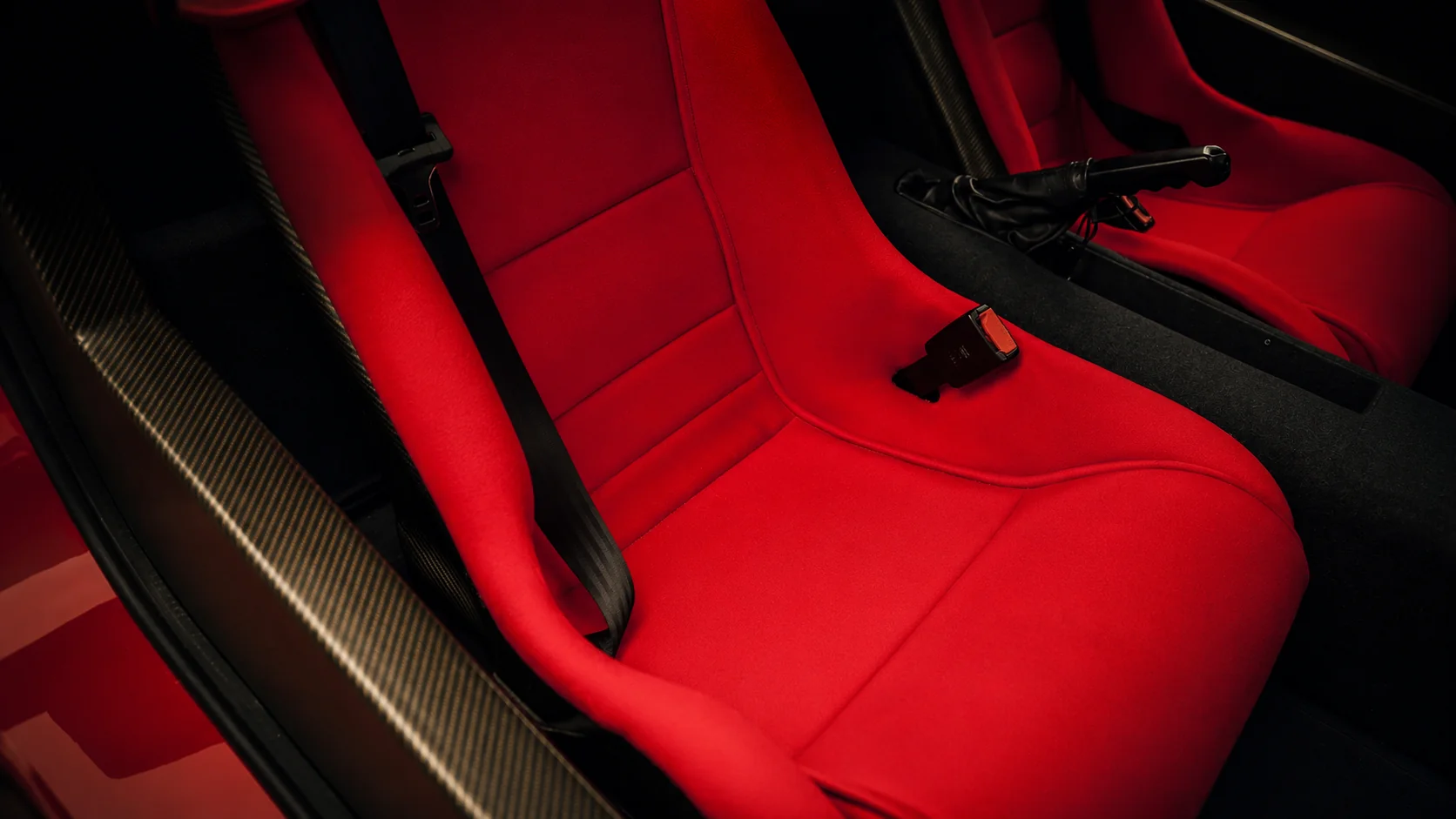
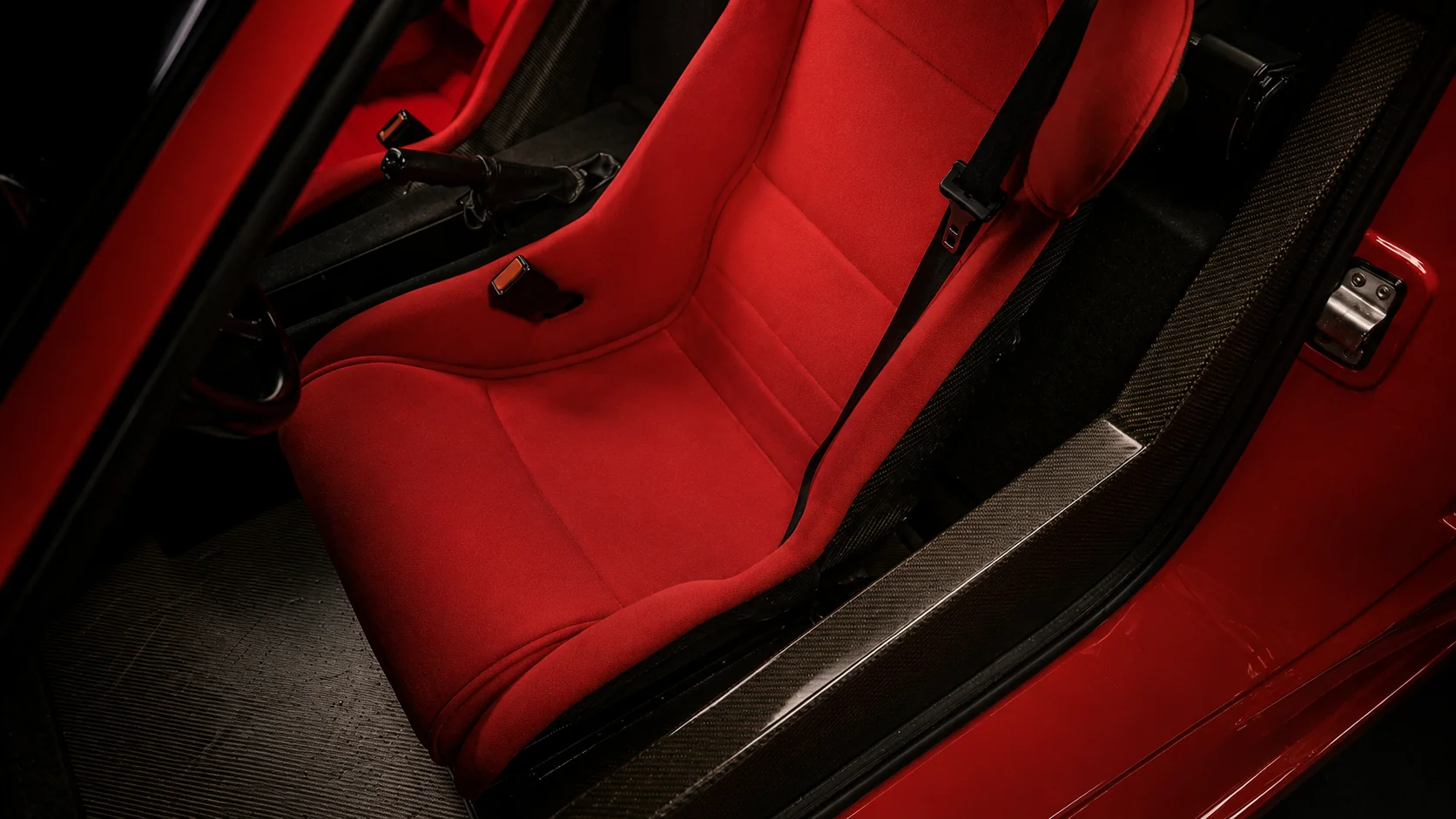
The seats are the car's signature: fixed composite shells, thinly padded, trimmed in cloth to match the bodywork exactly as the order sheet called for. Ferrari fitted air conditioning, and it is the only concession in the entire cabin.
Everything so far is true of every F40 built. What follows is true of this one.
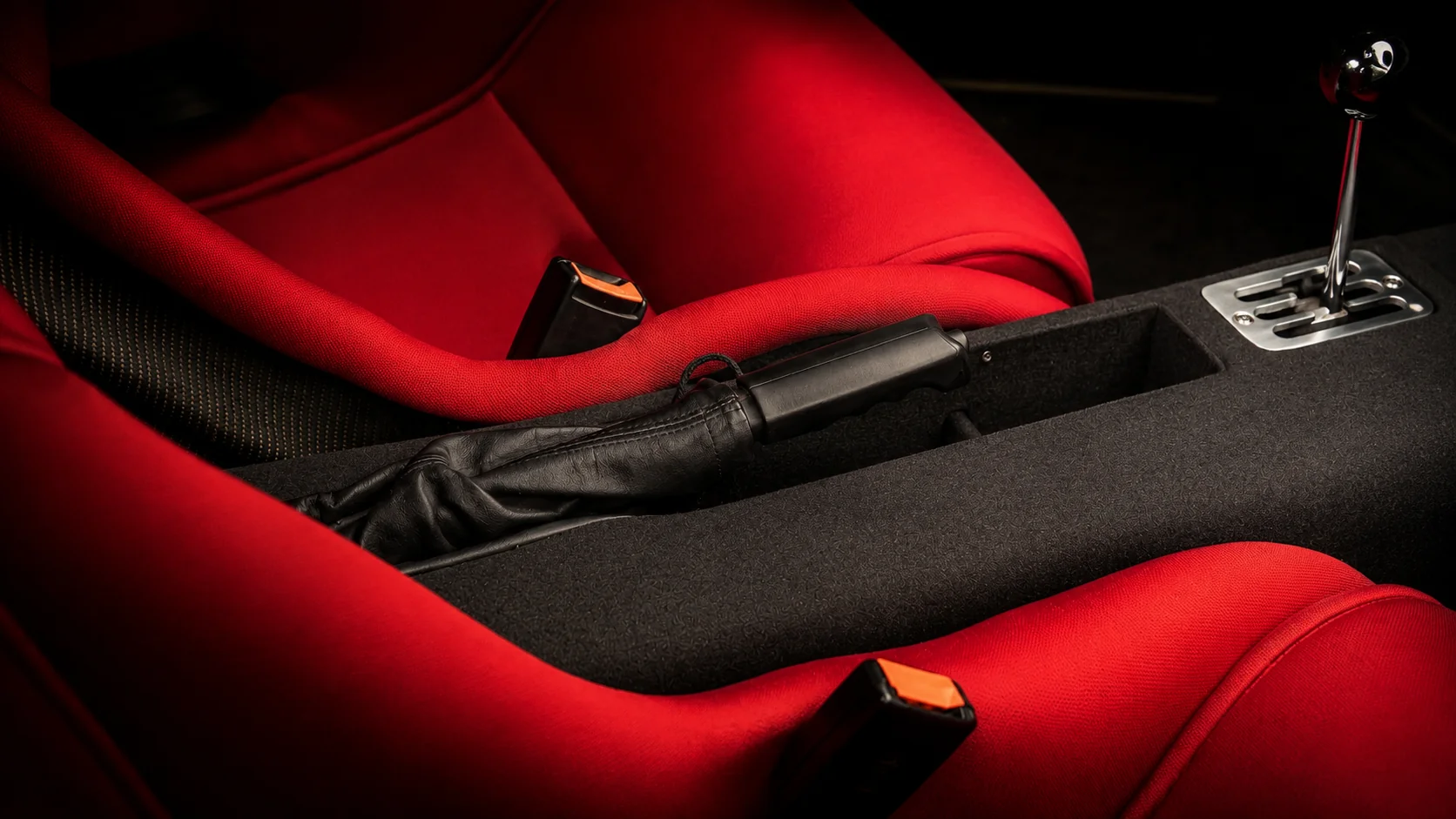
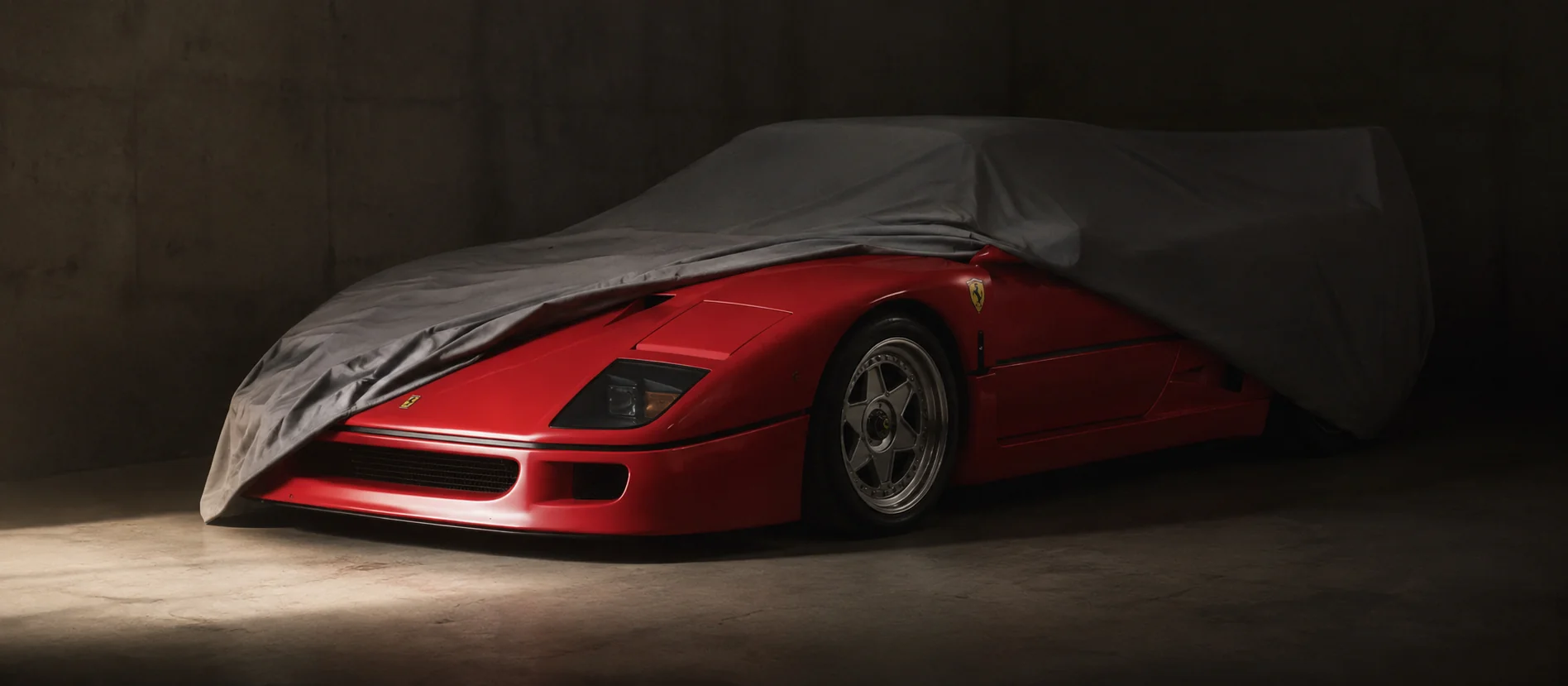
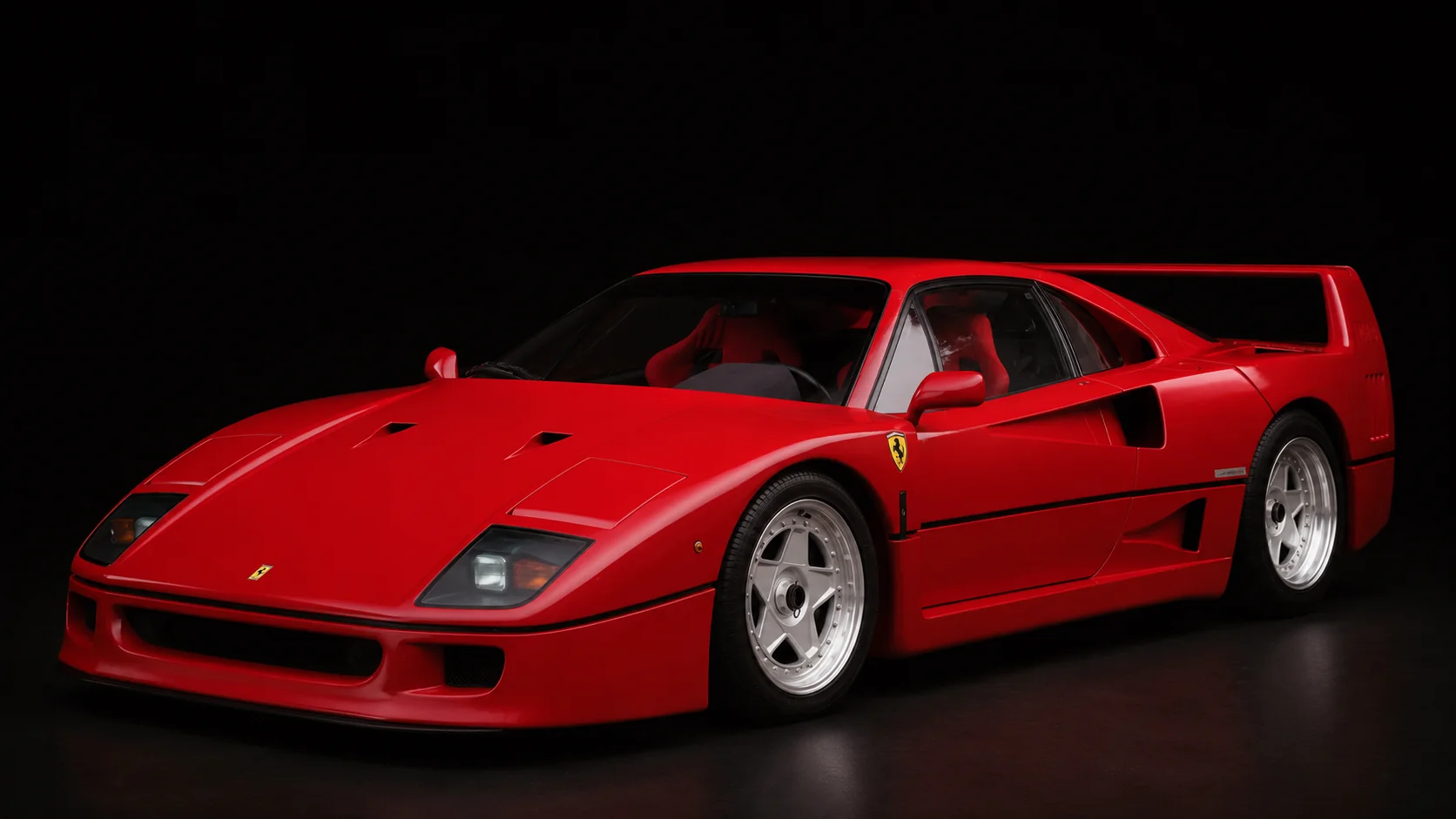
Built in 1992, in the final year of F40 road car production, this car has covered 8,500 kilometres from new and passed through three hands in thirty-four years. It wears the Rosso Corsa it left Maranello in, protected today by full paint protection film, over the cloth racing seats specified for it on the original order.
It was ordered with the adjustable front suspension, an option Ferrari offered only late in production, which lifts the nose clear of the kerbs and ramps that a car of this ride height cannot otherwise attempt. It was never standard equipment, and among owners who intend to drive the car rather than store it, it is the most sought-after specification an F40 can carry.
It carries Ferrari Classiche certification: Maranello's own verdict on originality and authenticity, granted only after the car has been examined against its build records. Three decades of ownership, servicing and speculation have left a great many F40s with questions attached to them. Certification is how those questions stop being asked.
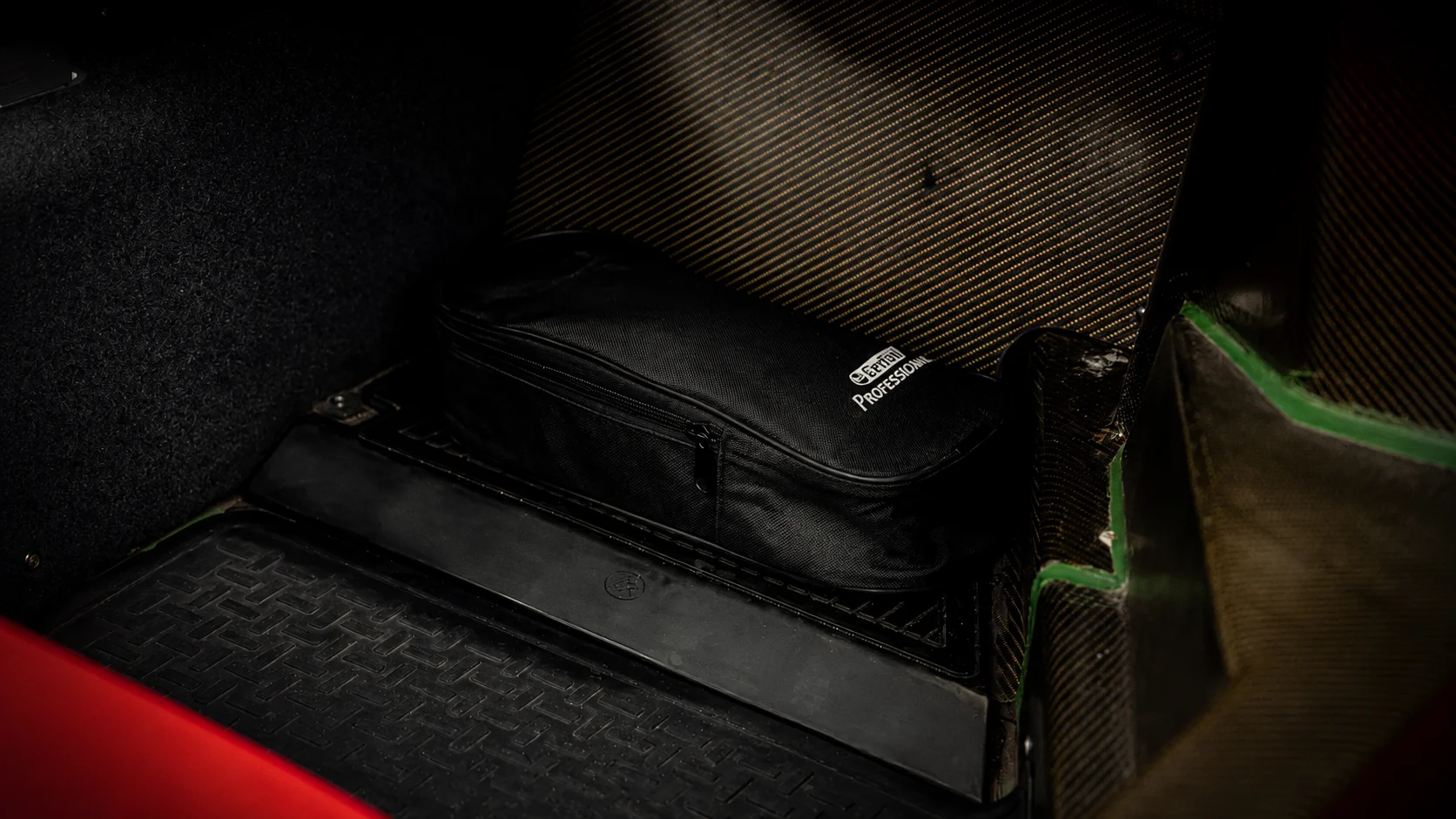
The car is accompanied by its original book pack, including the Service and Warranty Supplement, the original leather document wallet and the spare key. Behind that sits a comprehensive service history and an extensive history file documenting the car's provenance and maintenance. None of it has been assembled after the fact. It has simply been kept.
Certified by MaranelloNot an opinion and not a valuation. A record, checked against the car.
Engine
Transmission
Chassis
Bodywork
Performance
Production
Price
All figures are period factory data unless otherwise noted. Where published sources differ, both have been recorded. All details are subject to buyer verification.
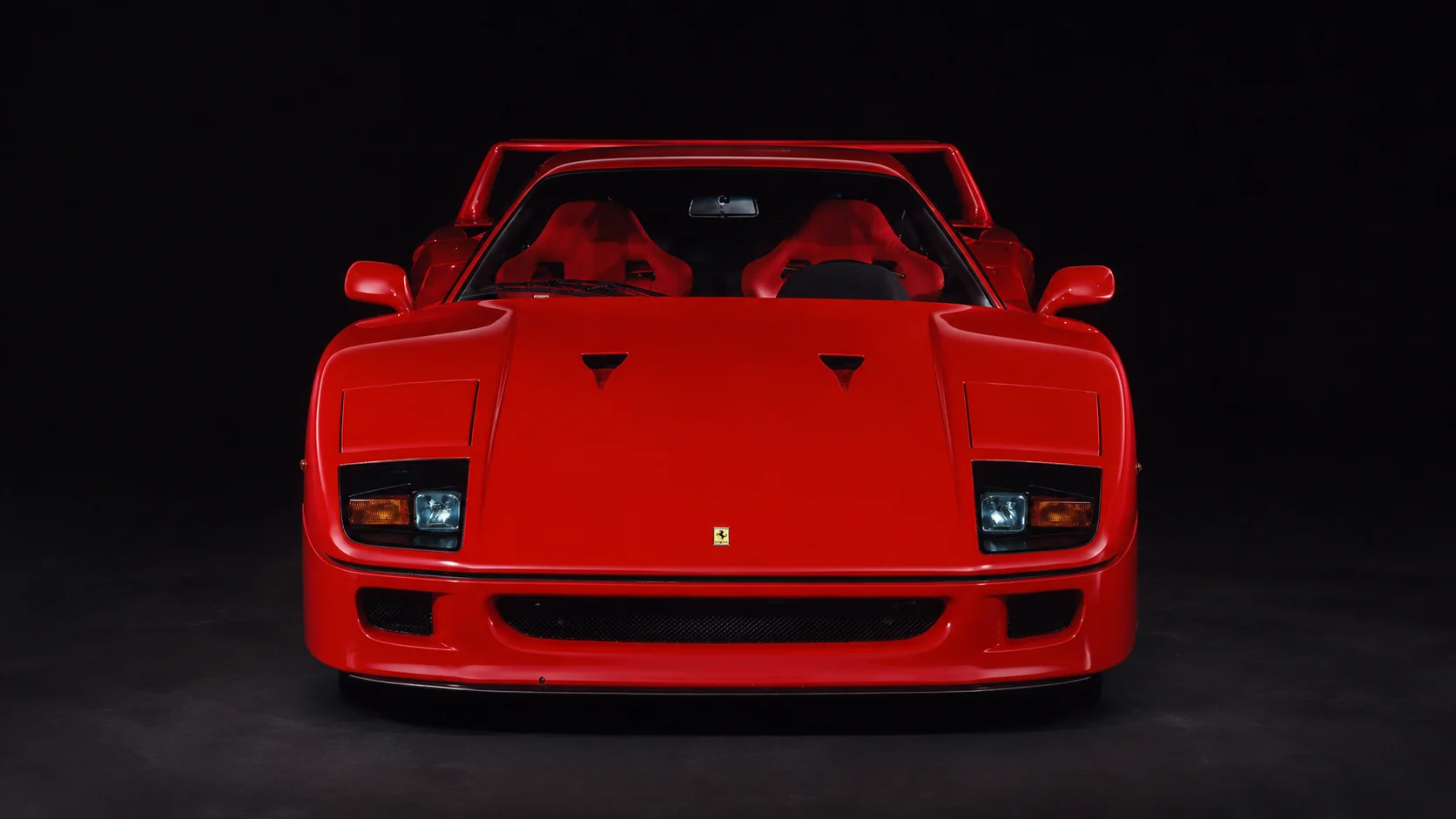
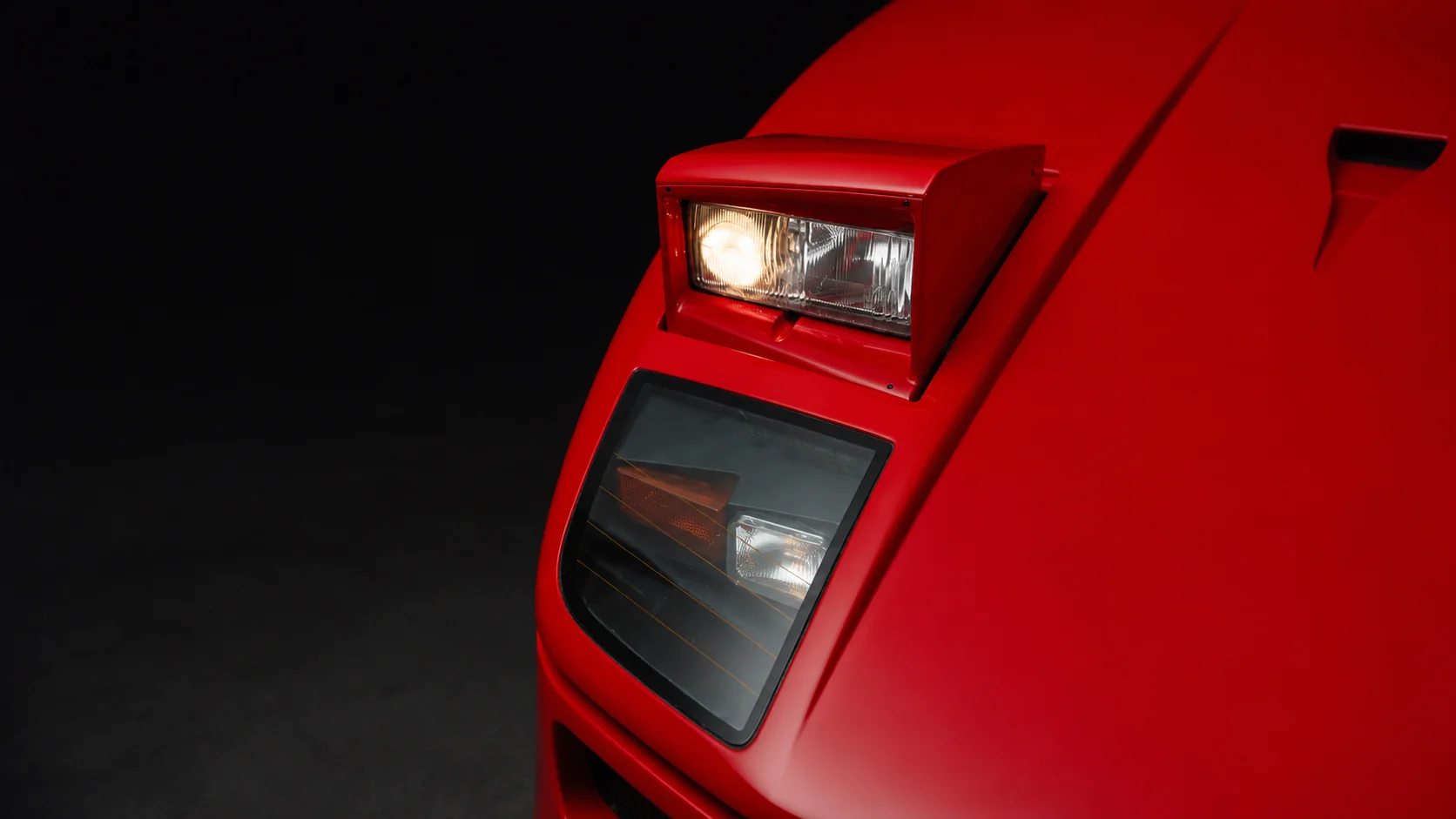
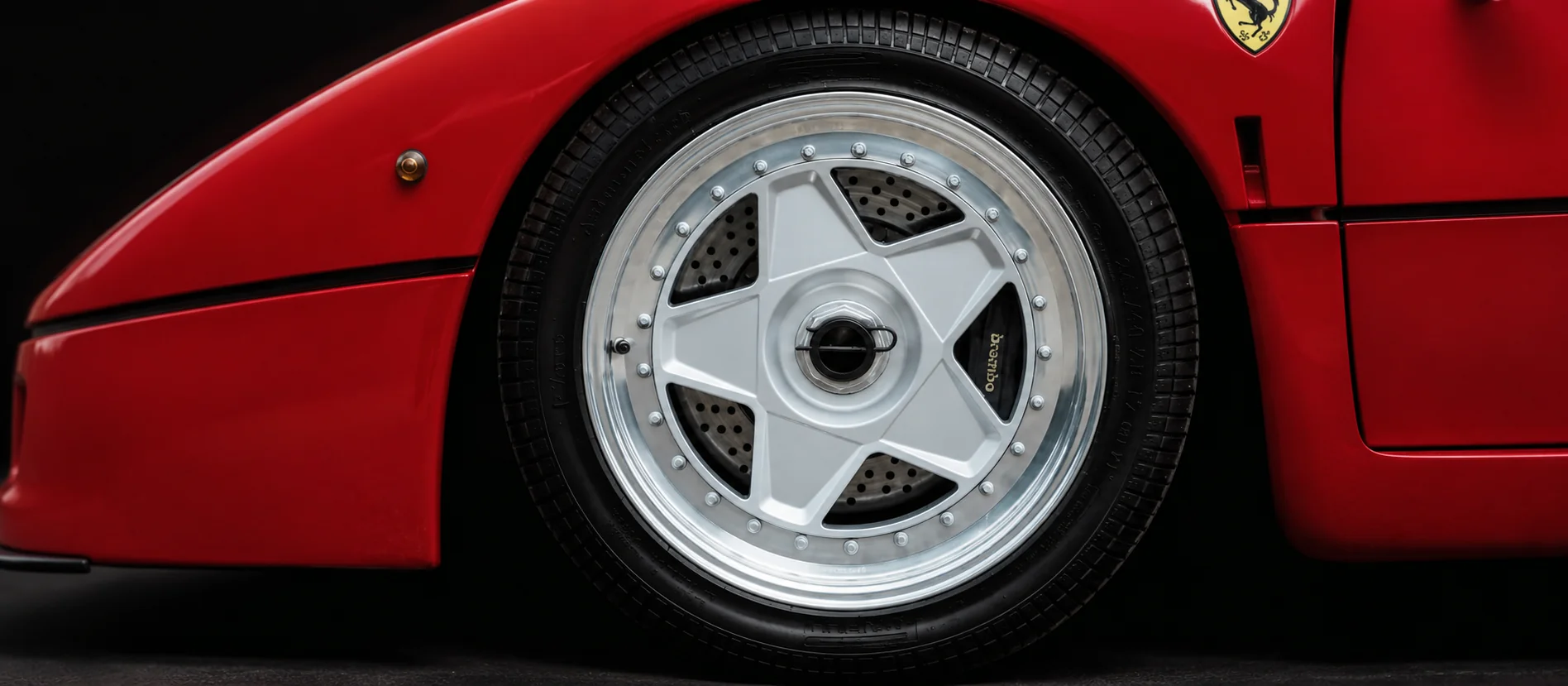
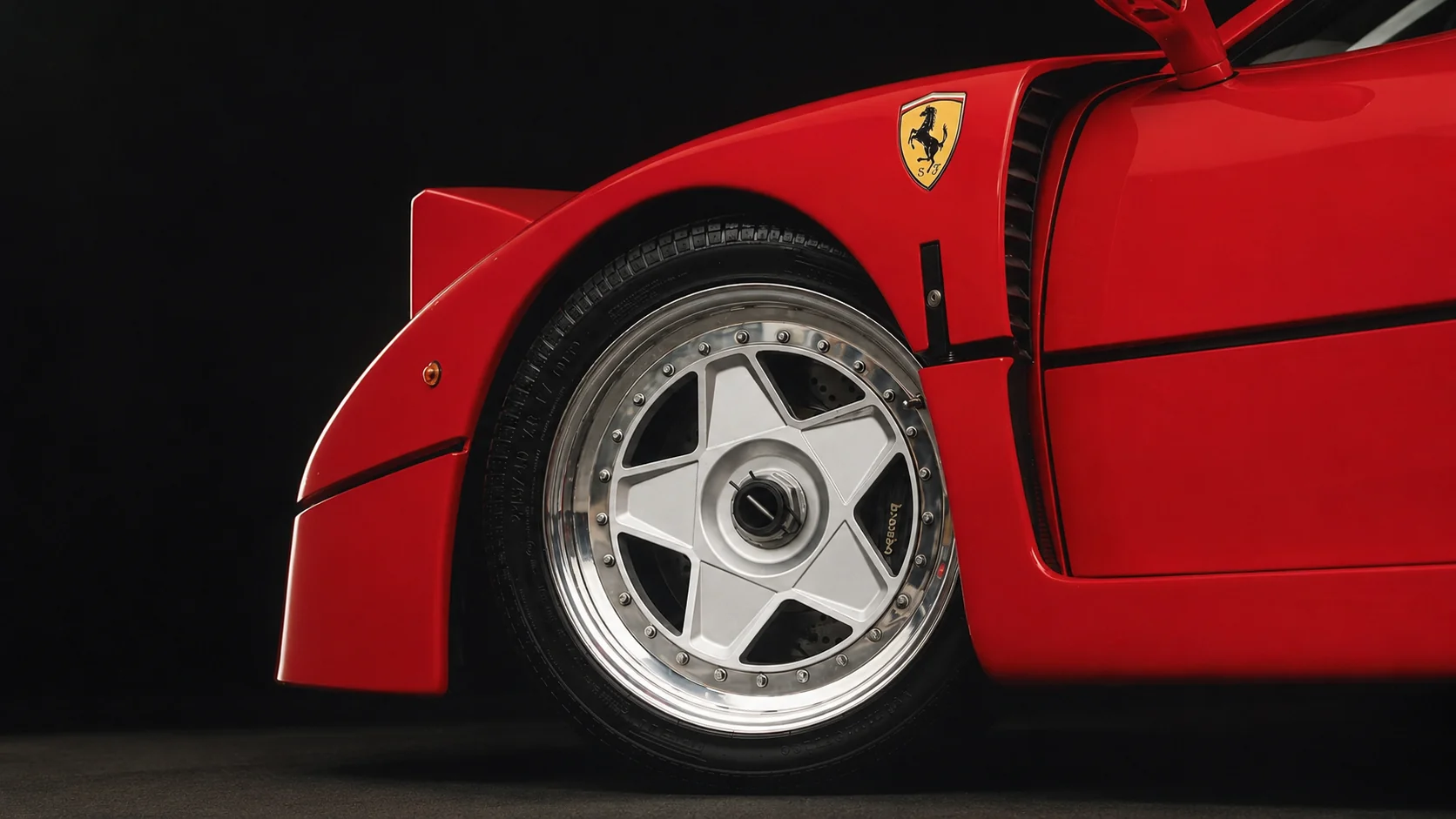
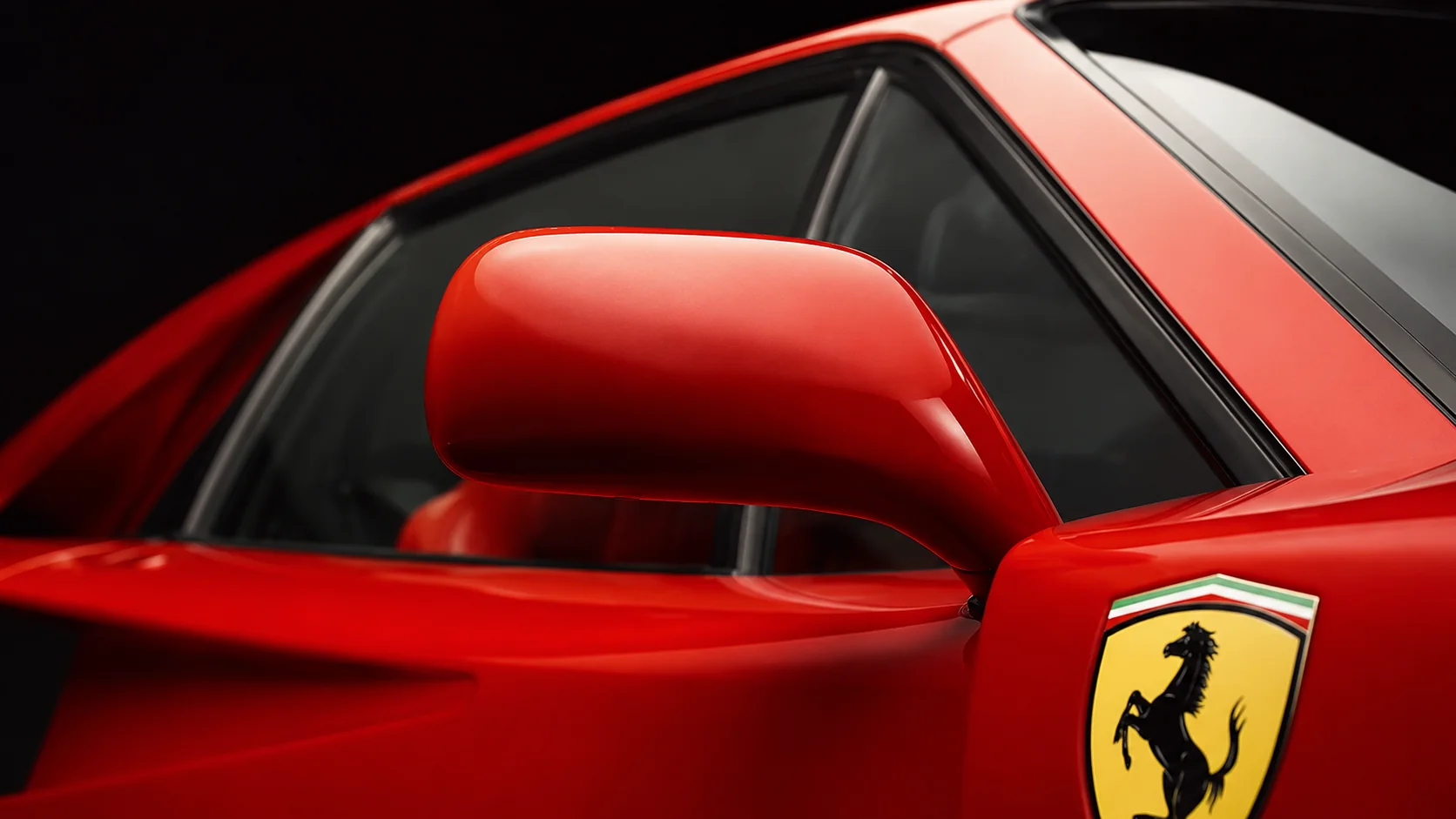
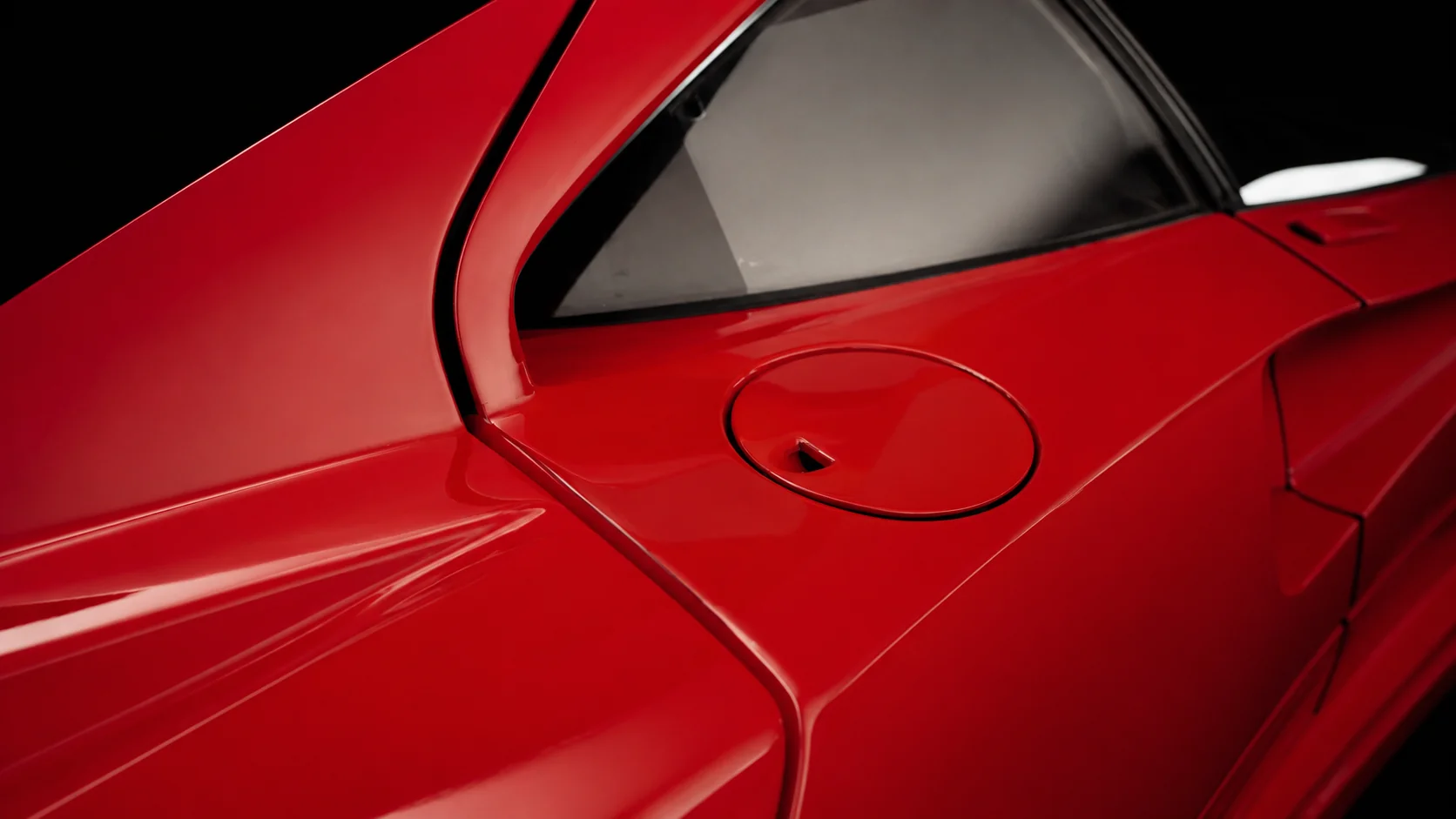
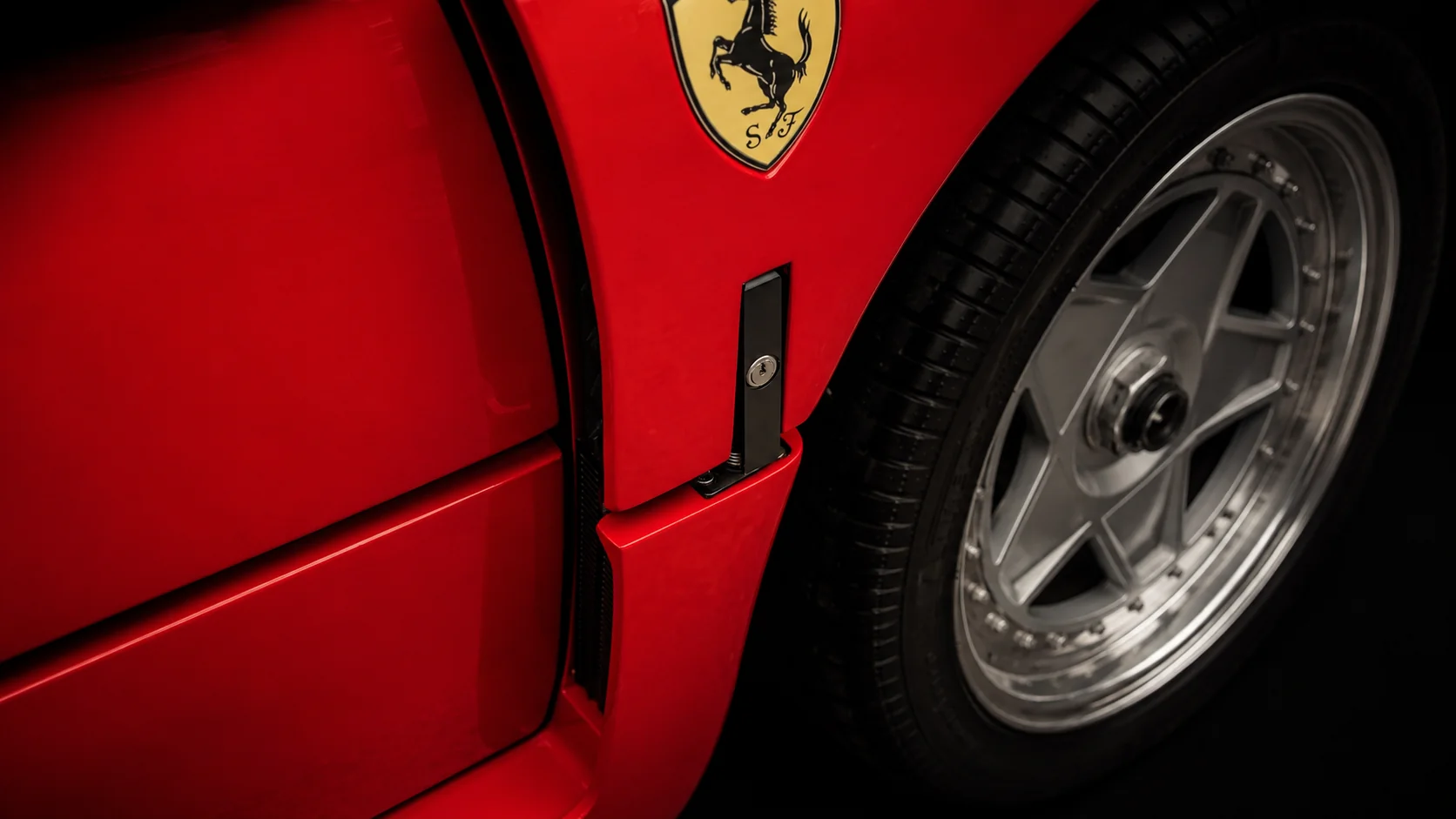
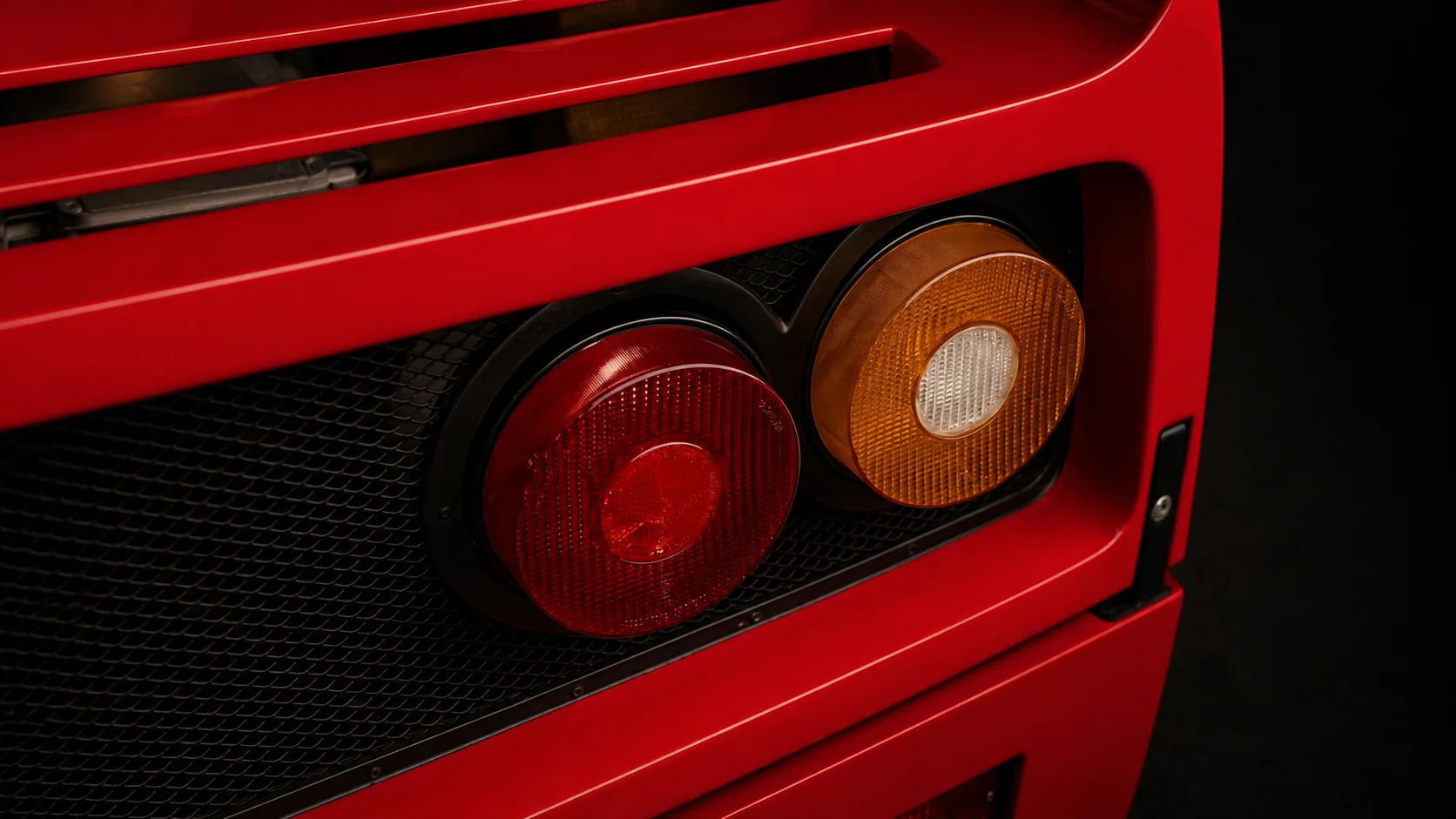
Photographed as it stands today, in the condition in which it will be handed over.
Ferrari had a problem no supplier had solved.
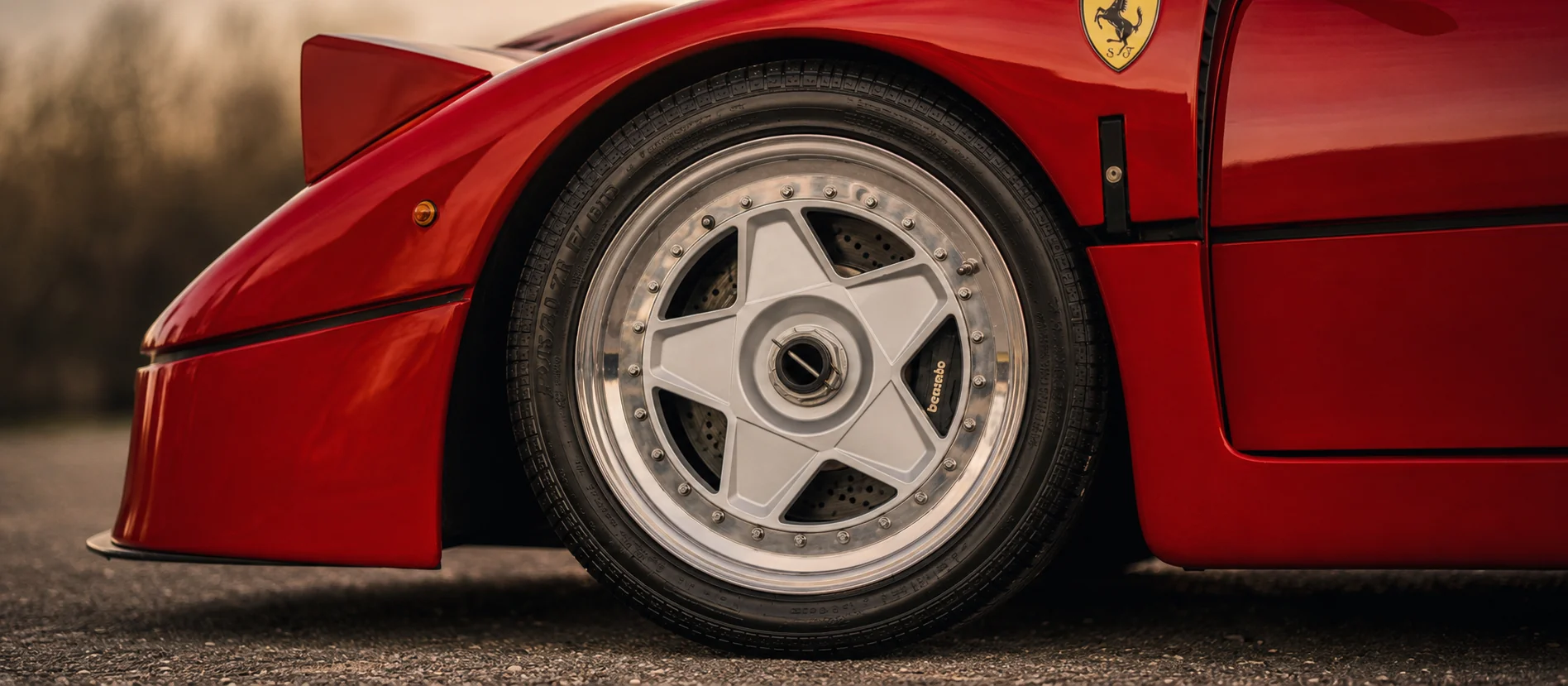
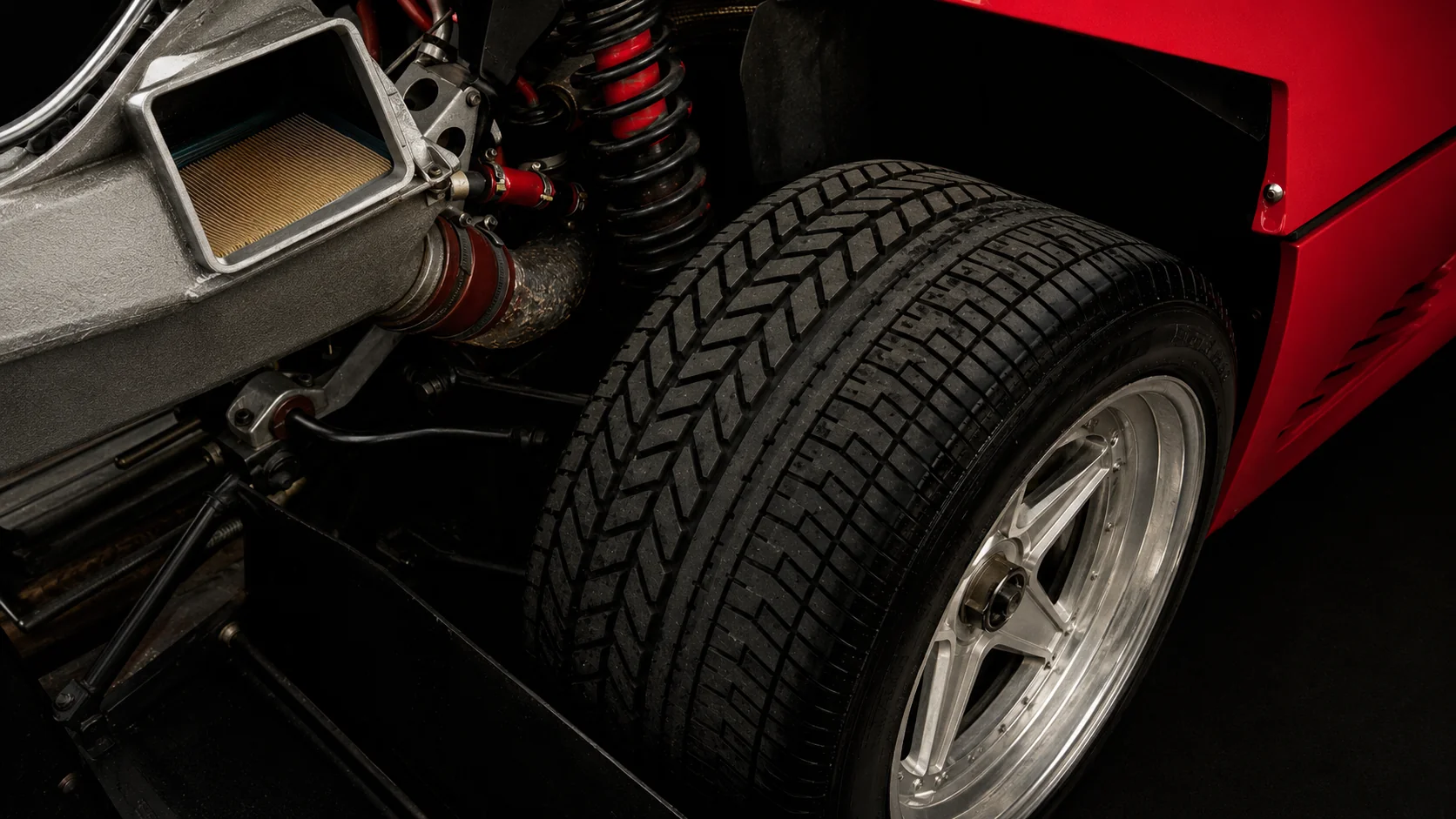
The F40 made 78 hp more than the 288 GTO before it, and nothing on sale in 1987 could hold it to the road. Nicola Materazzi went to Pirelli's head of development, Mario Mezzanotte, whom he had known since the Lancia rally years. Pirelli built a carcass from lightweight materials including Kevlar, drawing on five seasons of Formula One, and gave it an asymmetric tread. The result was the P Zero. It was created for this car, and it went on to define a generation of performance tyres.
Most were bought by people who never intended to drive them.
By 1990 it was estimated that only one F40 in ten was being used at all. The rest went directly into storage, bought by speculators who watched prices climb to many times the list figure before the bubble broke. That decade left the model with a provenance problem it has never fully shaken: cars that changed hands repeatedly, on paper, without anyone recording what was done to them. Thirty-four years later, the difference between a car with a history and a car with a story is visible in the file.
Ferrari's top speed claim did not survive independent testing.
Ferrari published 324 km/h. When Auto, Motor und Sport took two factory cars to the Nardò ring, neither exceeded 321 km/h. The F40 never held the outright record it was credited with. What it held instead, for years, was a different title: the fastest car a private buyer could actually order. Three kilometres per hour has never changed what the car is.
The most damning review came from a rival engineer.
Gordon Murray, five years before his own road car appeared, took the F40 apart in print. He called the chassis fifties technology, said he could feel it flexing on circuit, and described the car as a big go-kart with a plastic body. He also said this: it is the lack of weight that makes it exciting. Both halves of the verdict have aged into praise.
Sixty-eight of them stood in the rain, and one was not red.
In the summer that this car was built, Ferrari and the German owners' club gathered sixty-eight F40s in Italy for four days across Maranello, Fiorano and Mugello. It rained at Mugello, and owners waited in it while the cars were lined up for photographs that are now part of the model's archive. Piero Ferrari drove in the rally, in an F40. Luca di Montezemolo stood at the head of the line.
Enzo Ferrari never saw what came after this car.
He had been building cars under his own name for forty years when he signed off the F40, which is where the name comes from. He died thirteen months after its unveiling. It was the last car he ever approved, and the last statement he ever made about what a Ferrari was supposed to be.
The events worth entering ask for the same three things before they ask anything else: certification, a complete book pack, and a documented history file. This car holds all three. What follows is the calendar that opens as a result.
Eligibility for any given running is always at the discretion of the organiser and should be confirmed directly with them.
Thirty-four years, three owners, and nothing about this car that has to be taken on trust.